Wednesday, May 11, 2011

Revive the WPA and Put America Back to Work


David Woolner makes the case for reviving the Works Progress Administration (WPA) at New Deal 2.0:

Begun 76 years ago, the WPA brought America into the modern age. Our times call for a repeat of this effort.

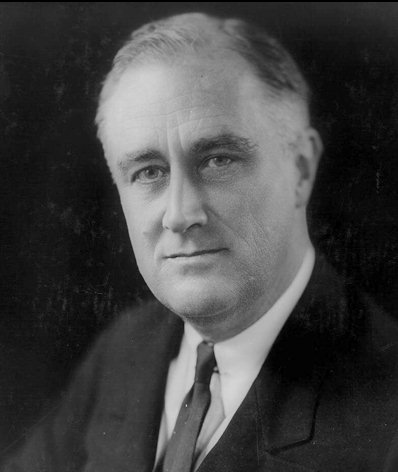
More than three quarters of a century ago, President Franklin D. Roosevelt declared that the “demoralization caused by vast unemployment is our greatest extravagance. Morally it is the greatest menace to our social order.” He also insisted that he would “stand or fall” by his “refusal to accept as a necessary condition of our future a permanent army of unemployed.” On the contrary, he said, “we must make it a national principle that we will not tolerate a large army of unemployed and that we will arrange our national economy to end our present unemployment as soon as we can and then take wise measures against its return. I do not think it is the destiny of any American to remain permanently on relief rolls.”

To put people back to work, FDR launched a series of programs designed to protect America’s environment (through the CCC reforestation programs and creation of the shelter belt in the Midwest to bring an end to the Dust Bowl) and build America’s economic infrastructure. The most famous of these was launched seventy-six years ago today: the Works Progress Administration or WPA. Between 1935 and 1943, the WPA literally built the infrastructure of modern America, including 572,000 miles of rural roads, 67,000 miles of urban streets, 122,000 bridges, 1,000 tunnels, 1,050 fifty airfields, and 4,000 airport buildings. It also constructed 500 water treatment plants, 1,800 pumping stations, 19,700 miles of water mains, 1,500 sewage treatment plants, 24,000 miles of sewers and storm drains, 36,900 schools, 2,552 hospitals, 2,700 firehouses, and nearly 20,000 county, state, and local government buildings.

Conservatives critics charged that the WPA was a “make work” program, but its accomplishments, which touched nearly every community in America, continue to make a mockery of this charge. The WPA put millions of skilled and unskilled laborers back to work — it was a requirement of the program that all those involved in the projects, from the architects and engineers down to the construction laborers, be hired by WPA dollars. It provided the critical economic infrastructure needed to bring the United States into the modern age.

Sadly, many of the conditions that led to the creation of the WPA are once again with us today: high unemployment and a crumbling economic infrastructure that is rapidly rendering the United States less and less competitive in the global economy. This sorry state of affairs is detailed in a recent article in The Economist, which notes, among other things, that the United States’ public spending on transport and water infrastructure has fallen steadily since the 1960s and now stands at a paltry 2.4% of GDP. Meanwhile, Europe spends on average 5% of GDP on infrastructure and China is spending 9%. In fact, the United States, according to the article, does not spend nearly enough just to maintain, let alone expand, its existing transport and water systems. The result is that today the US ranks 23rd among the nations of the world in overall infrastructure quality, according to a recent study by the World Economic Forum.

A new and even modest stimulus package would help alleviate this critical problem and provide millions of skilled and unskilled jobs, but the deficit hawks in Congress will have none of this. They insist that such a use of government is contrary to the American way.

To this, FDR’s would no doubt reply:

[T]o those who say that our expenditures for Public Works and other means for recovery are a waste that we cannot afford, I answer that no country, however rich, can afford the waste of its human resources…

In our efforts for recovery we have avoided on the one hand the theory that business should and must be taken over into an all-embracing Government. We have avoided on the other hand the equally untenable theory that it is an interference with liberty to offer reasonable help when private enterprise is in need of help. The course we have followed fits the American practice of Government — a practice of taking action step by step, of regulating only to meet concrete needs — a practice of courageous recognition of change. I believe with Abraham Lincoln, that “The legitimate object of Government is to do for a community of people whatever they need to have done but cannot do at all or cannot do so well for themselves in their separate and individual capacities.”

Isn’t it time we rebuilt our nation and put people back to work? Time for a new WPA?

David Woolner is a Senior Fellow and Hyde Park Resident Historian for the Roosevelt Institute.

http://www.newdeal20.org/2011/05/06/the-wpa-that-built-america-is-needed-once-again-44003/

Saturday, March 12, 2011

Tea Partyers should be angry about income inequality


The American middle class is rapidly losing ground as the top one percent get richer. John Hamilton says the tea party crowd is angry about the wrong things. The real issue is a growing income inequality which has been fueled by years of free trade policies, corporate offshoring of jobs, tax cuts for the rich and deregulation of the financial industry.

Hamilton writes:

The tea partyers have a right to be angry. They are just focused on the wrong thing.

What they should be mad about — hopping mad — is the growing inequality of income in the United States.

The distribution of our national income has become severely skewed. It is worse than in every single country of the Middle East and approaches Latin America's discord-sowing levels. On the Gini Index, where higher numbers represent higher inequality, the U.S. comes in at 45. For comparison, the numbers in Latin America range from 41 in Venezuela to 59 in Haiti. With a score of 23, Sweden leads all nations in having the most equal distribution of income.

Does this matter? It does. As a U.S. diplomat in Latin America, I saw what severe income inequality does to a society: it generates pervasive grievances that fuel a volatile and often violent politics; it fractures social cohesion; and it throttles economic development. The last point is critical. In the United States, the economic activity of a robust middle class has been an important driver of growth. Until recently, that is. In 1970, when our Gini coefficient was 39.4, the wealthiest 1 percent of Americans took in 9.7 percent of national income. That was a lot, but today the equivalent figure is 23.7 percent. The wealthiest one-tenth of 1 percent receives an astonishing 12.3 percent of national income.

According to former Secretary of Labor Robert Reich, middle-class economic activity is no longer generating new growth and jobs. As the purchasing power of the middle classes declined after 1970, families coped for a time. Women earned a second income; all workers put in longer hours and families drew on the equity in their homes. As those strategies are now exhausted, job growth is anemic. And because the wealthy can spend only a fraction of their income, they are not generating new growth either. (To spend an annual income of $10 million — not uncommon in the corporate world — one has to spend $27,397 every day.) Extreme income inequality benefits no one — not even the wealthy.

The growth of inequality, according to Jacob Hacker and Paul Pierson (authors of Winner-Take-All Politics), was largely caused by public policy. Left alone, robust capitalism tends to produce inequality, as it did by the 1890s and again during the 1920s. It took the reforms of the Progressive Movement and New Deal to restore balance.

The New Deal and such post-war measures as the GI Bill contributed to the "great prosperity" of 1945-1970, when middle income gains actually exceeded upper income increases. After 1970, however, a "drifting" public policy ignored growing income inequality or even abetted it through de-regulation and tax policy. Hedge fund managers, for example, have their fee-derived income taxed at 15 percent. As Warren Buffet famously noted, he pays a lower rate of income tax than his salaried secretary.

A focus on income inequality lends an alternative optic on the tea party and conservative narrative that our economic difficulties have their origin in too much government — too much regulation, too much spending on the poor. Rather, the political class has been lax in its stewardship of societal good health. Remedies call for policies that would not have to be more than mildly redistributive — boosting the Earned Income Tax Credit, for example, imposing higher marginal tax rates on the wealthy and taxing capital gains at the same rate as wages and salaries. Such policies are unlikely to be adopted, however, until the public better understands income inequality in all its pernicious dimensions.

As a diplomat who spent most of his career in Latin America, I came to love the region — its peoples and cultures — and to admire many things about it. But not its inequality of income. We should not go there.

John Hamilton of Shelton, Wash., is a retired U.S. Foreign Service officer. He was U.S. Ambassador to Peru in 1999-2002 and to Guatemala in 2002-2005.

http://seattletimes.nwsource.com/html/opinion/2014449005_guest10hamilton.html

China space weapons pose threat to U.S. Navy


A warning about a military threat posed by China from space comes to us via Space Ref. Craig Vovault reports:

China's Military Space Surge

By Craig Covault,Aerospace America

China's surging military space program is poised to challenge U.S. aircraft carrier operations in the Pacific, as Chinese military spacecraft already gather significant new radar, electrooptical imaging, and signal intelligence data globally.

During 2010, China more than doubled its military satellite launch rate to 12. This compares with three to five military missions launched each year between 2006 and 2009. Since 2006, China has launched about 30 military related spacecraft. Its total of 15 launches in 2010 set a new record for China and for the first time equaled the U.S. flight rate for a given year.

Most U.S. public and media attention has focused on China's occasional manned flights and its maturing unmanned lunar program. But China's military space surge reveals a program where more than half of its spacecraft are like 'wolves in sheep's clothing,' posing a growing threat to U.S. Navy operations in the Pacific. India's navy is also concerned.

"This is a really big deal. These military spacecraft are being launched at a very rapid pace" says Andrew S. Erickson, a Naval War College expert on China's naval and space forces. China is becoming a military space power within a global context." At least three or four different Chinese military satellite systems are being networked to support China's 1,500 km+ range DF-21D antiship ballistic missile (ASBM) program, say U.S. analysts. The DF-21D is being designed to force U.S. Navy aircraft carrier battle groups and other large U.S. allied warships to operate hundreds of miles farther away from China or North Korea than they do today.

The ASBM "has undergone repeated tests and has reached initial operational capability," Adm. Robert Willard, commander of the U.S. Pacific Command said recently in Tokyo. The new Chinese space capabilities, combined with development of the DF-21D, are already having an effect on the planning of future operations in the Pacific, says Secretary of Defense Robert Gates.

"I'm trying to get people to think about how do we use aircraft carriers in a world environment where other countries [China specifically] will have the capability, between their missile and satellite capabilities, to knock out a carrier," Gates said recently at Duke University. "How do you use carriers differently in the future than we've used them in the past?" he asked.

The full article appears in the March 2011 issue of Aerospace America published by the American Institute of Aeronautics and Astronautics (AIAA)

http://www.spaceref.com/news/viewnews.html?id=1510

http://www.aerospaceamerica.org/

Friday, March 11, 2011

Downstate Democrats Back Illinois Concealed Carry Law


Lobbying their legislators in support of a concealed carry law in Illinois, hundreds of Illinois gun owners marched yesterday at the state capitol in Springfield as a part of Illinois Gun Owners Lobby Day (IGOLD). Illinois is one of two states in the country that does not allow concealed carry. Past attempts to pass a law have stalled.

Senate Bill 82, the Family and Personal Protection Act sponsored by State Senator Gary Forby (D – Benton), would legalize concealed carry in Illinois. The bill creates procedures by which county sheriffs could issue concealed carry permits to persons at least 21 years old with no record of felonies, violence, mental illness, or substance abuse. Applicants would also be required to complete specific trainings, including classroom instruction and live firing exercises.

State Senator John Sullivan (D – Rushville), Chairman of the Senate Democratic Downstate Caucus and co-sponsor of SB 82, noted the support of several other members of the downstate caucus, including Senator Mike Frerichs (D – Champaign), Senator William Haine (D – Alton), Senator Mike Jacobs (D – Moline), and Senator Dave Koehler (D – Peoria).

Senator Sullivan has created an online petition where citizens can show their support for concealed carry in Illinois. To sign, please visit http://www.senatorjohnsullivan.com/concealedcarry.

“I agree with many people in my district that it’s time to allow responsible gun owners the right to conceal and carry in Illinois,” said Sullivan. “I invite everyone to stand with me by signing the petition on my website.”

In addition to Senator Sullivan, the following senators issued statements in support of SB 82 and concealed carry in Illinois:

Senator Gary Forby (D – Benton):
“Over 290 million people in 48 other states can responsibly exercise their right to carry concealed weapons,” said Forby. “It’s outrageous that five million people that don’t trust their law-abiding neighbors enough are blocking this right from seven and a half million other citizens.”

Senator William Haine (D – Alton):
“It is time that Illinois joins 48 other states in the Union to allow responsible citizens to exercise their Second Amendment rights and protect themselves and their families,” Haine stated. “This bill assures that only well-trained, responsible citizens are allowed to carry their firearms in a concealed capacity.”

Senator Dave Koehler (D – Peoria):
“Many, many people in my district have made it clear that they support legalizing conceal and carry,” Koehler said. “I stand with them and urge them to sign Senator Sullivan’s petition. We need to show the other senators in Springfield how strongly the people of Central and Southern Illinois feel about this issue.”

Thursday, March 10, 2011

House Democrats support rebuilding America's intrastructure


The Hill's Finance and Economy Blog reports:

House Ways and Means Committee Democrats introduced legislation Thursday to provide financing for infrastructure investments around the nation.

The measure extends eight bond, tax credit and loan guarantee programs for states and municipalities, anchored by the Build America Bonds (BAB) program, which helped finance $181 billion in infrastructure projects in the past two years, according to the committee.

“These proven programs are vital in our effort to rebuild America’s infrastructure and economy," said Ways and Means Ranking Member Sander Levin (D-Mich.). “There are still far too many states and municipalities, in addition to the 14 million unemployed Americans, struggling to regain their footing after the Great Recession, and this legislation gives them the tools to make long-needed investments."

There is an appetite in the Senate to finance an overhaul of the nation's infrastructure that could align with the Obama administration's $556 billion proposal, or at least provide some funding for the projects included in the fiscal year 2012 budget request.

Transportation Secretary Ray LaHood has said he'd like to see a six-year transportation infrastructure bill ready before the August recess.

Sens. Ron Wyden (D-Ore.) and John Thune (R-S.D.) have recently discussed renewing the BAB program, which expired Dec. 31, with a focus on transportation projects to attract a broader range of support.

The Building American Jobs Act of 2011 includes:

• Build America Bonds — extend the program through 2012, with a 32 percent subsidy rate in 2011, and 31 percent subsidy rate in 2012.

• Recovery Zone Bonds — make an additional allocation of Recovery Zone bonds to ensure each local municipality receives a minimum allocation equal to at least its share of national unemployment in December 2009. The bill would also extend the authorization for issuing bonds through 2011.

• Water & Sewer Bonds — exclude bonds financing facilities that furnish water and sewage facilities from state volume caps. The bill would also exclude bonds financing facilities that furnish water and sewage facilities from certain limitations on tribal government issuances.

• AMT/Private Activity Bonds — extend both provisions for one year (i.e., exempt from AMT tax-exempt private activity bonds issued in 2011 and current refunding of private activity bonds issued after 2003 and refunded during 2011).

• New Markets Tax Credit — allow NMTC to be claimed against the AMT with respect to qualified investments made between March 15, 2010 and January 1, 2012.

• Federal Home Loan Bank Bond Guarantees — extends ability of FHLBs to guarantee tax-exempt bonds through 2011.

• Small Issuer Exception for Bank-Qualified Bonds — extends the ability of financial institutions to purchase tax-exempt bonds of up to $30 million per issuer (from $10 million) through 2011.

• Low-Income Housing Tax Credit (LIHTC) Exchange Program — extends the ability of states to receive a portion of their LIHTC allocation as a direct payment through 2011.

http://thehill.com/blogs/on-the-money/budget/148707-house-democrats-introduce-legislation-to-provide-infrastructure-financing

Congressman Ben Chandler Fights High Gas Prices


Congressman Ben Chandler (D-KY) has filed a bill with his colleagues in Congress to lower prices at the pump. This bill will authorize penalties of up to $500 million for large companies selling oil, gasoline, and diesel at excessive prices or taking unfair advantage of circumstances during an international crisis.

“Greedy oil companies and CEOs shouldn’t be allowed to take advantage of Kentuckians trying to make ends meet in this tough economy,” Chandler said. “It is unacceptable. Gas prices are high enough already, we need to put an end to price gouging and price speculation once and for all.”

H.R. 964, the Federal Price Gouging Prevention Act, will empower the Federal Trade Commission (FTC) and state attorneys general to institute civil and criminal penalties for fuel price gouging during periods proclaimed by the president as an international crisis affecting oil markets. This legislation could also apply to speculation in the oil futures market. The civil penalty for engaging in price gouging would be a fine of not more than $100 million. The criminal penalty for a corporation engaging in price gouging would be up to $500 million.

Originally introduced by Rep. Tim Bishop, Chandler is an original cosponsor of the bill with Representatives John Yarmuth (KY), Jerry McNerney (CA), Tim Walz (MN), Mike McIntyre (NC), and Bruce Braley (IA).


H.R.964 -- Federal Price Gouging Prevention Act (Introduced in House - IH)


112th CONGRESS

1st Session

H. R. 964
To protect consumers from price-gouging of gasoline and other fuels, and for other purposes.

IN THE HOUSE OF REPRESENTATIVES

March 9, 2011
Mr. BISHOP of New York (for himself, Mr. MCNERNEY, Mr. WALZ of Minnesota, Mr. MCINTYRE, Mr. BRALEY of Iowa, Mr. YARMUTH, and Mr. CHANDLER) introduced the following bill; which was referred to the Committee on Energy and Commerce

A BILL
To protect consumers from price-gouging of gasoline and other fuels, and for other purposes.

Be it enacted by the Senate and House of Representatives of the United States of America in Congress assembled,

SECTION 1. SHORT TITLE.

This Act may be cited as the `Federal Price Gouging Prevention Act'.

SEC. 2. UNCONSCIONABLE PRICING OF GASOLINE AND OTHER PETROLEUM DISTILLATES DURING EMERGENCIES.

(a) Unconscionable Pricing-

(1) IN GENERAL- It shall be unlawful for any person to sell, at wholesale or at retail in an area and during a period of an international crisis affecting the oil markets proclaimed under paragraph (2), gasoline or any other petroleum distillate covered by a proclamation issued under paragraph (2) at a price that--

(A) is unconscionably excessive; and

(B) indicates the seller is taking unfair advantage of the circumstances related to an international crisis to increase prices unreasonably.

(2) ENERGY EMERGENCY PROCLAMATION-

(A) IN GENERAL- The President may issue a proclamation of an international crisis affecting the oil markets and may designate any area within the jurisdiction of the United States, where the prohibition in paragraph (1) shall apply. The proclamation shall state the geographic area covered, the gasoline or other petroleum distillate covered, and the time period that such proclamation shall be in effect.

(B) DURATION- The proclamation--

(i) may not apply for a period of more than 30 consecutive days, but may be renewed for such consecutive periods, each not to exceed 30 days, as the President determines appropriate; and

(ii) may include a period of time not to exceed 1 week preceding a reasonably foreseeable emergency.

(3) FACTORS CONSIDERED- In determining whether a person has violated paragraph (1), there shall be taken into account, among other factors--

(A) whether the amount charged by such person for the applicable gasoline or other petroleum distillate at a particular location in an area covered by a proclamation issued under paragraph (2) during the period such proclamation is in effect--

(i) grossly exceeds the average price at which the applicable gasoline or other petroleum distillate was offered for sale by that person during the 30 days prior to such proclamation;

(ii) grossly exceeds the price at which the same or similar gasoline or other petroleum distillate was readily obtainable in the same area from other competing sellers during the same period;

(iii) reasonably reflected additional costs, not within the control of that person, that were paid, incurred, or reasonably anticipated by that person, or reflected additional risks taken by that person to produce, distribute, obtain, or sell such product under the circumstances; and

(iv) was substantially attributable to local, regional, national, or international market conditions; and

(B) whether the quantity of gasoline or other petroleum distillate the person produced, distributed, or sold in an area covered by a proclamation issued under paragraph (2) during a 30-day period following the issuance of such proclamation increased over the quantity that that person produced, distributed, or sold during the 30 days prior to such proclamation, taking into account usual seasonal demand variations.

(b) Definitions- As used in this section--

(1) the term `wholesale', with respect to sales of gasoline or other petroleum distillates, means either truckload or smaller sales of gasoline or petroleum distillates where title transfers at a product terminal or a refinery, and dealer tank wagon sales of gasoline or petroleum distillates priced on a delivered basis to retail outlets; and

(2) the term `retail', with respect to sales of gasoline or other petroleum distillates, includes all sales to end users such as motorists as well as all direct sales to other end users such as agriculture, industry, residential, and commercial consumers.

SEC. 3. ENFORCEMENT BY THE FEDERAL TRADE COMMISSION.

(a) Enforcement by FTC- A violation of section 2 shall be treated as a violation of a rule defining an unfair or deceptive act or practice prescribed under section 18(a)(1)(B) of the Federal Trade Commission Act (15 U.S.C. 57a(a)(1)(B)). The Federal Trade Commission shall enforce this Act in the same manner, by the same means, and with the same jurisdiction as though all applicable terms and provisions of the Federal Trade Commission Act were incorporated into and made a part of this Act. In enforcing section 2 of this Act, the Commission shall give priority to enforcement actions concerning companies with total United States wholesale or retail sales of gasoline and other petroleum distillates in excess of $10,000,000,000 per year.

(b) Civil Penalties-

(1) IN GENERAL- Notwithstanding the penalties set forth under the Federal Trade Commission Act, any person who violates section 2 with actual knowledge or knowledge fairly implied on the basis of objective circumstances shall be subject to--

(A) a civil penalty of not more than 3 times the amount of profits gained by such person through such violation; or

(B) a civil penalty of not more than $100,000,000.

(2) METHOD- The penalties provided by paragraph (1) shall be obtained in the same manner as civil penalties obtained under section 5 of the Federal Trade Commission Act (15 U.S.C. 45).

(3) MULTIPLE OFFENSES; MITIGATING FACTORS- In assessing the penalty provided by subsection (a)--

(A) each day of a continuing violation shall be considered a separate violation; and

(B) the court shall take into consideration, among other factors, the seriousness of the violation and the efforts of the person committing the violation to remedy the harm caused by the violation in a timely manner.

SEC. 4. CRIMINAL PENALTIES.

(a) In General- In addition to any penalty applicable under section 3, any person who violates section 2 shall be fined under title 18, United States Code, in an amount not to exceed $500,000,000.

(b) Enforcement- The criminal penalty provided by subsection (a) may be imposed only pursuant to a criminal action brought by the Attorney General or other officer of the Department of Justice. The Attorney General shall give priority to enforcement actions concerning companies with total United States wholesale or retail sales of gasoline and other petroleum distillates in excess of $10,000,000,000 per year.

SEC. 5. ENFORCEMENT AT RETAIL LEVEL BY STATE ATTORNEYS GENERAL.

(a) In General- A State, as parens patriae, may bring a civil action on behalf of its residents in an appropriate district court of the United States to enforce the provisions of section 2 of this Act, or to impose the civil penalties authorized by section 3(b)(1)(B), whenever the attorney general of the State has reason to believe that the interests of the residents of the State have been or are being threatened or adversely affected by a violation of this Act or a regulation under this Act, involving a retail sale.

(b) Notice- The State shall serve written notice to the Federal Trade Commission of any civil action under subsection (a) prior to initiating such civil action. The notice shall include a copy of the complaint to be filed to initiate such civil action, except that if it is not feasible for the State to provide such prior notice, the State shall provide such notice immediately upon instituting such civil action.

(c) Authority To Intervene- Upon receiving the notice required by subsection (b), the Federal Trade Commission may intervene in such civil action and upon intervening--

(1) be heard on all matters arising in such civil action; and

(2) file petitions for appeal of a decision in such civil action.

(d) Construction- For purposes of bringing any civil action under subsection (a), nothing in this section shall prevent the attorney general of a State from exercising the powers conferred on the attorney general by the laws of such State to conduct investigations or to administer oaths or affirmations or to compel the attendance of witnesses or the production of documentary and other evidence.

(e) Venue; Service of Process- In a civil action brought under subsection (a)--

(1) the venue shall be a judicial district in which--

(A) the defendant operates;

(B) the defendant was authorized to do business; or

(C) the defendant in the civil action is found;

(2) process may be served without regard to the territorial limits of the district or of the State in which the civil action is instituted; and

(3) a person who participated with the defendant in an alleged violation that is being litigated in the civil action may be joined in the civil action without regard to the residence of the person.

(f) Limitation on State Action While Federal Action Is Pending- If the Federal Trade Commission has instituted a civil action or an administrative action for violation of this Act, no State attorney general, or official or agency of a State, may bring an action under this subsection during the pendency of that action against any defendant named in the complaint of the Federal Trade Commission or the other agency for any violation of this Act alleged in the complaint.

(g) Enforcement of State Law- Nothing contained in this section shall prohibit an authorized State official from proceeding in State court to enforce a civil or criminal statute of such State.

SEC. 6. EFFECT ON OTHER LAWS.

(a) Other Authority of Federal Trade Commission- Nothing in this Act shall be construed to limit or affect in any way the Federal Trade Commission's authority to bring enforcement actions or take any other measure under the Federal Trade Commission Act (15 U.S.C. 41 et seq.) or any other provision of law.

(b) State Law- Nothing in this Act preempts any State law.

Tuesday, March 01, 2011

Oklahoma "right-to-work" law failed to create jobs


Right-to-work laws do not boost employment growth in the states in which they
are enacted, a new Economic Policy Institute (EPI) Briefing Paper finds. In fact, Right-to-work laws may actually harm a state’s economic prospects. Does “Right-to-Work” Create Jobs? Answers from Oklahoma by Gordon Lafer and Sylvia Allegretto examines the economic consequences of enacting right-to-work laws and uses Oklahoma as a case study; while most right-to-work laws have been in place for three decades or more, Oklahoma’s law was enacted in 2001. http://epi.3cdn.net/fd70a3db178e318a6c_8um6iihw9.pdf

Right-to-work laws make it illegal for unionized workers to negotiate a contract that requires each employee who enjoys the benefit of the contract to pay his or her share of the costs of negotiating and policing it. In effect, right-to-work laws limit the effectiveness of unions to negotiate higher wages and benefits for their members. Right-to-work laws are in place in 22 states, and state legislatures in states including Indiana and Michigan are currently debating passage of new ones.

Because Oklahoma is the only state to have adopted right-to-work in the current era of globalization, its experience is particularly telling. Does “Right-to-Work” Create Jobs? finds that manufacturing employment in Oklahoma, which increased in the 10 years prior to the enactment of the right-to-work law, fell steadily in the years following it, suggesting that the law had little impact on the state’s manufacturing sector. The right-to-work law in Oklahoma did not buffer it from the country’s employment crisis in 2001-2003 or the Great Recession, either. Compared to the six states that border it, Oklahoma was no better off in terms of its unemployment rate or its rate of job growth in 2010 than it was in 2000, prior to enactment of its right-to-work law. Finally, the number of out-of-state businesses opening plants in Oklahoma decreased following the adoption of right-to-work. Furthermore, more than
160 Oklahoma employers have announced mass layoffs and 100 facilities have closed
since right-to-work was enacted.

Right-to-work laws could in fact have a negative effect on a state’s economy. When weakened unions negotiate contracts with lower wages and fewer benefits, workers spend less on housing, food and other necessities. Wages for non-union workers also decline when right-to-work is adopted, because employers no longer face pressure to match union contract standards. Local and state governments therefore receive less in tax revenues and must cut public services—services that are critical to effective economic development. In addition, the economic sectors that hold the most promise for growth are in construction and service industries rooted in local communities, not those dependent on mobile, lower wage manufacturers.

Sunday, February 27, 2011

Can worker-owned cooperatives help solve the jobs crisis ?


Spain's Mondragon Cooperative is owned by the approximately 89,000 employees and serves as a worldwide model for worker-owned cooperatives.

Reporting at La Prensa San Diego, Mark Day takes a look at the viability of worker-owned cooperatives as a viable economic model. Such cooperatives can vary in size from a few employees to the large Mondragon Cooperative.

Day writes:

The worker-owned cooperative, an economic workplace model that has been around for decades is making a comeback. In some parts of the U.S. new coops are sprouting up, cutting unemployment rates and revitalizing economically depressed communities.

La Prensa San Diego recently toured several cooperatives in Oakland and Berkeley and spoke with people whose lives have been transformed by the cooperative experience.

Sandra Martinez, a worker at A Taste of Denmark bakery in Oakland, recently told her story. In mid-2010, Neldam’s, the original bakery, suddenly went out of business after 81 years. The building’s owners, Kevin and Sukhee Yoo, faced with an empty property, formed a coop with 12 workers, including Martinez, re-naming it A Taste of Denmark.

“I didn’t know what a cooperative was,” said Martinez, seated at a table near the baked goods displays. “We weren’t asked for money. They wanted our experience.”

Martinez said that for the workers, the bakery’s morale changed for the better. “Before, the bosses yelled at each other and at us,” she said. “Things are less stressful now. We have a better sense of what we are doing. Besides, my pay has improved and I am guaranteed my 40 hours a week.”

Another side effect, say the bakery workers, is that A Taste of Denmark is now expanding its menu to cater to the Latino and Asian markets and has a website featuring specials and new products.

The worldwide gold standard for cooperatives is the Mondragon Cooperative Corporation, based in the Basque country of northern Spain. In the aftermath of the Spanish Civil War, Father Jose Maria Arizmendiarriata, a former political prisoner of Gen. Francisco Franco, organized impoverished Basque peasants into a coop that manufactured paraffin stoves.

More importantly, the priest established a set of principles to guide the cooperatives: among them are open admission to all workers regardless of race, politics or religion; participatory democracy in management (one worker one vote); sovereignty of labor, wage solidarity, social transformation, and education.

Mondragon’s worker-owned cooperatives now include 120 workplaces, 87 of which are industrial factories that manufacture kitchen appliances, housewares, auto parts and machine tools. One is a large bank, another chain of supermarkets and still another is a university with 3,600 students.

One of the largest factories is called Fagor. Managers tout its rigid safety standards and quality control. All machines are carefully tested for safe operation and workers keep careful records of any accidents.

All of Mondragon’s workplaces have management selected by workers and yearly assemblies where workers set policies and elect their governing boards.

Mondragon executives and organizers regularly mentor worker co-ops throughout the world. Last year, Gayle McLaughlin, the mayor of Richmond, Calif., spent a week in Mondragon and shared her findings with her constituents. Discussions are now underway in Richmond to establish a coop bike shop, a natural foods café and a chain of urban gardens.

Another Mondragon-mentored project is the Evergreen Cooperative Laundry, established in 2009 in a depressed inner city Cleveland Ohio neighborhood where industrial flight has taken place in recent years. Superior technology, and better than average wages, have made the laundry a highly coveted workplace for those seeking employment in Cleveland.

Another Cleveland cooperative venture is the Green City Growers, which operates a hydroponic food production greenhouse in the midst of the city’s blighted areas. The project receives funds from the White House Office of Urban Affairs, H.U.D. and several foundations.

Back in Oakland, Quentin Sankofa, one of seven young African-American worker-owners at the Mandela Food Cooperative, spoke of the difficulties in establishing a coop in a low-income community.

The Mandela coop, located near the West Oakland BART station, provides fresh fruit and vegetables delivered daily by youths to small grocery and liquor stores in the area.

“It is not an easy thing for low income people of color to start a business, let alone a cooperative,” said Sankofa. “No banks or credit unions wanted to lend us money. But after receiving funding and other support from the nonprofit Mandela Marketplace, the food coop began to stand on its own feet,” he said.

“We received training in retail methods, the basics of nutrition and how to work together cooperatively. And we were also able to tap into redevelopment funds. Our short term goals are simply to survive these tough economic times, but long term we want to expand to a bigger space.”

The last stops on the coop tour: The Cheese Board in Berkeley and Emeryville’s Arizmendi Bakery. The Cheese Board, begun in 1967, is arguably the bay area’s most successful worker-owned cooperative. It operates a large cheese shop on Shattuck Ave. with an adjoining pizza restaurant where a jazz band plays twice daily.

Cheese Board worker owners receive $21 per hour plus coop dividends, full health care, dental and a retirement savings plan. The coop attempts to pay fair wages to its workers, a fair price to its suppliers and fair prices to its customers.

The Arizmendi Bakery in Emeryville is a spinoff from the Cheese Board, which helped set up the chain of five bakeries and lent them its recipes. Named after the Basque priest who founded the Mondragon cooperative, Arizmendi is governed by policy council, with two elected members from each bakery.

“Our idea is to replicate this model, to saturate the bay are with new coops,” said Jabari Jones, one of the Arizmendi bakers. “We need to educate the public, to convert more jobs and industries into co-operatives, to create a critical mass.”

Although there are only about 1,500 members in Northern California cooperatives, tough economic times and high success rates are spurring their rapid growth. “We are no longer considered just another alternative,” said Melissa Hoover, executive director of the San Francisco-based U.S. Federation of Worker Cooperatives. “We are now part of the mainstream economy—and we are growing.”

http://laprensa-sandiego.org/featured/can-worker-owned-cooperatives-offer-a-solution-to-our-economic-woes/

Richard Aleman notes at The Distributist Review:

To the casual reader co-ops may seem a European phenomenon. However, we can look to our own shores for evidence that there is a rich history of cooperative ownership rooted in our nation. Not only do tens of thousands of co-ops operate in every sector, from fishing to agriculture, but the first cooperative, Philadelphia Contributionship for the Insurance of Houses from Losses by Fire, was established in 1752 by none other than Benjamin Franklin.

Cooperative businesses have a proven track record in the marketplace, whether in agriculture, health care, quality control, legal services, banking, utilities, technical training, and market research, to name a few. Worker-owners manufacture medical equipment, provide medical services, form local construction companies, and operate cafes and movie theaters.

The cooperative business is not only an attractive alternative for large-scale manufacturing. It is also beneficial for those wishing to start small businesses yet lacking in capital investment.

Like any other business, cooperatives set their rules and regulations, establish their articles, and vote democratically under the principle of one person, one vote. They may, if they so choose, establish managerial boards, issue target and goal requirements, and compensate worker-owners based on their investment.

While most large-scale industries reduce the level of ownership in our society and treat labor as a cost instead of a partner in the production process, cooperatives are the Distributist answer to increase widespread ownership of the means of production. Cooperatives can restore the “Made in the USA” label, are the answer to the damage wrought by the North American Free Trade Agreement, and will mobilize workers whose jobs have been shipped overseas, raising American domestic production from the ashes.

Cooperatives are not just fascinating because they serve as the Distributist approach to medium and large-scale industry. They, like G.K. Chesterton, rekindle the imagination

http://distributistreview.com/mag/2011/02/industry-a-distributist-solution-part-ii/

The Age: No Nuclear Arsenal Limit for China


Philip Dorling reports at The Age:

High ranking Chinese officials have declared that there can be no limit to the expansion of Beijing's nuclear arsenal, amid growing regional fears that it will eventually equal that of the United States, with profound consequences for the strategic balance in Asia.

Records of secret defence consultations between the US and China reveal that US diplomats have repeatedly failed to persuade the rising superpower to be more transparent about its nuclear forces and that Chinese officials privately admit that a desire for military advantage underpins continuing secrecy.

According to US diplomatic cables obtained by WikiLeaks and provided exclusively to The Age, the deputy chief of China's People's Liberation Army General Staff, Ma Xiaotian, told US Defence and State Department officials in June 2008 that the growth of China's nuclear forces was an ''imperative reality'' and there could be "no limit on technical progress''.

Advertisement: Story continues below Rejecting American calls for China to reveal the size of its nuclear capabilities, Lieutenant-General Ma bluntly declared: ''It is impossible for [China] to change its decades-old way of doing business to become transparent using the US model.''

While claiming in a further July 2009 discussion that Beijing's nuclear posture has "always been defensive'' and that China would "never enter into a nuclear arms race", General Ma acknowledged that, "frankly speaking, there are areas of China's nuclear program that are not very transparent''.

China's assistant foreign minister He Yafei similarly told US officials in June 2008 that there will be an ''inevitable and natural extension'' of Chinese military power and that China ''cannot accept others setting limits on our capabilities''.

Other leaked US cables reveal Japan fears China's nuclear arsenal will grow to equal that of the US, and Tokyo has urged Washington to retain strong nuclear capabilities to deter an "increasingly bold" China from ''doing something stupid".

In top-level nuclear policy consultations in June 2009, senior Japanese Defence Ministry officials told US representatives that Tokyo's assessment was that "China is rapidly upgrading its nuclear capability beyond its relatively insignificant levels from the 1980s and the 1990s, and is trying to reach parity with Russia and the US''.

"China is displaying newfound confidence in its military capabilities and is visibly showing its strength in the region, particularly with respect to the [Japanese] Senkakus [island group],'' Japan-US Defence Co-operation director Kiyoshi Serizawa told US diplomats.

A senior Japanese Foreign Ministry official also warned that China's "troubling" nuclear build-up had to be viewed in the context of its other activities, including its 2007 anti-satellite test, cyber-attacks and growing naval capabilities.

"If China perceives the United States having difficulty accessing the region, it is more likely to do something stupid,'' said Japan-US Security Treaty Division senior co-ordinator Yusuke Arai.

In a separate discussion with US envoys, Japanese Defence Ministry officials expressed concern the Obama administration's plan to negotiate a cut in nuclear forces with Russia would encourage China's nuclear build-up. A senior Japanese official said that while China had declared a ''no first-use'' nuclear weapons posture, "no nuclear expert believes this is true''.

US and Japanese officials agreed that the opaque nature of China's nuclear build-up was troubling, and the Japanese stressed that close co-ordination was "critical" before any US decisions on "deep cuts" in nuclear weapons talks with Russia.

But after the release of the Obama administration's Nuclear Posture Review in early 2010, the US and Russia signed a new Strategic Arms Limitation Treaty on April 8 to halve their nuclear arsenals to 1550 strategic weapons over the next seven years.

The International Institute for Strategic Studies estimates China has up to 90 intercontinental ballistic missiles (66 land-based and 24 submarine-launched) and more than 400 intermediate range missiles targeting Taiwan and Japan. The US intelligence community predicts that by the mid-2020s, China could double the number of warheads on missiles capable of threatening the US.

http://www.theage.com.au/world/no-nuclear-limit-china-20110227-1ba0l.html

Ian Fletcher: Why A Flat Tariff on All U.S. Imports Would Work


Writing at The Huffington Post, Ian Fletcher makes the case for a flat tariff on all U.S. imports:

I advocate protectionism. But one standard criticism is that this would just result in politically connected industries getting tariffs raised on the products they produce. This would corrupt our economy, force consumers to pay higher prices, and serve no legitimate economic logic.

Sounds logical enough. As the 19th-century American radical economist Henry George put it, "introducing a tariff bill into a congress or parliament is like throwing a banana into a cage of monkeys."

So let's just cut that Gordian knot right now: what America needs isn't some complicated system of tariffs, but a flat tariff, the same on every imported good and service.

The exact level at which to set the tariff is an open question. For the sake of argument, we can take 30% as a hypothetical figure, because it is in the historic range of U.S. tariffs and is close to the net pressure on America's trade balance due to foreign nations' VAT or value-added taxes. The right level will not be something trivial, like 2%, or prohibitive, like 150%. But there is no reason it shouldn't be 25 or 35%, and this flexibility will provide wiggle room for the compromises needed to get a tariff through Congress.

A flat tariff would be imperfect, but it would be infinitely better than free trade and relatively politics-proof. Above all, it is a policy people are unlikely to support for the wrong reasons (AKA producer special interests) because it does not single out any specific industries for protection. It would thus maximize the incentive for voters and Congress to evaluate protectionism in terms of whether it would benefit the country as a whole--which is precisely the question they should be asking.

A flat tariff would also create the right balance of special-interest pressures: some interests would favor a higher tariff, others a lower one. This is a prerequisite for fruitful debate, as it means both views will find institutional homes and political patrons.

A flat tariff's uniformity across industries would avoid the problems that occur when upstream but not downstream industries get tariff protection. For example, if steel-consuming industries do not get a tariff when steel gets one, they will become disadvantaged relative to their foreign competitors by the higher cost of American-made steel. And why should steelworkers be protected from foreign competition at the price of forcing everyone else to pay more for goods containing steel? The only reasonable solution is that steelworkers should pay a tariff-protected price for the goods they buy, too. This logic ultimately means that all goods should be subject to the same tariff.

A flat tariff would have other benefits, too. For one thing, it would avoid the danger of getting stuck with a tariff policy that made sense when it was adopted but gradually became an outdated captive of special interests over time, always a risk with tariffs. Although it is a fixed policy, it would not be fixed in its effects, but would automatically adapt to the evolution of industries over time. In 1900, it would have protected the American garment industry from foreign (then mostly European) competition. It wouldn't do that today. As which industries are good industries changes over time, which industries it protects will change accordingly.

A flat tariff would trigger the relocation back to the U.S. of the right industries. For example, a 30% tariff would not cause the relocation of the apparel industry back to the U.S. from abroad. The difference between domestic and foreign labor costs is simply too large for a 30% premium to tip the balance in America's favor in an industry based on semi-skilled labor. But a 30% tariff quite likely would cause the relocation of high-tech manufacturing like semiconductors. This is key, as these industries are precisely the ones we should want to relocate. These capital-intensive, knowledge-intensive industries support high wages and have bright technological futures.

Another objection to a tariff is that if any industry is granted protection, it will just slumber behind it. Some industries indeed long to shut out foreign competition, reach a lazy detente with domestic rivals, then coast along with high profitability and low innovation. But a flat tariff resists this danger because it does not hand out a blank check of protection: it gives a certain percentage and no more. Any industry that cannot get its costs within striking distance of its foreign competitors will not be saved by it. This discipline, although unpleasant for the losers, is the price we must pay for having a tariff that actually works, rather than one which eliminates the discipline of foreign competition entirely and protects all industries indiscriminately.

The political bickering that a tariff varying by industry would cause also militates in favor of a flat tariff. The inability of different industries to coalesce around a common tariff proposal sabotaged efforts to achieve a tariff in 1972-74, but this is a policy around which the greatest possible number of industries can unite.

A flat tariff is also more ideologically palatable than most other tariff solutions. Above all, it respects the free market by leaving all specific decisions about which industries a tariff will favor up to the marketplace. It will thus be considerably easier for ideological devotees of free markets to swallow than some scheme in which tariffs are set by a federal agency, leading to that nightmare of free-marketeers: government picking winners. In the real world, zero government intervention in the economy is impossible, so the issue for believers in economic freedom and small government is to design policies that work through the smallest possible, carefully chosen interventions. This is precisely what the natural strategic tariff offers because it operates at the periphery of our economy, leaving most of its internal mechanisms untouched. In fact, the more wisely we control our economic border, the less we will probably need to control the inside of our economy.

(One final note: a flat tariff would need to include a rebate on reexported goods in order to avoid handicapping American exporters. This would include both goods that are transshipped without modification and goods that are exported after value-added processing. The latter includes everything from chocolate made from imported cocoa to computers made from imported chips. This is implied by its intrinsic logic as a tax on domestic consumption. Other nations follow the same logic in rebating VAT to their exporters.)

http://www.huffingtonpost.com/ian-fletcher/why-a-flat-tariff-on-all_b_828692.html

Catholic Church Stands in Solidarity with Wisconsin's Workers


Milwaukee Archbishop Jerome E. Listecki has issued the following statement in support of Wisconsin's union workers rallying in opposition to legislation which would take away collective bargaining rights:

The Church is well aware that difficult economic times call for hard choices and financial responsibility to further the common good. Our own dioceses and parishes have not been immune to the effects of the current economic difficulties. But hard times do not nullify the moral obligation each of us has to respect the legitimate rights of workers. As Pope Benedict wrote in his 2009 encyclical, Caritas in veritate:

Governments, for reasons of economic utility, often limit the freedom or the negotiating capacity of labor unions. Hence traditional networks of solidarity have more and more obstacles to overcome. The repeated calls issued within the Church's social doctrine, beginning with Rerum Novarum [60], for the promotion of workers' associations that can defend their rights must therefore be honored today even more than in the past, as a prompt and far-sighted response to the urgent need for new forms of cooperation at the international level, as well as the local level. [#25]

It does not follow from this that every claim made by workers or their representatives is valid. Every union, like every other economic actor, is called to work for the common good, to make sacrifices when required, and to adjust to new economic realities.

However, it is equally a mistake to marginalize or dismiss unions as impediments to economic growth. As Pope John Paul II wrote in 1981, “[a] union remains a constructive factor of social order and solidarity, and it is impossible to ignore it.” (Laborem exercens #20, emphasis in original)

It is especially in times of crisis that “new forms of cooperation” and open communication become essential. We request that lawmakers carefully consider the implications of this proposal and evaluate it in terms of its impact on the common good. We also appeal to everyone –lawmakers, citizens, workers, and labor unions – to move beyond divisive words and actions and work together, so that Wisconsin can recover in a humane way from the current fiscal crisis.

From The Catholic Labor Network

Well over a century ago, with the rise of industrial capitalism, Pope Leo XIII issued his encyclical Rerum Novarum.

Reflecting on how the modern economy too often offered the rich and powerful an opportunity to exploit working people, he took consolation in the multiplication of "workingmen's unions" that helped ameliorate the condition of labor. "There are not a few associations of this nature," the Holy Father observed, "but it were greatly to be desired that they should become more numerous and more efficient."

Catholic social teaching on the right of workers to organize has been consistent over the century since Leo XIII wrote. While there are those who argue that unions are a relic of the industrial revolution, neither Pope John Paul II nor Benedict XVI may be counted among them. John Paul II observed in his 1981 encyclical Laborem Exercens that labor unions are "indeed a mouthpiece for the struggle for social justice" and in fact "an indispensable element of social life." In his 2009 encyclical letter Caritas in Veritate, Benedict was categorical:

"The repeated calls issued within the Church's social doctrine, beginning with Rerum Novarum, for the promotion of workers' associations that can defend their rights must therefore be honored today even more than in the past."

While we do not minimize the depth of the current economic crisis, we must conclude that any measure that attempts to resolve them by depriving workers of the right to organize and collectively bargain stands in direct conflict with the teaching of the Catholic Church.

As brothers and sisters in the faith we urge our fellow Catholic legislators to seek remedies for Wisconsin's economic challenges that respects our Catholic magisterial tradition, and honor the rights of Wisconsin's workers, both public and private, to join labor unions. In addition, we invite all Wisconsin's legislators to reflect on how to best protect the values of human dignity, freedom of association, and the right of collective bargaining that are developed in Catholic Social teaching.


Info: Catholic Labor Network http://www.catholiclabor.org

Sunday, January 30, 2011

"Winner-Take-All Politics" puts spotlight on Washington's role in shrinking middle class


The top 1% percent income bracket continues to gain economic ground as the middle class shrinks. Paul J. Nyden has reviewed a new book titled "Winner-Take-All Politics: How Washington Made the Rich Richer and Turned Its Back on the Middle Class" by Jacob S. Hacker and Paul Pierson, Simon & Schuster, 2010.

Nyden writes in The Charleston Gazette:

Middle-class and working Americans prospered for a generation after World War II. But during the past 30 years, most Americans experienced meager economic improvements or none at all.

Our economic and political systems awarded major financial benefits to the wealthiest 1 percent of all Americans.

Between 1972 and 2010, the richest one of every 10,000 households increased its average annual earnings from less then $4 million to $35 million, in figures adjusted for inflation.

At the same time, tens of millions of other Americans - under Republican and Democratic leaders -- lost their job security, lost their homes and struggled to pay ballooning health-care costs -- which precipitated more than half the bankruptcies filed in recent years.

Between 2002 and 2008, nearly 40 percent of home equities owned by American families were wiped out.

Today, the United States has higher income inequality than any other industrial nation.

These are among the stark themes of Winner-Take-All Politics: How Washington Made the Rich Richer and Turned Its Back on the Middle Class, a new book by political scientists Jacob S. Hacker and Paul Pierson.

The federal government played a central role in promoting the dramatic rise in income inequality.

Back in 1965, when Lyndon B. Johnson was president, the average chief executive officer at large corporations made 24 times as much as the average employee. By 2007, CEOs were paid 300 times as much.

During Richard Nixon's presidency, between 1969 and 1974, domestic social programs expanded.

Nixon signed numerous regulatory acts, including: the Environmental Protection Act, Mine Safety and Health Act, Occupational Safety and Health Act, and legislation creating the Consumer Product Safety Commission and National Traffic Safety Commission.

Nixon's proposals for health-care reform, Hacker and Pierson write, were significantly more extensive than Obama's 2009 proposals.

Democrat Jimmy Carter, in the White House between 1977 and 1981, oversaw the beginning of the "liberal era's" demise.

They were "tumultuous years in which the unexpected liberalism of Nixonland turned into the unexpected conservatism of Carterland," Hacker and Pierson write.

Over the next 30 years, federal regulations, many created during Franklin D. Roosevelt's New Deal, were dismantled. Huge deficits and debts began to accumulate.

By the late 1990s, when Democrat Bill Clinton was president, regulations controlling banks descended to pre-New Deal levels.

Gutted laws and regulations made it easier for banks to merge, relaxed restrictions separating commercial banks from high-risk investment banks, removed interest rates ceilings and ended a decades-old separation between banks and insurance companies.

Today, the ability of federal officials to monitor and regulate corporate misdeeds has been gutted.

Today's politically liberal groups are typically upper middle class. They pay little attention to economic problems, focusing on other significant issues such as environmental protection, women's rights and civil liberties.

With the decline of unions, middle-class and working Americans lost powerful advocates for pocketbook issues to counter those at the top.

In recent decades, White House occupants have done little to help unions, which played a central role in the post-World War II prosperity.

A defining moment came in 1981, when Ronald Reagan broke a strike by the Professional Air Traffic Controllers Association -- a critical defeat for labor.

Allied with Republicans, Democrat Bill Clinton fought hard to win Congressional approval of the North American Free Trade Agreement, over opposition from trade unions and several Democratic members of Congress, such as the late Sen. Robert C. Byrd, D-W.Va.

NAFTA and the Central American Free Trade Agreement empowered U.S. companies to pay foreign workers 10 cents, or less, for every $1 they paid to American workers to do the same jobs, Hacker pointed out in his 2006 book, The Great Risk Shift.

In 1960, 40 percent of all American non-agricultural jobs were in well-paying industries like steel, auto, chemical, aluminum, textiles and mining. By 2002, just 14 percent were still in manufacturing.

For decades, "captains of industry" -- people like Andrew Carnegie, John D. Rockefeller and Henry Ford -- were big financial winners. They smelted steel, drilled for oil and produced automobiles.

Over the past 30 years, "deal makers and financial gamblers" solely focused on making personal profits displaced those captains.

When Barack Obama became president, he quickly abandoned campaign promises to promote passage of the union-backed Employee Free Choice Act, which would make it easier for people in individual workplaces to vote on whether to have unions represent them.

Dwight D. Eisenhower, the retired Army general and Republican president between 1953 and 1961, backed the rights of workers to organize.

"Only a handful of reactionaries harbor the ugly thought on breaking unions and depriving working men and women of the right to join the union of their choice," Eisenhower said.

During the past generation, the Republican Party has moved steadily rightward, Hacker and Pierson argue.

The Reagan era was halfway between the "reluctant New Dealism" of Nixon and the "winner-take-all enthusiasm" of George W. Bush.

Today, our country faces enormous challenges: reforming an increasingly troubled and expensive health-care system, improving schools, dealing with impending financial strains created by an aging population.

Yet most Republicans believe our nation's top priority is to pass, and maintain, "big tax reductions for those at the top."

During the Reagan and Bush II administrations, deficits and debts skyrocketed, despite rhetoric from both presidents about reducing government spending.

In addition to approving massive tax cuts for the wealthy, government leaders have routinely increased military spending without adequate resources to pay for that expansion and new wars.

We are also witnessing a disturbing decline in public knowledge and awareness about the causes of problems confronting most Americans.

In 2008, Obama set an all-time record for presidential fund-raising. His campaign collected more than $1 billion -- a significant portion from corporate donors like insurance and pharmaceutical companies.

But corporate lobbying dwarfs campaign spending.

In 2009, corporate lobbyists reported spending almost $3.5 billion.

Banks, investment firms, insurance companies and realtors alone hired 940 lobbyists to influence the 535 members of the U.S. Senate and House of Representatives.

The rise of television and Internet sites lead many Americans to neglect real news.

"While the best-informed citizens are better informed than ever," Hacker and Pierson write, "more and more citizens are consuming less and less news."

The news media feels constant pressure to provide entertainment.

Television stations are more likely to focus on scandals, crimes and celebrities, as well as "soft news" like personal health issues.

"Hard news" gets squeezed out, especially news about complex issues that are difficult and time-consuming to explain.

Stories about what caused bank failures routinely attract less public interest than photogenic accounts of highway accidents, fatal floods, cheating spouses and pregnant actresses.

Social interaction and civic culture is also declining.

Between 1955 and 1995, membership in the American Legion dropped by more than 40 percent. Membership in fraternal orders like the Elks, Masons and Eagles also dwindled.

Deceptive reporting of political surveys also plays a negative role. When pointing out how many Americans opposed last year's health-care reforms, media outlets routinely failed to mention one-fourth of those opponents wanted a stronger heath-care bill.

Republicans often use social issues -- such as gun-ownership, school prayer and abortion rights -- to attract millions to vote against their own economic interests.

"Making government responsible to the middle class would not just be a political achievement," Hacker and Pierson conclude. "It would reshape the economy."

Renewing the widespread prosperity of our post-World War II generation cannot be accomplished without major reforms to make our political and economic systems more equal.

http://wvgazette.com/News/201101281616

Sunday, January 23, 2011

Building America's Future: The Case for U.S. Infrastructure Investment


Building America's Future www.bafuture.org provides a number of useful facts which document the need to maintain and improve our country's infrastructure.

The Case for U.S. Infrastructure Investment
Fast Facts on America’s Infrastructure

Infrastructure includes:

* Approximately 4 million miles of roads

* 117,000 miles of rail

* 600,000 bridges

* 79,000 dams

* 26,000 miles of commercially navigable waterways

* 11,000 miles of transit (including more than 5,000 miles of rail transit)

* More than 3,000 transit rail stations

* 300 ports 19,000 airports

* 160,000 miles of high-voltage transmission lines

* 55,000 community drinking water systems

* 30,000 wastewater treatment and collection facilities

As a share of GDP, public spending on infrastructure has ranged from 2.3 percent to 2.5 percent since the mid-1980s. Before then, it had trended downward, from a peak of 3 percent in the late 1950s and early 1960s.

Few Things Make a Larger Impact on the Quality of Life for Average Americans than the Quality of Infrastructure in their Communities.

Underfunded roads and highways equal more parents stuck in traffic rather than at home with their families, an increase in unhealthy air pollution, and a decrease in overall safety.

FACT: Americans waste 4.2 billion hours and 2.8 billion gallons fuel a year sitting in traffic – equal to nearly one full work week and three weeks’ worth of gas for every traveler.

FACT: Nearly a 1/3 of all highway fatalities are due to substandard road conditions, obsolete road designs, or roadside hazards.

FACT: The national impact of crashes in 2003 was $230.6 billion (2.3% of GDP) according to U.S. DOT. (By way of comparison, Medicare annual costs in 2008 were just over 3% of GDP.)

FACT: Rough roads cost $67 billion each year an average of $335 per driver and as much as $750 in the worst metropolitan areas.

FACT: Transportation infrastructure is at capacity and projected to get worse. Congestion tripled between 1982 and 2005.

FACT: According to the Texas Transportation Institute, congestion costs Americans $78billion a year. A senior economist at U.S. DOT estimated in 2006 that the cost of congestion across all modes of transportation could approach $200 billion a year, including productivity losses, costs associated with cargo delays, and other economic impacts.

Our decaying water infrastructure is wasting billions of gallons of a nonrenewable resource, as well as putting our environment and public health at risk.

FACT: Drinking water utilities will need to invest $334.8 billion over the next 20 years, above the level of current spending, to continue to provide safe and sufficient water to the American public.

FACT: A federal investment of $20 billion in ready-to-go water infrastructure projects would create over 400,000 jobs in 2010. When transportation options are limited, the working poor bear the brunt of the burden.

FACT: Americans households spend 17.6% of their budgets on transportation (the second largest expense after housing). America’s poorest households spend more than 40% of take-home pay on transportation – a figure that has increased 33% since 1992

FACT: From 2000-2005, average American salaries went up 10.3 percent, transportation costs went up 13.4 percent.xiv FACT: Public transit users save more than $9,381 per year by taking public transportation instead of driving.

Since We Ultimately Pay for it, the American Taxpayers Deserve Safe, Efficient, Affordable and Modern Infrastructure.

FACT: One-third of America's major roads are in poor or mediocre condition, and 45 percent of major urban highways are congested.

FACT: Over 4,095 dams are "unsafe" and have deficiencies that leave them more susceptible to failure, especially during large flood events or earthquakes.

FACT: The use of portable classrooms by public school systems continues to grow at more than 20 percent each year.

It’s time for fresh approaches to old problems – we must reform and modernize the way we invest in infrastructure. Getting it done right (with accountability and transparency) is just as important as getting it done fast.

FACT: A near unanimous 94 percent of Americans are concerned about our nation's infrastructure, and 81 percent are willing to pay more in taxes to rebuild it. But over 60 percent say that accountability and transparency in how the funds are spent are their highest priorities.

Infrastructure is a Key Stimulus for Economic Growth
and a Measure of Global Competitiveness.

Our crumbling infrastructure isn’t just affecting our quality of life – it’s hurting America’s bottom line, causing lost revenues and waste.

FACT: Rolling blackouts and inefficiencies in the U.S. electrical grid cost an estimated $80 billion a year.

FACT: Over the next 30 years, our nation is expected to grow by 100 million and highway traffic will double again. Even if highway capacity grows no faster than in the last 25 years, Americans can expect to spend 160 hours – 4 work weeks – each year in traffic by 2035.

FACT: In 2003, freight logistics costs were 8.6 percent of GDP but rose to 9.5 percent in 2005, the largest such increase in 30 years. A full one-third of the increase in cost was attributable to inefficiencies in the transportation system.
Time and money are wasted when semi-trucks and trains carry goods on gridlocked roads and railways or when ports are not modern enough to meet today's demands. The more efficiently we can move people and goods, the stronger our economy will be.

FACT: On an average day, some 43 million tons of goods valued at $29 billion move on the nation’s interconnected network of ports, roads, rails and inland waterways.

FACT: Traffic on more than half the miles of interstate highway exceeds 70 percent of capacity, and nearly 25 percent of the miles are strained at more than 95 percent of capacity.

FACT: By 2020, every major U.S. container port is projected to at least double the volume of cargo it was designed to handle. Some East Coast ports will triple in volume, and some West Coast ports will quadruple.

FACT: In Chicago, the nation’s biggest rail center, more containers are transferred from train to truck than in any other city in the Western Hemisphere, and the number of rail cars passing through Chicago every day is projected to nearly double by 2020 Freight congestion in Chicago already plagues the supply chain: railroads allot longer times for a freight train to pass through Chicago than to get from LA to Chicago.

FACT: The U.S. Department of Transportation estimates that tonnage will increase 88% through 2035.

FACT: Freight traffic on U.S. railroads increased more than 50% from 1990 to 2003Freight bottlenecks cost about $200 billion or 1.6% of GDP per year.

FACT: A 2005 FHWA study estimated the direct cost of highway bottlenecks to truckers at $7.8 billion a year. Most of the bottlenecks—124 million hours of delay--occur at urban interstate interchanges at the cost of $4 billion. Each of the top ten Interstate bottlenecks causes more than a million truck-hours of delay a year.

FACT: Other countries are leapfrogging past us by investing in world-class ports. China is investing $6.9 billion; the port of Shanghai now has almost as much container capacity as all U.S. ports combined.

Targeted, accountable infrastructure investment is one of the most effective ways to stimulate our economy and create new jobs that can’t be outsourced.

FACT: Under the right conditions, a 1 percent increase in a country's infrastructure stock could produce a 1 percent increase in the level of GDP.

FACT: For every $1 billion in federal investment in transportation infrastructure, an estimated 27,800 to 34,800 jobs are created.

FACT: For every $1.00 invested in public water and sewer infrastructure services, approximately $8.97 is added to the national economy.

FACT: Repairing existing roads and bridges creates 9 percent more jobs per dollar than building new roads or bridges.

FACT: The United States Chamber of Commerce found that GDP per capita would increase by 0.3% for every single point of improvement in the Transportation Index. Allowing the overall transportation performance to lag behind the average index of the top 5 performing states leaves about $1 trillion of potential GDP on the table.

America is falling behind both developed and developing countries in tackling its infrastructure problems.

FACT: The U.S. is currently investing less on infrastructure as a percentage of gross domestic product (GDP) than Europe, China and many emerging countries.

FACT: The European Union is investing $677 million to the “Marco Polo” Program to encourage shippers to move freight off European highways and onto coastal shipping routes.

FACT: By 2020, China plans to build 55,000 miles of highways, more than the total length of the U.S. interstate system.

Smart Infrastructure Investments will help Decrease our Dependence on Foreign Oil, Clean our Air, and Support Healthy Communities.

FACT: Commercial and industrial buildings account for as much as 50 percent of U.S. energy use, and residential buildings account for another 20 percent.

FACT: Retrofitting public buildings to be more energy-efficient would reduce carbon emissions and save taxpayers energy costs, while creating as many as 800,000 jobs.

FACT: Had a “smart” power grid system been in place during the Northeast blackout of 2003, it could have saved almost $6 billion in economic loss to the region.

FACT: If 10 percent of the long-distance freight that moves by truck moved by rail instead, we would save more than a billion gallons of fuel per year, and annual greenhouse gas emissions would be reduced by more than 12 million tons – the equivalent of taking 2 million cars off the road or planting 280 million trees.

Our nation should also make a substantial investment in public transit, which will put people to work while helping to lower transportation costs for American families and businesses, reduce carbon emissions, and spur economic development across the U.S.

FACT: The U.S. economy currently generates more than 750,000 “green collar” jobs – a number that is projected to grow five-fold to more than 4.2 million over the next three decades.

FACT: Public transit reduces petroleum consumption by a total of 1.4 billion gallons of gasoline each year. This represents 108 million fewer cars filling up – almost 300,000 everyday.

FACT: In 2006, public transit around the country saved 3.4 billion gallons of oil and prevented 26 million tons of greenhouse gases.

http://www.bafuture.org/Websites/investininfrastructure/Images/Fast_Facts_12.10.10.pdf

The Progressive Case for School Choice


Dr. Charles Glenn made a strong argument in favor of progressive support for school vouchers in a 1998 speech. Over a decade later, Dr. Glenn's words as still relevant to the debate over education reform. We need to support public education but also recognize that schools have been historically a public-private partnership. Poor children deserve the same opportunities as rich kids whose parents already have school choice.

A Progressive Case for Vouchers
Octobre 1998
Charles L. Glenn, Boston University

[a presentation to the New York Chapter, American Jewish Committee]
(1998-10 A Progressive case for Vouchers.doc)

There are two convincing reasons why Progressives should support educational vouchers. They go by the names of ‘Freedom’ and ‘Justice.’

There is also a compelling reason why Progressives should be closely involved with working out the way in which voucher programs will be designed and implemented. We are rightly not convinced that it is appropriate to simply “let the market rip” with no regard for the consequences, that government should wash its hands of its responsibility of ensuring that justice is done, in education, for those who are most vulnerable to unfair treatment, most likely to lack advocates in their interest, most in need of extra support.

Public funding for schools which are not operated by government is coming in the United States, as it came decades ago in other Western democracies: in Canada, Australia and Britain, in France, the Low Countries, Germany, Spain and Denmark, and as it has come over the past decade in Sweden and in the countries of the former Soviet bloc. Indeed, public funding for schools which are not operated by government–we call them “charter schools”–is the hottest education reform of the Nineties, supported by Democrats and Republicans alike. All that has been excluded in the US, apparently, is schools which reflect the religious convictions and choices of parents, and now parents in Cleveland and in Milwaukee are receiving public funds to send their children to such schools as well. Can anyone doubt that more cities and states will follow?

The question for Progressives, I suggest, is whether they will join in the discussions through which these programs are shaped, or persist in a state of denial while others make all the running. They might pause to reflect that in none of the countries in Western Europe where

the Left are now in political control have they proposed to abolish the present arrangements for parent choice of religious schools; it is reported in The New York Times of October 20, 1998 that the first ex-communist premier of Italy is expected to be more generous to Catholic schools than have been any of his Christian-Democrat predecessors.

But isn’t this a question of ‘Church and State’? No, that is a fundamental misconception which only emerged in the Fifties. The historical record is clear: opposition to public funding for religious schools–and even to their existence, as with the Ku Klux Klan’s campaigns for the “little red schoolhouse” in the 1920s--was based on anti-immigrant sentiment. The Protestant majority felt profoundly threatened by millions of Catholic and Jewish immigrants, and the goal of preventing children from following their parents’ unAmerican ways motivated legislation from the 1850s on blocking public funding to non-government schools. These debates–which never mentioned the First Amendment–were an echo of political struggles in Europe, especially France, where for some decades the Catholic Church fought against Liberal governments with control of the schools the most important pawn in those battles.

But in the United States it is not the Catholic Church which is creating the demand for religious schools–the Catholic “market share” dropped dramatically in recent decades–but millions of parents, many of whom are Evangelical Protestants, African-American Protestants, Muslims . . . or Jews. Thousands of new schools have been established since the 1970s, and the great majority of these have a religious character.

Isn’t it “unconstitutional” to provide public funds for the education of children in religious schools? Curiously, while the First Amendment privileges the free exercise of religion as especially worthy of protection, the effect of Supreme Court decisions over the past forty years has been to treat religion as the only forbidden motivation for school choice.

Parents may choose among publicly-funded schools because of ambition for their children, or pedagogical theory, or fear of minority children, but they have not been able to choose because of religious conviction. This reverses the legal situation in other Western democracies, which privilege and support school choice based upon religious convictions over other motivations. Such policies recognize that religion has a way of encapsulating, for many parents, a whole range of hopes, moral convictions, and loyalties that they want above
all to transmit to their children.

The signs are more positive for flexibility on the part of the courts now than they have been in many years. The Rosenberger case, requiring that government act on the basis of “content neutrality” between religious and non-religious activities, the Agostini case (here in New York City), finding that secular educational goals can be met within religious schools, and other recent decisions create strong prospects that the door will continue to open. Public funds are already going to religious day-care programs and adolescent programs, as well as to colleges, without First Amendment barriers, and the Charitable Choice provision of the federal welfare law has created a whole new ball-game. But I’m not here to argue the legal case, but the policy case, for a voucher system of funding education.

I said at the start that there were two principled reasons why Progressives should support and work for a well-designed and equitable voucher system. The first, I said, is Freedom. Parents have a fundamental right, in a free society, to decide about the values that their children will be taught in school. That right has been recognized by a whole string of international covenants, beginning with the U. N. Declaration on Human Rights (1948), which states that "parents have a prior right to choose the kind of education that shall be given to their children" (article 26, 3). Similarly, the 1966 International Covenant on Economic, Social and Cultural Rights guarantees “the liberty of parents . . . to choose for their children schools, other than those established by public authorities, which conform to such minimum
educational standards as may be laid down or approved by the State and to ensure the religious and moral education of their children in conformity with their own convictions” (article 13,3).

It is on the basis of this fundamental human right, and not of any theory about “markets,” that virtually all the other Western democracies provide public funding to non-government schools that meet public standards and that are selected freely by parents.

Nor is this anchored only in the abstractions of human rights, but also in a series of Supreme Court decisions, notably in Pierce v. Society of Sisters (1925), where the Court famously declared that “the fundamental theory of liberty upon which all governments in this Union repose excludes any general power of the state to standardize its children by forcing them to accept instruction from public teachers only.” But, as Progressives have argued vigorously in the case of abortion, a right which you cannot afford to exercise is no right at all!

If Freedom demands that we allow parent choice, then, Justice demands that we support and promote it, especially for low-income families and those otherwise condemned to send their children–under mandatory attendance laws–to schools which they are convinced are doing or will do them harm. The learning gap in our society based upon social class and race is larger than the gap in other comparable societies. That is, the achievement gap between high-scoring and low-scoring schools in the United States is substantially larger than that in other countries with many immigrant children in their schools, like Australia or the Netherlands or France.

This is not the place to rehearse the evidence–available a number of countries--that schools based upon a religious viewpoint tend to be especially effective serving at-risk pupils. James Coleman and, more recently, Anthony Bryk of the University of Chicago found that the achievement growth benefits of Catholic school attendance are especially strong for students who are in one way or another disadvantaged: lower socioeconomic status, black, or Hispanic. The dropout rates from Catholic schools are strikingly lower than those from public schools or other private schools. This reduced dropout rate holds both for those who show no signs of problems as sophomores and for those who as sophomores are at risk of dropping out. Contrary to the conventional wisdom that Catholic schools simply do not admit or quickly expel potential trouble-makers, the studies have found that they rely much more heavily upon socialization to maintain order and motivation. Bryk and his colleagues found that “the achievement of students in Catholic high schools was less dependent on family background and personal circumstances than was true in the public sector” and “the
achievement advantage of white over minority students . . . increases in public high schools during the last two years of schooling, whereas the minority gap actually decreases in Catholic schools.”

In a society driven by educational credentials, what happens during the years of formal schooling has a dramatic life-long impact. If religious schools can offer an education that might make all the difference to a poor child or youth, it is unjust to make it impossible for their families to choose such schools, because we--who are able to do so much for our own children (including deciding where we will live)--see these schools not as benevolent but as a threat to democracy. They are, instead, a threat to an undemocratic monopoly system of vested interests.

Nothing could be more futile than to debate--as so many do--about whether an abstraction called “school choice” is a good or a bad thing. Choice is massively present in American education, and those who exercise it (most parents including those with children in public schools--and most public school teachers who are parents) would not willingly give it up. A report by the National Center for Education Statistics found that, in 1993, of families with incomes over $50,000, 72 percent had their children in private schools, public schools of choice (such as magnet schools), and schools which they had selected through residence decisions.

But, like many of the goods which we value, school choice is unevenly distributed in a way which reflects the income, the influence, and the sophistication of different groups in society. For that reason, it should be no surprise that support for school choice, as reflected in many surveys, is strongest among those who have the least opportunity to exercise it, and for whom the stakes are highest. The strongest support for parent choice of schools, including private schools with a religious identity, is among urban and minority respondents with school-aged children

Those who oppose public policies that would allow poor parents to choose what schools their children will attend, claiming that this would undermine the common public school and thus divide American society, do not apply that argument consistently. After all, if the unity of our society requires that children from different backgrounds attend school together, why should we allow the affluent to enroll their children in private schools or escape to the suburbs? Why not forbid private schools and mandate metropolitan school desegregation? We have not heard such proposals from the defenders of the public school monopoly, nor are we likely to. After all, big-city public schoolteachers are twice as likely as the general public to put their own children in private schools, and have strongly resisted residency laws requiring them to live within the school districts which employ them. Few–perhaps none--of their allies in Congress and the White House send their own children to the District of Columbia public schools.

However, there are significant negative effects from the present non-system of parent choice of schools, under which individual choices tend to increase racial and class segregation and the funding and taxation inequities between cities and suburbs. The question for Progressives, then, is not whether to have choice, but how to ensure that choice has equitable and socially-beneficial effects? This is what I’ve been devoting most of my attention to in recent years; it is a rather lonely position to be in because most of those I would expect to be my allies are committed to maintaining the government monopoly on public education at all costs.

I will not go into details here about how to make choice function equitably, but want to close by noting that nothing that I have said suggests that we should abandon public education in the slightest respect. In the first place, public education does not have to be provided in schools owned and operated by local government, as the charter school movement amply demonstrates. Public education is education which is available to all without cost and which is publicly accountable for fairness and for quality, whether provided by government or not. I wish, indeed, that all of our government-operated public schools met that standard of accountability!

In the second place, the existing public schools should be set free to function with greater autonomy and focus, freed from the smothering bureaucracy which crushes the education out of them. I was in charge of urban education and civil rights for Massachusetts for 21 years, through all three Dukakis terms, and finally grew convinced that lasting improvements could be achieved only through fundamental structural changes. That’s why I became an early supporter of charter schools, and eventually of vouchers. All public schools should be as autonomous as charter schools and should be eligible for vouchers. To the extent that they are as good as their advocates claim, they will suffer neither enrollment nor financial losses. When we abolished individual school attendance zones in Boston and a dozen other Massachusetts cities, public schools were suddenly forced to demonstrate to parents that they could serve their children effectively. Some closed, many improved. But the improvements were more limited than they should have been, because the schools were still tangled in the compulsion of any bureaucratic system to require that all of its parts behave precisely the same.

Abraham Lincoln pointed out that a nation could not survive half slave and half free. The truth applies to a nation’s educational system as well. I am not for vouchers as a way for some lucky children to escape from a bankrupt public education system, but as a way to transform that system, to abolish its choking monopolies and reshape it in ways consistent
with a free society.

1998-10 A Progressive case for Vouchers.doc