Tuesday, December 25, 2007

Why It Must Be Edwards in '08


Stephen Crockett and Al Stephens of Democratic Talk Radio make the case for why it must be John Edwards in '08:


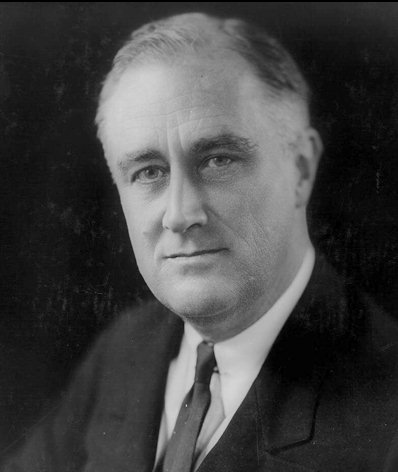
The Democratic Presidential candidate John Edwards is potentially the person most likely to realign the two major political parties for the next generation or two. Edwards is a Democratic political leader who is not only closely mirroring FDR as a historical figure but is doing so by following in the same political and economic traditions as FDR. The main differences are personal backgrounds and accents.


During the 1930’s, President Roosevelt essentially ended the dominance of the “Bourbon Democrats” in national Democratic politics and moved the Democratic Party solidly behind a political program of economic populism. As a result, the nation saw a couple generations of solid economic growth and mass prosperity.


A vibrant middle class emerged from the policies promoted by FDR. The Democratic Party clearly replaced the Republicans as the stronger of the two major parties as a result. Beginning with the election of Ronald Reagan, many Democrats in power drifted away from the core values of the Democratic Party and started running as “Republican-lite” candidates. They started trying to compete for corporate campaign money by permitting awful trade agreements that undermined the health of the American economy and weakened the American middle class while helping the economic elite become even more powerful.


Some Democrats playing footsie with Republicans and large corporations failed working Americans and the poor by letting the obscenely wealthy start paying much lower percentages of their incomes in federal taxes than the middle class majority. Many Democrats started turning their backs on some common sense elements of the Roosevelt tradition of having those able to pay higher taxes pay them. We call this progressive taxation.


The rich pay should be paying higher tax rates since they have more influence on government policies and benefit more from them. They completely abandoned our federal government commitment to preventing monopoly control by large corporations of many important aspects of everyday life. Price-gouging has become routine. Insider trading and excessive executive pay has become routine in the corporate world.


Wealthy foreign corporations are often having more impact on government policies than the needs of average Americans. Media consolidation has blocked out almost all non-corporate voices in the discussion of public policy issues. Edwards wants less corporate control over everyday life and has specific programs in mind to move in that direction.


The wages of Americans have been suppressed. The ability to unionize in order to achieve higher standards of living has been attacked by federal legislation, right wing court rulings and harassment by oppressive federal government regulation by the Bush Administration.
Edwards is the most labor-friendly Presidential candidate of the top-tier candidates. With Edwards, we have a candidate who both walks the walk and talks the talk. Edwards is strongly opposed to outsourcing American jobs and is committed to ending unfair international trade deals or tax policies that encourage corporations to move jobs out of the nation.


Poverty in America has largely been ignored by our political leadership since the 1980’s. We waste trillions of dollars fighting unnecessary wars but seem unwilling to seriously commit to eliminating institutionalize poverty. Edwards is the only candidate really talking about poverty in America. Poverty is a serious issue in many rural American communities and inner cities. Most candidates ignore the poor because they do not write big campaign donation checks. Edwards can give the poor hope and get them voting.


We remain the only nation out of the 75 most economically advanced nations not to have government guaranteed universal health insurance. We cripple our corporations in international competition by forcing them to provide for healthcare. As a nation we spend 17% of our economy on healthcare while our competitors spend 8%. Our competitors cover all citizens while we have 47 million uninsured citizens and even more underinsured. If we had not abandoned our FDR political traditions, this situation would have been corrected long ago.


Edwards is committed to universal healthcare. John Edwards is uniquely focused on returning Democrats to their FDR roots of economic populism. The Bush Republicans are committed to short-term “Greed Capitalism” that is as self-destructive as the Republican policies of the 1920’s.


FDR saved American capitalism by reforming it with the New Deal. Edwards can do the same. Edwards can restore the FDR coalition by running as an economic populist.


He can win in places like North Carolina, Florida, Colorado, Virginia and Oklahoma. Edwards might even win in places like Texas. He can win without abandoning Democratic traditional values. Edwards can carry rural communities and small towns without going Republican-lite. Edwards will carry all the traditional Democratic areas and much more because he truly represents Main Street instead of Wall Street.


Although from a working class background instead of coming from great inherited wealth, Edwards is much like our greatest American President, Franklin D. Roosevelt. Edwards has similar views with a Southern accent.


Written By Stephen Crockett and Al Lawrence (hosts of DemocraticTalkRadio.com and Editor of Mid-Atlantic Labor.com).Mail: P.O. Box 283, Earleville, Maryland 21919. Phone: 443-907-2367

Saturday, December 22, 2007

CBO data shows that income inequality hits new heights


Analysis of recently released Congressional Budget Office data by the Economic Policy Institute (EPI) shows the income gap between the very rich and the rest of us is growing at a historically fast pace. EPI senior economist Jared Bernstein reports his analysis of the data in the blog TPM Café and in a detailed, illustrated issue brief, Updated CBO data reveal unprecedented increase in inequality, released by EPI. Bernstein’s analysis was included in a recent New York Times article on the topic.


(From TPM Café)


Boy, Have We Got an Inequality Problem


By Jared Bernstein


The Congressional Budget Office (CBO) just updated their invaluable data series on income inequality and the results are startling. Income inequality among households, both before and after Federal taxes, grew more quickly over the last two years of the series, 2003-05, than over any other two-year period on record, back to 1979.


Over those two years, the growth of inequality transferred $400 billion dollars from the bottom 95% to the top 5%. That is, had the income distribution remained as it was in 2003, the income of each of the 109 million households in the bottom 95% would have been $3,660 higher in 2005.


If this is the ownership society at work, I think we need to have a serious talk with the owners.


If we break households in groups of 20% each by income, well over half of household income (55%) was held by the richest fifth in 2005, the highest such share on record;


The share of income held by the top 1% has climbed from 9% in 1979 to 18% in 2005.
After-tax income of the bottom 20% grew 6%, or $1,800 over these years (1979-2005, in 2005 dollars); the middle-class gained $11,000, up 21%, over these 26 years. The average income of the top 1%, more than tripled, up 228%, for a gain $781,000.


By 2005, the average post-tax income of the bottom fifth was $15,300, the middle fifth: $50,200, and the top 1%: $1.1 million.


These hugely different growth rates have led to much greater economic distance between income classes over the years. Back in 1979, the post-tax income of the top 1% was 8 times higher than that of middle-income families and 23 times higher than the lowest fifth. In 2005, those ratios grew to 21 (top compared to middle) and 70 (top to bottom), a vast increase in the distance between income classes.


Lest we forget, before our current problems in housing and financial markets developed, the overall economy grew solidly over this recovery, with notably strong productivity growth. Aggregate household income, according to these CBO data, grew $1.1 trillion, 2003-05. But, to put it mildly, these gains have failed to flow broadly throughout the income scale, and the extent of their concentration at the top of the income scale is historically unique. Just under two-thirds (63%) of the gain in household income from 2003 to 2005 went to just 5% of the nation’s wealthiest households.


Such concentration of income is unsustainable in a democratic society. The distributional mechanisms that have historically worked to ensure much more equitable outcomes appear to be wholly inoperative. Fixing them must be at the heart of any serious economic policy discussion.

How rank-and file-Democrats lost and can recapture their party


Former Ambassador and Boston Mayor Ray Flynn has highly recommended a new book by Mark Stricherz titled Why The Democrats Are Blue (Encounter Books, 2007). I don't agree entirely with Stricherz's thesis but it does give much history of how the culture war destroyed the Democratic New Deal Coalition, divided our nation and led to the present ideological polarization that has paralyzed Washington. And most importantly, Stricherz suggests ways that rank-and file Democrats with economic populist-social tradionalist values can regain a place at the table within Democratic circles. While reclaiming with the Democratic Party will be difficult to accomplish, populist voters can hardly find encouragement in watching the Republican candidates parrot free market platitudes as middle class families lose their medical coverage, jobs and homes.

The party that can actually govern - not just win narrow 51-49 election victories - will have to find a way to bridge the red-blue divide. Democrats moving to the center on social issues and focusing on being the party of working families could end the culture war or at least give us a cease fire long enough to solve some urgent problems like how we attain energy independence, expand access to health care and create decent paying jobs for Americans.
Below is the introduction to Stricherz's excellent book.

Introduction: Why the Democrats are Blue by Mark Stricherz

The Democrats limped out of Chicago divided and discouraged, the latest casualties in a culture war that went beyond differences over Vietnam. It would reshape and realign American politics for the rest of the century and beyond, and frustrate most efforts to focus the electorate on the issues that most affect their lives and livelihoods, as opposed to their psyches. The kids and their supporters saw the mayor and the cops as authoritarian, ignorant, violent bigots. The mayor and his largely blue-collar ethnic police force saw the kids as foul-mouthed, immoral, unpatriotic, soft, upper class kids who were too spoiled to respect authority, too selfish to appreciate what it takes to hold a society together, too cowardly to serve in Vietnam … Much of my public life was spent trying to bridge the cultural and psychological divide that had widened into a chasm in Chicago.
— Bill Clinton, My Life: The Early Years

With the race for the 2008 election underway, it’s tempting to conclude that the Democratic Party’s presidential candidates can ignore former President Clinton’s warning about the culture war. There is a rough consensus that the Democrats are favored to take back the White House; that Democrats, as they did in the 2006 midterms, will do so by riding voter disenchantment with President Bush’s handling of the Iraq War; and that the party’s candidates, as Senators Hillary Clinton and Barack Obama already have done rhetorically, will reach out to culturally conservative religious and blue-collar voters.

The conventional wisdom is reasonable enough. If Iraq continues to haunt the Republicans, the economy nosedives, or the Democratic presidential nominee makes a major concession to social conservatives, the Democrats probably will win the White House. There will be joy in Berkeley and Oakland, Evanston and Chicago, Cambridge and Boston.

But the conventional wisdom is short sighted. Should the bad news from Iraq recede, the economy stay strong, and the Republicans nominate a cultural conservative, more voters are likely to make abortion and homosexuality voting issues. In the past five presidential elections, the percentage of Americans who vote on social issues has swung between one-seventh and more than one-fifth of all voters. Given that the vast majority of “values voters” vote for the more culturally conservative candidate, the Democrats might well lose the presidency.

Again.The “Social Issue” has played a major role in keeping a Democrat out of the White House in six of the last nine elections. When Ben Wattenberg and Richard Scammon coined the term in their 1970 classic The Real Majority, the Social Issue comprised race, crime, and values. Although President Clinton helped diminish the importance of the first two, Democrats continue to stumble over values issues. As David Carlin, former Democratic majority leader in the Rhode Island state senate, has argued,

As the Civil War approached, the Democrats took the wrong position on slavery, and they found themselves, except for a few episodes of prosperity, America’s minority party from the election of Abraham Lincoln in 1860 until the election of Franklin Roosevelt in 1932. At the time of the Great Depression of the 1930s, the Republicans took the wrong position on the social and economic welfare responsibilities of the federal government, and they remained America’s number-two party until the coming of Ronald Reagan and Newt Gingrich in the 1980s and ‘90s. Today the Democrats are taking the wrong position on morality and religion, which may doom them to remain America’s minority until well into the twenty-first century.

The wrong position that national Democratic leaders have taken is that of secular liberalism. They oppose extending any legal protections to an unprotected class of human beings — unborn infants. And they favor granting public benefits for homosexual couples. Considering that the national party was known as “the party of the little guy” and led by Catholic big-city and state bosses, the post-1968 party’s support for secular liberalism qualifies as a revolution, not an evolution.

So why did the national Democratic Party side with secular liberals (“the kids and their supporters”) rather than religious traditionalists (“the mayor and his largely blue-collar ethnic police force”)? The question is of more than historical interest. To political observers, it should affect how they evaluate the Democratic presidential candidates. To those disgruntled with the national Democratic leadership, it should affect how they seek to reform the party.

I got a chance recently to pose this question to Bill Clinton, when he attended a funeral service at the National Cathedral in Washington for Eugene McCarthy. Clinton had delivered a eulogy for the former Minnesota senator, who in his 1968 campaign ran against the "immoral" Vietnam War and "autocratic" Democratic bosses like Mayor Daley. After the service, Clinton ambled over to the southeastern part of the Cathedral, pausing to smile, laugh, chat, and take pictures with those in the crowd. Spotting a lull in his repartee, I asked the former president if he thought whether the McCarthy movement was the transition between the old party, which was formed into the New Deal or Roosevelt coalition, and the current party. He paused for seven or eight seconds, looked away briefly, and pursed his lips.

"Yes and no," Clinton said plainly. "I think that he reflected the beliefs that Democrats had in the '60s. He didn't want to give up the old members of the party, the blue-collar workers. He was someone who, as you heard today, had grown up in a small town. He didn't think that because blue-collar workers favored the war, they would leave the party. And I think he would have been appalled at the massive cultural change that took place between the two parties. A lot of the things that happened in '68 caused that.”

When I tried to ask a follow-up question, he tapped me on the wrists with his large left hand. "I'm fixin’ to say something," he said. "I lived through that time, and I loved Bobby Kennedy, but if you look at what he was doing to get the support of blue-collar workers, he was making very emotional appeals and speeches. See, what McCarthy was trying to do was to get them off the farms. I think they understood that he was from Minnesota and had worked a combine. So they could oppose the war just like the kids were. He tried to talk to them in more of a calm tone [than did Kennedy].” Clinton then got around to addressing the culture wars: "I think he would have been repulsed — I think it would have made him sad — that urban, rural, and suburban voters were voting on guns, gays, and whatever. It all started in the late '60s.”

Clinton is right to focus on the McCarthy movement and the culture war. When political observers discuss the revolution in the national Democratic Party, they focus on the defection of the South in response to the passage of civil rights legislation in the 1960s. Their explanation isn't crazy, but it's only half the story. Like them, Clinton failed to identify the real reason that the national Democratic Party sided with secular liberals instead of religious traditionalists. It’s ironic because in the summer of 1969 Clinton visited a friend in Washington who was interning for the McGovern Commission and made the acquaintance of a commission member.

Officially known as the Commission on Party Structure and Delegate Selection, the commission was approved at the very gathering that Clinton deplored, the 1968 Democratic National Convention in Chicago. The 28-member panel is best known for creating the modern presidential nominating system, in which primary and caucus voters rather than big-city and state bosses choose the party’s presidential nominee. It is also known for its first chairman, Senator George McGovern, who won the party’s nomination in 1972.

Otherwise, the McGovern Commission has been ignored, an obscure panel whose notoriety is not even one-one hundredth of that of the Warren Commission or 9/11 Commission. This is understandable. The McGovern Commission was overlooked during its existence from 1969 to 1972 and sank into obscurity afterwards. It has not been re-examined by journalists and historians since the early 1980s. This book is the first account of the McGovern Commission in a generation. It draws on interviews with nearly all of the active participants. The book is also based on extensive archival material, featuring memos, personal notes, and oral history interviews from the collections of Harry Truman, John F. Kennedy, Hubert Humphrey, Lyndon Johnson, George McGovern, and Jimmy Carter.

The most significant consequence of the McGovern Commission is that the Democratic Party’s coalition changed and shrank. The New Deal or Roosevelt coalition had included white Southerners, Catholics, union members, blacks, and intellectuals. Under this coalition, the national party was a majority party, and its presidential candidates won seven of the ten elections from 1932 to 1968.

The McGovern Commission destroyed this old electoral alliance and replaced it with a Social Change coalition led by secular liberals. The Commission pushed through a rules change that required informal delegate quotas for women and young people. The proposal had three major consequences. First, while the Democratic coalition added feminists and secular professionals, it drove away blue-collar workers and Catholics, many of who became Reagan Democrats. Second, it broke the Democratic Party’s longstanding alliance with the Roman Catholic Church. Third, it reduced the number of Democratic constituents. According to party strategists William Galston and Elaine Kamarck, only 21 percent of the electorate identifies as liberal, while 34 percent identifies as conservative.

The fourth consequence of the McGovern Commission is that the Democratic Party’s nominating system reduced the clout of traditional Democrats. Under the old boss system, big-city and state politicians chose the nominee based on the candidate’s perceived ability to help the local ticket back home. While the boss system was undemocratic as a procedure, it was democratic in substance, nominating candidates from every wing of the party between 1932 and 1968.

Demolishing this system was a top goal of several commission aides. The aides created a nomination process that would ensure the nomination in 1972 of a candidate committed to ending the Vietnam War. Under the new system, college-educated and upscale Democratic voters and activists vote for the nominee based on the candidate’s ability to win and conform to their ideological preferences. To be fair, the activist system is more democratic as a procedure than the boss system. But the activist system is also internally undemocratic. It relies on gender and racial quotas for the party’s presidential delegates: those who attend the national convention. The activist system is also less democratic in substance. Not since 1972 has a major Democratic presidential candidate ran as a social conservative.

The fifth consequence of the McGovern Commission is that secular, college-educated professionals hijacked control of the party machinery and imposed their own secular, college-educated agenda. The old presidential or national wing of the Democratic Party had been in the hands of Northern Catholic bosses. Although an elite group, they delivered regularly for their cross-racial, working-class constituents, helping make possible the legislation of the Fair Deal, the New Frontier, and the Great Society. In contrast, the party’s new presidential wing has decreased the likelihood of American troops fighting overseas and stopped the GOP from repealing most federal social programs. However, it has not passed any major domestic initiatives, allowed Republicans to advance their economic agenda of turbo capitalism (e.g. lowering of the capital gains tax and taxes on the wealthiest Americans), and excluded socially conservative Democrats from the national stage.

To millions of Americans devoted to the old Democratic Party, the story of the McGovern Commission and its legacy is a tragedy — a classic tale of understandable but impure motives, an ends-justify-the-mean mindset, hypocrisy, rationalization, and hubris.

The first chapter explores the moral and cultural alienation of many Catholic and blue-collar workers from the Democratic Party. Focusing on several voters in one county in western Pennsylvania, it tells the stories of these “Caseycrats,” who favor liberal or populist economic policies and conservative cultural ones. They once favored Democrats based on economic issues, but they oppose the national party’s secular liberalism. The opposition of such voters has cost Democratic presidential candidates the last two elections, as the party’s own pollsters confirm. Although the national party's commitment to cultural liberalism attracts upscale voters, it also repels downscale voters, who represent nearly three in five of all voters in presidential elections. Why did the national party repel such voters? The standard answers are appealing but fail to explain the magnitude of the change.

The second chapter examines the overriding virtue of the boss nomination system: It was democratic in substance. David L. Lawrence, as mayor of Pittsburgh and governor of Pennsylvania, was known as “Mr. Democrat” in western Pennsylvania. Lawrence not only sought to extend legal protection to an unprotected class of human beings, black Americans, by playing a key role in passing the civil rights plank at the 1948 Democratic convention. He also played a key role in choosing every presidential nominee from Truman to Johnson. Lawrence, Mayor Richard J. Daley of Chicago, and John M. Bailey, boss of the Connecticut state party, exemplified the strengths of the boss nomination system. They were more ethical and less sectarian than their predecessors; still retained patronage, which kept them close to voters; delivered for their cross-racial, working-class constituents; went beyond their base to choose the party’s presidential nominees; and had no litmus test other than the candidate’s perceived ability to win.

The third chapter examines the main defect of the boss nomination system: It was undemocratic as a process. The Lawrence Commission (1965-68) did make the boss system more democratic. However, antiwar Democrats were marginalized in 1968. Consequently, young aides to Gene McCarthy’s campaign succeeded in passing a minority report at the Chicago convention that sought to democratize the nomination process.

The fourth chapter explores how secular activists overthrew the party bosses: by acting like old-style bosses. Young McCarthy aide Eli Segal feared that his efforts in 1968 to reform the party’s nomination system would fail. Although party officials appointed a successor to the Lawrence Commission, which became known as the McGovern Commission, Segal believed that party regulars would undercut the commission. Consequently, Segal created a small executive committee within the McGovern Commission to control the commission’s agenda. Rather than making the executive committee broadly representative of the party, he stacked it with supporters of the New Politics. While Segal and other former McCarthy aides were drawing up their preferred rules changes, they gave off the appearance of having consulted with the other wings of the party. In truth, they flew ideologically sympathetic commissioners in for key votes, coached Representative Allard Lowenstein of New York before a commission hearing about his testimony, and misleadingly claimed that Democrats endorsed their version of party reform.

The fifth chapter reveals the true motives of the activists in wresting control of the party machinery. It focuses on Fred Dutton, the chief designer and builder of the post-1960s Democratic Party. While serving on the Board of Regents at the University of California in the 1960s, Dutton believed that baby-boomers and college students were the future of American politics. Unlike the founders of the Democratic Party and Robert F. Kennedy, whose 1968 campaign Dutton managed, Dutton wanted to reduce the party’s ties with working class whites. Like theoreticians of the New Left and New Politics, Dutton believed that the cultural agenda of students should outweigh that of blue-collar workers. The chapter also shows how Segal, Anne Wexler, and Ken Bode sought to scrap the boss system in favor of a new activist system, which would be based on participatory democracy, in which voters discussed the candidates. Segal, Wexler, and Bode were motivated by their opposition to the Vietnam War specifically and the military-industrial complex in general. Bode proposed informal quotas as presidential delegates for women and young people, the two groups most likely to oppose the war.

The sixth chapter examines the first result of the McGovern Commission’s rules changes: Liberation feminists entered the Democratic coalition. In November 1971, leaders of the National Women’s Political Caucus, a newly formed nonpartisan group, met with DNC officials in Washington. The women demanded that they enforce the quotas passed by the McGovern Commission. DNC officials complied. At the time, it was unclear whether the emerging feminist movement would side with the Republicans, Democrats, or form a third party. An upper class and secular group, the feminists immediately sought to remove legal protection for a class of human beings, lobbying on behalf of an abortion plank at the 1972 Democratic convention.

The seventh chapter examines the second result of the commission’s rules changes: McGovern won the party’s presidential nomination in 1972. McGovern faced long odds in his bid. He had thin or frayed relations with union leaders, Catholics, and blacks; and his main issue, opposition to the war, was losing steam politically. But McGovern recognized that the party’s new nomination system had been revolutionized. So he became the candidate of liberal activists; used his chairmanship of the McGovern Commission to tell party leaders that he would not form a third- or fourth political party; and ran on Dutton’s Social Change coalition. His strategy worked, sort of. On the one hand, McGovern won the party’s nomination. On the other hand, Catholics and white working-class voters defected to the Republican Party in November.

The eighth chapter details the third result of the commission’s rules changes: secular liberals completed their takeover of the national party. No individual Democrat could stop them. DNC Chairman Robert Strauss, a staunch party regular, in the early-to-mid-1970s was unable to release their grip on the party machinery. Jimmy Carter, as both a presidential candidate and president, was unable to prevent secular feminists from controlling the party platform in 1980. And Bill Clinton, as a presidential candidate in 1992, was unable to prevent feminists from denying a speaking slot at the 1992 convention to Governor Robert Casey of Pennsylvania. As a result of this takeover, support for a once-great national party has dwindled to “blue” states on the coasts and Great Lakes region.

The afterword argues that the Democratic Party can return to being a People’s Party. To do so, party officials will have to shift power to the people. State caucuses and conventions, which reward highly motivated activists rather than ordinary voters, should be abolished. Independent voters, rather than Republican voters, should be allowed to participate in state primaries. Demographic quotas for delegates should be repealed. Super-delegates should be eliminated. And swing states should hold the first primaries in the nation. Enacting this package of reforms would dilute the power of party activists, but it could revive a once-great party.

http://whydemocratsblue.com/


Friday, December 07, 2007

SC Democratic officials back public school choice


The Sunday opinion pages of Charleston's Post and Courier http://www.charleston.net/ featured an editorial about growing support among Democratic elected officials in South Carolina for education reform. I cannot think of a position more in line with Democratic Party traditions than public school choice which will help improve the odds that all students have the opportunity to receive a quality education. Giving parents the option of selecting their children's public school is a step in the right direction.

The Post-Courier editorial board writes:

Education's rise to prominence as a political issue over the last two decades inevitably has been accompanied by heated debate over how best to improve public schools. But a welcome consensus, across party lines, is developing in recognition that one indisputable means of making public education better is to give families more educational choices. Many who once were wary of school choice now embrace it, rightly persuaded by its proven, positive results.

Sixth District Rep. James E. Clyburn, majority whip of the U.S. House, hails such gratifying school-choice success at a charter school in Harlem, N.Y., on today's Commentary page. Praising S.C. Education Superintendent Jim Rex's determination to expand choice in our state, Rep. Clyburn writes: "I believe every parent should be given the right to choose a public school or program for their child that is the best environment for that student."

Rep. Clyburn and Dr. Rex have more in common than a strong belief in public-school choice.
They're both Democrats.

Their party affiliation is significant in light of past resistance by many professional educators, a voting bloc that tends to support Democrats, to the general concept of school choice and its specific elements of charter and magnet schools.

That resistance is receding. Yes, political differences persist on school choice, in our state and across the nation. Gov. Mark Sanford vetoed a school-choice bill passed by the General Assembly, and strongly supported by Dr. Rex, earlier this year, citing its lack of private-school options. There remains substantial opposition, primarily from Democrats, to making private schools part of school-choice initiatives.

But a growing number of political leaders now appear eager to foster educational innovation and parental involvement by vastly broadening choices within the public-school system.
As all South Carolinians should, regardless of their parties or ideologies, they refuse to accept an educational status quo that for far too long has left far too many children in struggling schools that aren't meeting their — and our — needs.

Our state's economic future will be dismal without substantial progress by our public-education system. Providing more choices within that system should be a cause that draws widespread, bipartisan support.

As Rep. Clyburn convincingly writes: "We have the opportunity to be visionary in South Carolina on the issue of public-school choice."

With growing bipartisan backing for educational choice, we have the opportunity to make such a vision a reality.

Wednesday, December 05, 2007

Casey introduces Pregnant Women Support Act


Democrats For Life of America announced today that Senator Robert Casey (D-PA) introduced the Pregnant Women Support Act into the United States Senate. S. 2407, similar to legislation (H.R. 3192) introduced by Lincoln Davis (D-TN) earlier this year in the U.S. House, is designed to reduce the number of abortions by aiding those women who feel they have no other option.

"We applaud Senator Casey for leading the charge to reduce the abortion rate in this country by helping pregnant women," said DFLA's Executive Director, Kristen Day. "Our goal since the beginning was to craft a bill that would find common ground and have a positive chance of not only becoming law, but truly helping pregnant women and their families. Senator Casey's leadership will help tremendously with our goal to reduce the abortion rate by 95 percent in 10 years."

The battle over abortion in the United States has long been characterized by bitter partisan rhetoric and suspicion. This bill will help shape a common-sense solution that people on all sides of the political spectrum can support. DFLA believes that it should be the goal of all people to end abortion in this country and to help mothers and young children.

"The Pregnant Women Support Act is about showing that it is possible for people from different ideological positions to come together and help those who are in need," said DFLA Executive Director Kristen Day. "All Americans should be strongly in favor of helping mothers and saving babies, regardless of their political ideology or position on the legality of abortion."

One of the key provisions of the proposal calls for banning the discriminatory practice against pregnant women in the health insurance industry by removing pregnancy from all "pre-existing condition" lists in health care. Other provisions call for making adoption tax credits permanent, provides grants for low-income parenting college students, fully funding the federal WIC program, increased funding for domestic violence programs, and provides free home visits by registered nurses for new mothers.

Since its founding, Democrats For Life has propounded what they see as a more consistent approach to being pro-life, challenging both the pro-life community to broaden its view of defending life and also the Democratic Party to come back to its roots of defending those who cannot defend themselves. They hope that this bill will further both objectives, as well as create common ground for all to stand on in the fight to defend human life.
The 95-10 Initiative is a comprehensive package of federal legislation and policy proposals that will reduce the number of abortions by 95% in the next 10 years.
Remarks of U.S. Senator Bob Casey (D-PA)
December 4, 2007

Mr. President, I rise today to speak about a member of the American family for whom we all care, but for whom we don’t do nearly enough to support: pregnant women.

I remember the times my wife Terese learned she was pregnant, and even though I can never experience it directly, I know through her and my sisters that there is one indelible and unforgettable moment when a woman finds out she is pregnant. For many women, this is a moment of great joy, the miracle of pregnancy. Perhaps it has been long awaited or perhaps it is something of a surprise, but it is welcome. Many of these women don’t need help beyond what their families provide and others may receive adequate support within our existing framework of programs and services.

But there is another circumstance that a pregnant woman may face. For that woman, the moment of discovery is not a moment of joy. For her, it is a moment of terror, or panic or even shame. She may be in a doctor’s office or clinic or she may be at home. For her, that moment begins a crisis in which she feels overwhelmingly and perhaps almost unbearably alone. She could be wealthy, middle income or poor, but most likely poor. Whatever her income, she feels, very simply, all alone.

A pregnant woman may have an abusive spouse or boyfriend who is tormenting her. She is all alone.

Another pregnant woman may believe that she cannot support or care for a new baby at this point in her life. She is all alone.

Another woman might believe that her financial situation is so precarious that she cannot care for and raise a child. She may feel alone and helpless.

We know that 48 percent of all pregnancies are unintended and, excluding miscarriages, 54 percent of unintended pregnancies end in abortion. The response “cannot afford a baby” is the second most frequently cited reason why women choose to have an abortion and 73 percent of women having abortions cited this reason as a contributing factor.

A woman who is facing the challenges of an unplanned pregnancy that may be a crisis for her does not need a lecture from a politician or a clinical reminder that she has a simple choice to make. The choice is never simple. Never. This woman needs support and love and understanding. She needs to be embraced in her time of crisis, not sent on her way to deal with it on her own. She needs our help to walk with her, not only throughout the nine months of her pregnancy, but also for the early months and years of her child’s life.

We in the Congress, in both the House and Senate and both parties, need to address this issue in a comprehensive way that meets these needs. Some members have initiated good efforts and we should applaud and support those efforts, but I believe that neither political party is doing enough for pregnant women in America today. While there is tremendous disagreement on how we can best do this, there is one significant area of common ground – one thing we all agree upon. We all want to reduce the number of abortions.

Many women who have abortions do so very reluctantly, and while “choice” is a term that is widely used in this debate, many women who face unplanned pregnancies do not feel they have a genuine choice. That is why I am introducing the Pregnant Women Support Act. With this bill, it is my fervent hope that a new dialogue – a common ground – will emerge on how we can reduce abortions by offering pregnant women real choices:

This bill will:

Assist pregnant and parenting teens to finish high school and prepare for college or vocational training;

Help pregnant college students stay in school, offering them counseling as well as assistance with continuing their education, parenting support and classes, and child care assistance.

Provide counseling and shelter to pregnant women in abusive relationships who may be fearful of continuing a pregnancy in a crisis situation;

Establish a national toll-free number and public awareness campaign to offer women support and knowledge about options and resources available to them when they face an unplanned pregnancy;

Give women free sonogram examinations by providing grants for the purchase of ultrasound equipment;

Provide parents with information about genetic disability testing, including support for parents who receive a diagnosis of Down Syndrome;

Ensure that pregnant women receive prenatal and postnatal care by eliminating pregnancy as a pre-existing condition in the individual healthcare market and also eliminating waiting periods for women with prior coverage;

Establish nurse home visitation for pregnant and first time mothers as an eligible benefit under Medicaid and SCHIP. One example of this is the Nurse-Family Partnership, an evidence-based program and national model in which nurses mentor young first-time and primarily low-income mothers, establishing a supportive relationship with both mother and child. Studies have shown this program to be both cost effective and hugely successful in terms of life outcomes for both mothers and children;

Increase funding for the Women, Infants and Children Program, providing nutrition assessment, counseling and education, obesity prevention, breastfeeding support, prenatal and pediatric health care referrals, immunization screening and referral, and a host of other services for mothers and children;

Expand nutritional support for low-income parents by increasing the income eligibility level for food stamps;

Increase funding for the Child Care and Development Block Grant, the primary source of federal funding for child care assistance for low-income parents;

Provide support for adoption as an alternative to abortion, and make the adoption tax credit permanent.

Mr. President, I introduce this bill with the deepest conviction that we can find common ground. I believe that we can transform this debate by focusing upon the issues that unite us, not the issues that divide us. It’s well known where I stand on these issues. I am a pro-life Democrat. I believe that life begins at conception and ends when we draw our last breath. I believe that the role of government is to protect, enrich, and value life for everyone, at every moment, from beginning to end. And I believe that we as a nation have to do more to support women and their children when they are most vulnerable – during pregnancy and early childhood.

I support family planning programs because they avoid what can be a dark moment, when a woman, often alone, faces a pregnancy she feels she can’t handle. I support family planning programs precisely because they reduce abortions. But that is not the issue I address today. Today, with this bill, I am focused on the woman who is pregnant and I am asking a question we should all be asking: “What more can I do?” “What more can we do for pregnant women who need our help?”

I believe there is more common ground in America than we might realize – if only we focus on how we can truly help and support women who wish to carry their pregnancies to term and how we can give them and their babies what they really need to begin healthy and productive lives together.

For the past 34 years, the abortion issue has been used mostly as a way to divide people, even as the number of abortions remains unacceptably high. We have to find a better way. I believe the Pregnant Women Support Act is part of that better way. We must work toward real solutions to the issue of abortion by targeting the underlying factors that often lead women to have abortions. This is precisely what the Pregnant Women Support Act will do.

We need to walk in solidarity with pregnant women who face unplanned pregnancies and who need our support and help, not our judgment. Mr. President, that is exactly what this bill does for that woman who finds herself alone as she faces what may be the most difficult experience of her entire life: the woman who has no one to turn to for advice, for counsel, for support. I truly believe there are few things more terrifying than the prospect of supporting another human being when you have no support of your own.

Reducing the number of abortions should not be a partisan issue. It should not pit Democrats against Republicans. I seek common ground. I ask my colleagues on both sides of the aisle to join me in seeking real solutions that will unite us in providing life with dignity, before and after birth, for pregnant women, mothers and children. Surely we must all agree that no woman should ever have to face the crisis of an unplanned pregnancy alone. Thank you Mr. President, and I yield the floor.


Saturday, December 01, 2007

Harold Ford proposes a middle class flat tax


Former Congressman and Democratic Leadership Council Chairman Harold Ford has an excellent tax reform proposal to benefit middle and working class Americans. I have my differences with the DLC especially on economic issues but Ford's idea appears to be sound public policy and good politics. Ford is handing Democrats the kind of idea that wins elections.


Making his case for a middle class flat tax in a Washington Times column http://www.washingtontimes.com/ published on November 29, Ford states: "This is simple and fair: no middle-class family with an income of under $150,000 should ever pay an effective tax rate of more than 10 percent. If what they owe after calculating their taxes is more than 10 percent of their income, they won't have to pay a dime above 10 percent. If they owe less than 10 percent, they pay the lesser amount."


Ford writes:


We ended the last century with America's economic might at its zenith, with Americans at their most optimistic, and with nearly all who endeavored to make the most of their opportunities and talents getting ahead in life. John F. Kennedy's declaration that a rising tide will lift all boats was alive and well.


Middle-class Americans generate little or no national savings. We've had four straight years of rising productivity and falling incomes. Many Americans are earning less, while the costs of a middle-class life have soared: In the last five years, college costs are up 50 percent, health care up 73 percent, and gasoline more than 100 percent. Rising housing costs have driven people farther and farther from their work.


These trends undermine our way of life because middle-class strength and growth represent the backbone of American life.


Our national political discussion about how to grow the middle class often becomes just that, a political discussion punctuated by harsh talk of "class warfare." In fact, class warfare is under way — as billionaire Warren Buffet is fond of saying — and the middle is not winning.


To address the challenges of the middle class, Democrats should advance an agenda that aims to do something loftier than just repeal the Bush tax cuts on millionaires. It should boost incentives for average Americans to increase savings and investments, and help them participate more fully in the upside of economic growth.


As Ford argues for a middle class flat tax, many Republicans are promoting tax changes that would transfer more wealth to the super rich.


Writing in today's LA Times http://www.latimes.com/, columnist Michael Kinsley exposes the flaws in the so-called flat tax and fair tax proposals of Republican Presidential contenders Fred Thompson and Mike Huckabee. As Kinsley points out, middle and working class Americans would pay higher taxes as the rich get huge reductions in taxation under these GOP plans.


Kinsley writes:


The central gimmick of Fred Thompson's recently announced tax plan is to offer people a choice. They can pay taxes under the current rules -- with some juicy new breaks added from the big- and small-businesses wish lists -- or they can pay a so-called flat tax, with lower rates and fewer deductions. So anyone who wants a simpler tax code could have one. But for people who get a lot of deductions now, the simpler tax would be a higher tax. How many people, do you suppose, would choose simplicity over complexity, even if simplicity would cost them more? My bet: approximately zero.


Like most flat-tax advocates over the years, Thompson puts a thumb on the scale by combining flatness with a large tax cut. The Congressional Joint Committee on Taxation figures that Thompson's plan would fall a mere $2.5-trillion short of revenue over the next decade, compared with the current system. If you can borrow $2.5 trillion, it makes it easy to arrange for more people to see their taxes go down than up if they choose the flat-tax alternative.But this has nothing to do with simplifying the system.


If you don't care how much debt you run up, you can give everyone a tax cut without bothering about simplification. You can stop collecting tax at all! That would be nice and simple. The real strategy of Thompson's plan is a familiar one from past Republican tax plans: Give large breaks to business and the wealthy (such as abolishing the estate tax), bribe the middle class to go along by offering smaller breaks to them, and don't worry about paying for it all.


Mike Huckabee, currently enjoying his 15 minutes, makes a slightly different political mistake, which we might label, for lack of a better term, "total honesty." He has endorsed something called the Fair Tax proposal, which involves repealing all federal revenue sources -- the income tax, Social Security tax, estate tax, everything -- and replacing them with a 23% sales tax on everything except education.


The Fair Tax propaganda says it is intended to be "revenue neutral." That is, it would bring in just as much money as the taxes it replaces.This makes it easy to figure who would win and who would lose. It's a zero-sum game: Every dollar someone's taxes go down is a dollar someone else's go up. What you spend every year is the amount you earn minus the amount you save.


On average, Americans save practically nothing, but wealthier people save more. Very poor people actually spend more than they earn, while Bill Gates and Warren Buffett couldn't spend more than a small fraction of their income. So wealthy people are going to see their taxes go down, which means that poor and middle-class people are going to see their taxes go up.


Kinsley is right. Thompson and Huckabee are just selling us more "trickle down" snake oil ! We need tax policies that will help working families instead of more tax cuts for the rich. Harold Ford has given Democrats a winning issue with the middle class flat tax. Democratic candidates need to take this idea and run with it.

Sunday, November 18, 2007

Power To Save The World: former foe makes the case for nuclear energy


Gwyneth Cravens was an activist fighting against Long Island's Shoreham nuclear power plant during the 80's. Today, Cravens is supporting expansion of nuclear power plants. Random House has just released a new book by Cravens titled "Power To Save The World." She explains her reversal on this issue in a recent NPR interview and video clip from ForaTV.
Here is a summary of "Power To Save The World" from the publisher's website:
In this timely book, Gwyneth Cravens takes an informed and clarifying look at the myths, the fears, and the truth about nuclear energy.
With concerns about catastrophic global warming mounting, it is vital that we examine all our energy options. Power to Save the World describes the efforts of one determined woman, Gwyneth Cravens, initially a skeptic about nuclear power, as she spends nearly a decade immersing herself in the subject. She teams up with Dr. D. Richard Anderson, a leading expert in risk assessment and nuclear safety who is also a committed environmentalist, to trace the path of uranium—the source of nuclear fuel—from start to finish. As we accompany them on visits to mines as well as to experimental reactor laboratories, fortress-like power plants, and remote waste sites normally off-limits to the public, we come to see that we already have a feasible way to address the causes of global warming on a large scale.
On the nuclear tour, Cravens converses with scientists from many disciplines, public health and counterterrorism experts, engineers, and researchers who study both the harmful and benign effects of radiation; she watches remote-controlled robotic manipulators unbolt a canister of spent uranium fuel inside a “hot cell” bathed in eerie orange light; observes the dark haze from fossil-fuel combustion obscuring once-pristine New Mexico skies and the leaky, rusted pipes and sooty puddles in a coal-fired plant; glimpses rainbows made by salt dust in the deep subterranean corridors of a working nuclear waste repository.
She refutes the major arguments against nuclear power one by one, making clear, for example, that a stroll through Grand Central Terminal exposes a person to more radiation than a walk of equal length through a uranium mine; that average background radiation around Chernobyl and in Hiroshima is lower than in Denver; that there are no “cancer clusters” near nuclear facilities; that terrorists could neither penetrate the security at an American nuclear plant nor make an atomic bomb from its fuel; that nuclear waste can be—and already is—safely stored; that wind and solar power, while important, can meet only a fraction of the demand for electricity; that a coal-fired plant releases more radiation than a nuclear plant and also emits deadly toxic waste that kills thousands of Americans a month; that in its fifty-year history American nuclear power has not caused a single death. And she demonstrates how, time and again, political fearmongering and misperceptions about risk have trumped science in the dialogue about the feasibility of nuclear energy.
In the end, we see how nuclear power has been successfully and economically harnessed here and around the globe to become the single largest displacer of greenhouse gases, and how its overall risks and benefits compare with those of other energy sources. Power to Save the World is an eloquent, convincing argument for nuclear power as a safe energy source and an essential deterrent to global warming.
Link to Huffington Post column on nuclear energy by Gwyneth Cravens.

A Warning from China

RTT News gives us a disturbing report that received little coverage in the mainstream media or in the blogsophere.

11/10/2007 5:06:50 PM During a major military exercise in the Pacific Ocean, U.S. Navy officials are concerned over the unexpected appearance of a Chinese submarine.

Senior NATO officials said that since the Chinese vessel surfaced in the middle of the recent military exercise, U.S. Navy officials have been shocked by the advanced technology used by their Chinese counterparts, The Daily Mail reported Saturday.

One official said that based on the ease at which the submarine avoided 12 U.S. warships to surface near a 1 thousand-foot carrier, Navy officials are reconsidering the potential dangers posed by Chinese subs. While Chinese officials have said the entire incident was a simple coincidence, some U.S. diplomats have accused the vessel of “shadowing” the U.S. fleet during the exercise.

http://www.rttnews.com/


Skelton: Refocus On 'Forgotten War'

Kansas City's KMPC-TV reports:

Missouri Rep. Ike Skelton has a new take on the war on terror -- he is advocating taking some troops from Iraq and sending them to Afghanistan.

Skelton said the Iraq invasion has turned the campaign in Afghanistan into "The Forgotten War," and it is now a place where the Taliban and the drug lords are coming back.

"I believe we must reinforce the success in Afghanistan by sending some portion of the forces being withdrawn from Iraq to Afghanistan," Skelton said Monday in a speech at the Truman Library.

The speech was streamed on the Internet by Webster University as part of its public policy series.

Skelton is chairman of the House Armed Services Committee.

http://www.kmbc.com/news/

Monday, November 12, 2007

Bill Bradley: The New American Story

Politics is stuck,” writes Bill Bradley, in his latest book "The New American Story", but “idealism isn’t dead. It can be reawakened." Bradley calls attention to the polarization of American politics resulting from the power of ideological extremes within both parties and partisan gerrymandering of Congressional districts. Bradley says that the drawing of Congressional districts by partisan politicians in control of state legislatures has reduced the number of competitive U.S. House districts to 40. Since the vast majority of members of the House come from districts that lean heavily toward one party, they often cater to extreme factions within their party to ward off potential primary challenges rather than more moderate and independent-minded voters.

One of the great myths of modern politics challenged by Bradley is the red-blue divide. Bradley cites polling data indicating that 72 percent of blue state voters favor capital punishment and 62 percent in red states oppose job and housing discrimination against gays.

Bill Bradley makes some good points. At some point, we look have to look beyond the ant-hill mentality of single issue fanatics on both sides and focus on the big picture. The party that stands up to the single issue zealots and appeals to mainstream America will be rewarded at the polls. That is not to say that the burning social issues are not important (I happen to be passionate about a number of issues) but a lot of critical matters like energy independence are being downplayed.

I do think certain critical issues have to take priority given the mess that we are in right now thanks to short-sighted politics in both parties. Issues like abortion, gay-lesbian rights, gun control, the role of church and state are not going to be important to us if we lack energy, jobs, housing and health care.


Iraq and Afghanistan Vets Deserve New GI Bill


Our troops returning from Iraq and Afghanistan have endured long deployments and repeat tours of duty. It is time on this Veterans Day to remember these men and women. We must demand that our Congress improve their GI Bill benefits. If these great Americans can make huge sacrifices for our nation, then we have an obligation to repay them with a college education. Furthermore, it should be noted that a 1988 Congressional study found that seven dollars were returned to the national economy for every one dollar spent on the original GI bill. Senator Jim Webb is leading the fight for a GI Bill for post 9-11 veterans and sends this Veterans Day mesage:

As someone who hails from a family with strong military roots, I hold immense personal pride in those who answer our nation's call to duty. My father served our country for 26 years as an Air Force pilot and as a pioneer in the Thor and Atlas missile programs. I was proud to follow in his footsteps, serving as an infantry Marine in Vietnam. My brother served as a Marine helicopter pilot. And my son Jimmy has joined the tradition, recently home from serving as an infantry Marine in Iraq.

If you have served in our nation's military or have friends or family who have served, I want to take a moment to thank you. I'd also like to take this opportunity to share with you an issue I've been working on since my first day in office -- a revitalized GI Bill for our returning Iraq and Afghanistan veterans.

Warmest regards this Veterans Day,

Jim Webb

Under legislation sponsored by Webb (S.22 in the Senate, H.R.2702 in the House), returning service members could earn up to 36 months of benefits, equivalent to four academic years, which would include payment of tuition, books and fees, as well as a $1,000 a month living stipend for those veterans whose military service qualifies them for the program.

The Post-9/11 Veterans Educational Assistance Act of 2007 has been endorsed by the Veterans of Foreign Wars (VFW), Vietnam Veterans of America (VVA), the Air Force Sergeants Association (AFSA), the Enlisted Association of the National Guard of the United States (EANGUS), the Iraq and Afghanistan Veterans of America (IAVA), and the American Association of Community Colleges (AACC).

“Once an enlistment enticement, educational assistance has now become a transition necessity. This legislation is the right thing to do for those who are willing to take up arms and defend this great nation, something less than one percent of Americans are willing to do,” said Frank Yoakum, SGM (ret.), Legislative Director, Enlisted Association of the National Guard of the United States (EANGUS).

“Education is an expensive endeavor; many veterans can not afford to use the current G.I. Bill. The measure proposed by Senator Webb and Congressman Scott is an investment in our troops, an investment in our veterans, and an investment in our nation,” said Eric Hilleman, Deputy Director of Legislative Affairs, Veterans of Foreign Wars (VFW).

Patrick Campbell, Legislative Director for the Iraq and Afghanistan Veterans of America shared the following testimony with the U.S. Senate Committee on Veteran's Affairs on July 31, 2007. Campbell makes a good case for why we need to improve our GI Bill benefits for our service members returning from Iraq and Afghanistan:

Mr. Chairman and members of the Senate Veterans' Affairs Committee, on behalf of the Iraq and Afghanistan Veterans of America (IAVA), thank you for this opportunity to address the issue of VA/DOD Cooperation and Coordination on Educational Assistance.

After World War II, nearly eight million service members (more than half of the entire American fighting force) took advantage of the education benefits afforded them by the Servicemen's Readjustment Act of 1944. A veteran of WWII was entitled to free tuition, books and a living stipend that completely covered the cost of education. Since 1945 over 21,400,000 service members have utilized at least some of their educational benefits and over the past 10 years at least 66% of active duty and 42% of Reservists and National Guard have gone to school on the "GI Bill."

Sixty years later, we are still reaping the benefits of one of the greatest social investment programs ever implemented. A 1988 Congressional study proved that every dollar spent on educational benefits under the original GI Bill added seven dollars to the national economy in terms of productivity, consumer spending and tax revenue. Today we have the opportunity to renew our social contract with our servicemen and women. Iraq and Afghanistan Veterans of America (IAVA) supports reinstating a World War II style GI Bill (S.22 or S. 1409) that will cover the true cost of education.

The current Chapter 30 Montgomery GI Bill, as created in 1984, was conceived in peace-time and contains several obstacles to a veteran trying to use their well-earned benefits. First, active duty educational benefits require a hefty $1,200 initial buy-in. Although nearly 95% of active duty service members buy into the program, only 8% of service members use all of their educational benefits and more the 30% never touch their GI benefits (returning over $230 million to the US Treasury).

Second, service members are required to pay tuition, room & board and textbook costs up-front and are then reimbursed over the course of the semester. Before a servicemember can attend a single class they must pay tuition and fees amounting, on average, to $5,836 for a public school and $22,218 for private schools. Servicemembers are faced with the daunting task of taking multiple jobs to raise the money, attending a less prestigious institution, taking out student loans and/or "living on mama's couch" to cut expenses.

Lastly, educational benefits have failed to keep up with the skyrocketing cost of higher education. As per statue, educational benefits are increased yearly based on inflation rates. As evident from the chart below, the cost of education has outpaced inflation by over 100% since 1984.

(Pulled from the College Board's "2006 Trends in College Pricing.")
In 2006, Chapter 30 benefits only covered 75% of the cost of a public school education and 32% of a private school education.

IAVA believes that a World War II style GI Bill is more than just a social investment; it's an important readiness tool. The military needs to recruit an additional 70,000 active duty service members over the next two years. Improving educational benefits for veterans is an important strategy for accomplishing this goal. The alternative is to continue to lower recruitment standards and increase enlistment and retention bonuses. We have already seen the military double the number of GED waivers and increase the number felonies allowable by a new recruit. Enlistment and retention bonuses have already climbed to $20,000 and could grow even higher.

The GI Bill is the military's single most effective recruitment tool; the number one reason civilians join the military is to get money for college. As our military recovers and resets in the coming years, an expanded GI Bill will play a crucial role in ensuring that our military remains the strongest and most advanced in the world.

http://veterans.senate.gov/public/index.cfm?pageid=16&release_id=11177&sub_release_id=11258&view=all

Contact your Senators and Representative and urge them to support S.22 and H.R. 2702.

Saturday, November 10, 2007

Why Right Democrat No Longer Calls Himself a "Blue Dog Democrat"


As a Southerner, many in my family once regarded themselves as "Yellow Dog Democrats." If you are a Democrat from a red state like me who is populist on economics and traditionalist on social issues, then you must be a "Blue Dog." For a long time, I reluctantly accepted the "Blue Dog" Democrat label. The "Blue Dog" moniker always struck me as too much of a quaint Southernism that might be confused with the old "Dixiecrat" label. "Mainstream Democrat" or "Populist" seemed like a better description but I went along with my fellow grassroot populist-social traditionalist Dems who think of themselves as Blue Dogs. During the 2006 election, Blue Dog Democrats were widely described in the media as being the kind of pro-life, pro-gun rights, anti-illegal immigration and anti-globalization types who could make our party competitive again in the red states.


My research into the voting records of many of the Blue Dog Democrats made me skeptical. A couple of years ago, all but three of the members of the Blue Dog Caucus voted for a bankruptcy bill that was in the interests of credit card companies and not working families. I also noticed that only group photo of Blue Dog Caucus members on their website was taken on Wall Street. http://www.bluedogdems.com/what.html Some of the Blue Dogs in Congress had records of support for abortion rights and favored amnesty for illegal aliens. The main focus of the Blue Dogs was always deficit reduction which is important but the caucus also failed to take a position on many other issues critical to our nation's survival. I discovered that some of the most conservative Democrats in Congress chose not to join the Blue Dog Coalition and that a center-right Democrat like Nancy Boyd of Kansas (who has shown far more courage on the illegal immigration issue than most Blue Dogs) was rejected for membership. Our Congressional Blue Dogs seemed to have very different agenda than most grassroots Blue Dogs.


After the 2006 election, I had high hopes that Democrats would again become the party of working families and embrace economic populism. The vote on the Peru "free trade" agreement suggests otherwise. A review of the roll call suggests that only 116 House Democrats will stand up for America's workers while 103 House Democrats are clearly in the pocket of Wall Street. In fairness, it should be pointed out that only 16 Republicans dared to challenge Wall Street in the latest "free trade vote" while 176 Republicans are clearly controlled by big business. There is little hope that any genuine economic populist movement could influence the Republican Party but a large number of Democrats are also under corporate control. See roll call vote


How did the Congressional Blue Dogs vote on "free trade" ? 30 members of the Blue Dog Caucus voted to send more of our jobs to Peru. 15 members of the Blue Dog Coalition were willing to oppose Wall Street and voted no. Two Blue Dogs decided to go fishing and didn't vote. I was especially disappointed with the yes vote by newly elected Congressman Brad Ellsworth of Indiana - previously thought to be one of a new breed of Democrats who mix populism with mainstream values.


To their credit, some Congressional Blue Dogs like Mike Michaud of Maine and Gene Taylor of Mississippi (who represents the most Republican district served by a Democrat in Congress) have consistently defended American workers and newly elected Heath Shuler of North Carolina votes like a real populist. But there are twice as many Congressional Blue Dogs who are puppets on the string of corporate America. I will not advocate the defeat of the "Wall Street" Dogs (as they would likely be replaced by "Wall Street" Republicans) but they certainly fail to represent my vision of what the Democratic Party or even red state Democrats should be. That's why Right Democrat has printed his last Blue Dog Coalition news release and no longer calls himself a "Blue Dog" Democrat.


Wednesday, November 07, 2007

Edwards and Obama split on "free trade" with Clinton undecided

Former U.S. Senator Edwards opposes "free
trade" deal backed by Wall Street interests

Today's Washington Post reported the positions of the Presidential candidates on the Peru "free trade" agreement. Harold Meyerson writes: Democrats have reverted to their accustomed divisions on trade as well, after mustering near-unanimous opposition to the Central American Free Trade Agreement -- the last accord to emerge from the Bush administration without Democratic input -- in 2005. Barack Obama supports the pact while John Edwards opposes it. Hillary Clinton has yet to take a position, though she has suggested the nation may need a little "timeout" from new trade agreements pending a review of the effects previous pacts have had on American workers."


The Edwards Campaign issued this press release concerning the proposed trade agreement:


As part of seven-day "Stand Strong" campaign, Edwards calls for smart trade policies that put workers and families first.


Newton, Iowa – Today, as part of his seven-day "Stand Strong" campaign, Senator John Edwards will announce his opposition to the expansion of the NAFTA model with the Peru trade deal now before Congress.


Edwards will make this announcement in Newton, Iowa - the former headquarters of the Maytag Corporation and the location of a Maytag washer and dryer plant. The Maytag plant, which opened in 1893, officially closed its doors last Thursday. Maytag was acquired by Whirlpool in March of 2006 for $2.6 billion. Several weeks later, Whirlpool announced it would close the Newton factory and former headquarters, eliminating 1,800 jobs. Whirlpool is moving production to non-union factories in Ohio where workers earn significantly less than their union counterparts in Newton.


"I grew up in Carolina mill towns and so I've seen firsthand the devastating impact trade can have on workers and communities," said Edwards. "Presidents from both parties have entered into trade agreements like NAFTA and the WTO promising that they would create new jobs. Instead, in recent years we've lost millions of manufacturing jobs, seen wages stagnate, and run up larger and larger trade deficits.


"For too long, Washington has been looking at every trade deal and asking one, and only one, question - is it good for corporate profits? And they haven't looked at all at the harm it will do to workers, their wages, or to the U.S. economy. Like the failed free trade agreements before it, the Peru Agreement puts the interests of the big multinational corporations first, ahead of the interests of American workers and communities."


Edwards believes we need smarter trade policies that lift up American workers. He has proposed four principles to ensure that globalization works for everyone:


Our trade deals and preferences must benefit American workers and communities, not just corporate bottom lines. This means that they must include strong labor and environmental standards and clearly prohibit illegal subsidies and currency manipulation.


Our trade policies must lift up workers around the world. Making sure that all workers share in the gains from trade is the right thing to do economically, and it will make America safer and more secure.


We must understand that "one size does not fit all" in trade agreements. Instead, we need to address differences in form of government, rule of law, state of economic development, and the day-to-day trade and business practices of our trading partners.


Our trade deals must be fully and fairly enforced. Edwards will make top prosecutors at the Department of Justice responsible for enforcing trade agreements.


To mitigate the damage of earlier trade agreements, Edwards has also called for revamping trade assistance to help dislocated workers and communities. Edwards proposed the creation of training programs for American workers, help for communities to recover from mass layoffs and strengthening the safety net for workers who have lost their jobs.


During the week-long "Stand Strong" campaign, Edwards is traveling across Iowa and New Hampshire to discuss his bold and detailed proposals for health care reform, smart and safe trade policies, ending the war in Iraq and restoring America's moral authority in the world. One of the highlights of the week was a major policy address he gave yesterday in Des Moines on corporate responsibility. Edwards called for updating the social compact with hard-working Americans to protect them from abuse by corporations and help them achieve financial security in the new economy.


"Real strength comes from standing up for the millions of American families who don't have a voice," said Edwards. "We need a leader in the White House who has the strength and courage to stand up and fight for regular Americans rather than someone who defends the lobbyists that are destroying the better America we all believe in."

U.S. House expected to expand "free trade"


With the support of President George Bush and House Speaker Nancy Pelosi, the Peru "free trade" agreement is expected to pass the U.S. House of Representatives. As a populist Democrat, I am very disappointed that our Congressional leaders are allowing this matter to be brough to a vote. As Harold Meyerson pointed out in today's Washington Post, why the Democratic leadership rush to pass more "free trade" agreements ? See link to Meyerson column. http://www.washingtonpost.com/wp-dyn/content/article/2007/11/06/AR2007110601809.html

Congressman Peter DeFazio (D-OR) hits the nail on the head that the Peru "free trade" agreement is "by, for and about Wall Streeet." Despite the reality that previous trade agreements have given us a steady increase in the trade deficit (along with a falling dollar), our leaders in both parties want more such accords to further weaken our nation's manufacturing capacity. See the column below from The Oregionian. And Lori Wallach of Public Citizens makes an excellent case for why Democrats in Congress should side with American workers rather than Wall Street.

http://www.oregonlive.com/

DeFazio: Peru deal is "by, for and about Wall Street"
by Jeff Kosseff
The Oregonian
November 07, 2007

WASHINGTON -- Rep. Peter DeFazio, D-Ore., has never been known to hold back his thoughts, particularly when it comes to trade.

In his more than two decades in Congress, DeFazio has been a harsh critic of trade expansion deals, most prominently the North American Free Trade Agreement in the '90s.

As the House prepares to vote on the Peru Free Trade Agreement, DeFazio released a statement calling the U.S. trade policy a "dismal failure" and branding the Peru agreement as "not in the best interest of American workers, the U.S. economy, or our national security."
DeFazio's full statement is after the jump.

"The dollar is dropping like a rock. We're borrowing $2 billion a day from overseas to buy things that we don't make in America anymore. We've lost 4 million manufacturing jobs nationally, and 40,000 jobs here in Oregon due to so-called free trade policies. Millions of middle class Americans are seeing their pay go stagnate or decline. Our current trade policy is a dismal failure. It's a failed engine for America's economy."

"Now along comes the Peru Free Trade agreement. The advocates say the burgeoning middle class in Peru are going to be a huge market for the goods that we don't make in America anymore. They tout the breakthroughs on modest environmental and labor provisions, but the destructive multi-national corporate-written chapter 11 core, that lead to the failure of NAFTA, CAFTA, and other trade agreements, remains at the center of this policy. This agreement is by, for, and about Wall Street, plain and simple. It's not in the best interest of American workers, the U.S. economy, or our national security."

"If trade is the engine that drives our economy, we need an overhaul. Instead, with this bill, we're getting a new hood ornament, some side view mirrors and a misbegotten cousin of NAFTA as a trade policy."

http://www.oregonlive.com/politics/index.ssf/2007/11/defazio_peru_deal_is_by_for_an.html

Lori Wallach of Public Citizens Global Trade Watch explains why Congressional Democrats must support fair trade and oppose the Peru trade deal.

Wallach writes:

While many corporations are eager to obtain the new rights and privileges offered by this FTA, expanding the NAFTA-CAFTA model will harm the interests of most people in both countries. Recent polling has shown repeatedly that the American public has had it with our current trade model. The recent Wall Street Journal/NBC poll found that, by a margin of 2-to-1, even GOP voters think our current trade policy is damaging to them. Democrats won congressional majorities in no small part because of the scores of freshmen elected across the country, including in GOP-leaning districts, who focused their campaigns on stopping more Bush job killing rade agreements. It is good politics – and good policy – for Democrats to create a new trade direction for our country.

Unfortunately, the Peru NAFTA expansion does not accomplish this important goal, nor will the public perceive it as anything but more of the same.Worse, passage of the deal would give President Bush a high-profile victory, changing the message from the debacle in Iraq. It is hard to understand how a Democratic-controlled Congress would give Bush another NAFTA-style trade agreement under any circumstances, but more so the week after he announced he would veto the Democrats’ Trade Adjustment Assistance legislation, not to mention past vetoes of Democrats’ children’s health insurance and anti-war legislation.

There is a long list of trade policies on which the Democratic Congress could take initiative rather than helping President Bush expand NAFTA. We would be excited to work with you to address the imported food safety crisis, fix our disastrous China trade situation, halt the continuing importation of sweat shopmade goods, expand Buy America and anti-offshoring policy, and close the tax loopholes that promote offshoring. Such policies would be a foundation for a new direction on trade which could be built upon when a new president arrives in 2009. The first step towards this new direction is opposing more of the same. Please vote no on H.R. 3688, the Peru Free Trade Agreement.

Sincerely,
Lori Wallach
Director
Public Citizen’s Global Trade Watch
http://www.citizenstrade.org/


Monday, November 05, 2007

The Democratic Gun Vote

Gov. Bill Richardson has a perfect score on gun rights


Chase Martyn is an astute observer of Iowa politics, a blogger http://cmondisplay.com/ and managing editor of the Iowa Independent. http://www.iowaindependent.com/ In a recent blog post, Martyn calls attention to the "Democratic Gun Vote" in Iowa. Pro-gun rights voters are critical to winning in that state.

Martyn writes:

In Iowa, Democrats have lost elections over gun control issues. When I knocked doors in rural areas in 2004 for a State House candidate I was volunteering for, I heard constant complaints from no-party voters who shut the door in my face because my candidate wanted to take their guns away. That was all fine and good, except my candidate (and, in general, the Iowa Democratic Party) had no interest in taking their guns away.

In 2007, the political landscape is vastly different. Democrats, who for years have been trying to compete in rural areas, have finally gotten their message across that they are not all in favor of Giuliani/Pelosi-style gun control. Two candidates in particular have attempted this campaign cycle to court Democrats who hunt: Gov. Bill Richardson and former Sen. John Edwards.
Richardson, who has an A rating from the National Rifle Association (and who was the only Democrat to address the NRA’s annual convention this year, although it was by video), recently highlighted his status as a pro-hunting Western governor at campaign stops in rural Iowa. From Dien Judge’s coverage of Richardson’s stop in Albia earlier this month:

“I’m a hunter, by the way,” said Richardson after answering an unrelated question. “I know a lot of you are hunters, so please support me. The NRA gave me an A+ rating.”
While the right to bear arms is obviously not a burning issue in the minds of most Iowa Democratic caucus-goers, Richardson’s record on the subject may well earn him the respect of rural Democrats in places like Albia and other small towns that are often ignored by presidential candidates.

Edwards today held a conference call to unveil his “Hunting and Fishing Bill of Rights and Responsibilities.” Again, from Dien’s coverage on Iowa Independent:
In an impromptu telephone press conference this morning, Edwards said it’s part of his effort to “ensure that people who live in rural areas and small towns” that he has a commitment to “strengthening their way of life and their economies.”

Edwards used the event to announce a new set of policy proposals focused on hunting, fishing and the great outdoors. He explained that his “Hunting and Fishing Bill of Rights and Responsibilities” is an agenda to protect and strengthen hunting and fishing traditions.

While the majority of Democratic caucus-goers may not care much one way or the other about gun rights and hunting, Democrats in rural areas care quite a bit. Many of them are themselves hunters, and those who are not still recognize the importance of having a Democrat at the top of the ticket who will not alienate gun control opponents. Caucus-goers are known for their pragmatism, and having a name associated with strict gun control on the ballot as the Democratic presidential nominee could cause major problems for local Democratic candidates.

Right Democrat: Support for the right to keep and bear arms is strong in Middle America. Millions of rank and file Democrats are gun rights supporters as Second Amendment defenders exist across party and ideological lines. Democrats need to favor gun rights to win rural America and firearms owners are a critical swing vote in many states.


Friday, November 02, 2007

Heath Shuler proposes the SAVE Act for Immigration Control


The Asheville Citizen-Times reports that Congressman Heath Shuler of North Carolina http://shuler.house.gov/ is introducing the SAVE Act (Secure America with Verification and Enforcement) which will mandate improved border security and employer compliance with immigration laws. Shuler is a populist Democrat and has been a member of the House Immigration Reform Caucus.

Shuler targets immigration
by Doug Abrahms, GANNETT NEWS SERVICE
published November 2, 2007 8:30 pm

http://www.citizen-times.com/apps/pbcs.dll/article?AID=200771102106
WASHINGTON — Employers would be required to verify their workers are in the U.S. legally, under a bill Rep. Heath Shuler will introduce next week.

Shuler, D-Waynesville, who said turning off the employment magnet will reduce illegal immigration, has added 75 House Democratic and Republican co-sponsors for the measure. The bill would require employers to verify workers’ status through a Department of Homeland Security database, which currently is voluntary.

“North Carolina is dealing with one of the fastest-growing illegal immigrant populations in the country,” Shuler said. “This legislation represents a common-sense answer to the immigration problem facing our nation.”

Shuler’s bill also would add 8,000 Border Patrol agents, increase aerial surveillance of the border and spend more on workplace enforcement of immigration laws. So far, 41 other Democrats and 34 Republicans have agreed to co-sponsor the bill, including Reps. Mike McIntyre, Sue Myrick, Walter Jones and Robin Hayes of North Carolina.

Shuler’s bill “seems to be one of the most extensive enforcement bills introduced,” said Steven Camarota, research director at the Center for Immigration Studies in Washington. His group favors stronger enforcement of immigration laws.

Typically, freshman lawmakers stand little chance of getting difficult bills through the House, he said.

But the Democrats who control Congress are struggling with immigration policy, just as Republicans did before 2006, Camarota said. Many Americans are frustrated that so many immigrants continue to cross the Mexican border illegally, he said.

“I think there’s real fear of the issue in the Democratic Party,” Camarota said.
Democracy Corps, a polling company run by Democrats Stan Greenberg and James Carville, released a memo this week warning Democrats that illegal immigration has caused current voter discontent. Many Americans wonder why the U.S. has lost control of its borders and doesn’t go after illegal employment, the memo said.

“Voters want control of the borders and workplace and (to re-create) an immigration system that works and oppose driver’s licenses for illegal immigrants — positions supported by about two-thirds of the country,” the memo said. “If political leaders do not start there, they are not likely to be heard on other steps.”

One of the leading pro-immigration enforcement organizations, Numbers USA strongly endorsed the Shuler bill. In a letter to Congressman Shuler, Numbers USA President Roy Beck describes the SAVE act as a "middle ground" solution to the illegal immigration matter. Beck's letter is reproduced below:

The Honorable Heath Shuler512 Cannon House Office BuildingWashington, D.C. 20515
Dear Congressman Shuler:

Numbers USA’s half-million grassroots activist voters are dedicated to removing the jobs magnet that is the biggest among many large causes of our illegal immigration nightmare. Your new bill is just what the nation needs.

I am most pleased to offer Numbers USA’s endorsement of your SAVE Act (Secure America with Verification and Enforcement).SAVE Act is the middle-ground answer to the illegal immigration issue. This not only will be the most effective solution, but it is what polls show most Americans want. When given the choice among (a) mass roundups and mass deportations, (b) mass legalizations, and (c) Attrition Through Enforcement & Self Deportation, the public chooses the middle-ground Attrition option which is what your bill offers.

I appreciate the many ways that the SAVE Act would increase our border security and help with interior enforcement.Our greatest excitement is in the promise of finally protecting American workers, legal foreign workers and law-abiding businesses from the unfair competition of massive hiring of illegal workers throughout our economy. And by requiring every worker to be run through the E-Verify system within four years, the SAVE Act would greatly reduce the opportunities for national origin-based discrimination.

Numbers USA has always maintained that very few businesses actually want to hire illegal aliens. And we believe that of the minority of businesses that do hire illegal aliens, most do so without knowing it or do so because they feel forced to do it to keep up with competitors who ARE hiring illegal aliens. Universal mandatory use of E-Verify will protect legitimate businesses, protect U.S. workers and remove the financial ability for most illegal workers to remain in the United States.

Under this bill, we can expect a peaceful self-deportation of hundreds of thousands of illegal aliens a year, immediately bringing relief to overburdened communities and improving wage prospects, particularly for the 23 million less-educated Americans who do not currently have a job.The sight of so many of their countrymen returning home after failing to find or hold U.S. jobs, will be a significant deterrent to foreign nationals seeking to enter our country illegally or to overstay their visas.
The SAVE Act builds on the assets of the E-Verify system and strengthens it in several regards. Most importantly, it deals with the current inability of E-Verify to catch illegal workers who have stolen the identities of Americans or of legal foreign workers. But the SAVE Act has provisions that creatively will identify these cases of identity fraud and will eliminate the ability of most identity thieves to remain in a job for long.
One of Numbers USA’s chief missions is to end illegal immigration in order to have a society that is more economically just. Our half-million members are fairly evenly distributed through every Congressional district and every county in the country. All have a stake in resolving illegal immigration for a better quality of life in their own communities. Thank you for introducing the SAVE Act. We will work diligently to educate the nation and the Congress about the need for its passage.


Sincerely,


Roy Beck

President,

NumbersUSA


I applaud Heath Shuler's efforts. The American people are ready for real action to solve the illegal immigration problem. With Shuler's constructive leadership and growing bi-partisan support, we can secure our borders and protect the interests of America's working families.