Saturday, December 25, 2010

Fritz Hollings: Winning trade war is key to revitalizing U.S. economy


Former Senator Fritz Hollings writes at Economy In Crisis:

Pundits keep analyzing the President trying to get the economy going and create jobs. It’s not that the President lectures like a professor. It’s not waiting for the recession to end and growth resumes. And it’s not the need for more bi-partisanship. Bi-partisanship is our trouble. The President, Congress, Republicans and Democrats in Washington, all agree on tax cuts, deficit spending, defense spending, wars, and chasing contributions for re-election. Worst of all, there’s a bi-partisan agreement to avoid competing in the trade war.

A business consultant on “Morning Joe” stated the typical political nonsense: “government doesn’t create jobs.” He had just won the Malcolm Baldridge Award. He ought to give it back. In globalization with governments competing in a trade war for production and jobs, the United States retreats. The consultant added “small business creates jobs.” Small business is not a job multiplier. Manufacture is the job multiplier. Manufacture is the creator of jobs. Manufacture is the engine of growth. Manufacture develops the middle class.

In the last ten years we’ve lost a third of the nation’s manufacture in the trade war to off-shoring. Long before the recession, Princeton economist, Alan Blinder, estimated that in ten years the country would lose 30 million to 40 million jobs to off-shoring. President Obama didn’t inherit just a recession. He inherited a financial collapse together with a job collapse from off-shoring.

Stimulation won’t do. President Bush increased the debt and stimulated the economy $5 trillion in eight years. In the same period, household debt increased or stimulated the economy another $7 trillion. The Federal Reserve stimulated the economy a trillion dollars in the remainder of 2008. By January 2009, when Obama was sworn in as President, the economy had been stimulated $13 trillion in eight years, and we were losing exactly 799,000 jobs a month. President Obama in two years has now stimulated the economy another $3 trillion and last month unemployment increased. Stimulation is spent. We’re losing jobs not only from the recession but because we are not competing in the trade war.

The United States was founded in a trade war. The Mother Country forbade manufacture in the colony and required exports from the colony to be carried in English bottoms. The Boston Tea Party that triggered the Revolution framed a Constitution calling for Congress to regulate trade – not freeing trade. In fact, the forefathers agreed to regulate trade four years before they could agree on first amendment rights. The first bill to pass the United States Congress on July 4, 1789, was a protectionist tariff. We didn’t pass the income tax until 1913. We financed and built the United States into an industrial power with protectionism for the first hundred years, causing Teddy Roosevelt to exclaim in a letter: “Thank God I’m not a Free Trader.”

After World War II, Japan started the present trade war by closing its domestic market, subsidizing its manufacture, selling its export at cost, and making up the profit in the closed market. Japan’s thrust for market share put General Motors into bankruptcy with Toyota #1. I worked with business in this trade war to protect its domestic production, passing numerous trade bills, only to be vetoed by presidents of both parties because of the Cold War. But when President Clinton passed NAFTA with Mexico, off-shoring began in earnest. And ten years ago, when China entered the World Trade Organization, off-shoring hemorrhaged. Now, Corporate America, instead of fighting free trade, cries “free trade,” “protectionism,” “don’t start a trade war.”

Globalization is nothing more than a trade war with manufacturers looking for a cheaper country to produce. Wall Street, the big banks, the financial houses, the Business Roundtable, and the United States Chamber of Commerce are a fifth column in this trade war. They’re not interested in creating jobs in the United States. They’re interested in investment off-shore to keep their profits up in the market. The CEOs are not interested in taking on labor worries with domestic production. They want to keep China profits flowing for their golden parachute. Consequently, they oppose getting into the trade war.

If the President enforces trade laws or Congress introduces a trade measure, coming down on their heads will be Tom Donahue of the United States Chamber of Commerce and the Wall Street crowd, contributing to their defeat. So business leadership, the President, the Congress, all join in a charade of “free trade,” “don’t start a trade war.”

Every excuse in the world is given for the lack of jobs except the trade war. Pundits blame the lack of jobs on education and innovation. We need a lot more education in South Carolina, but we have the skills to produce the “ultimate driving machine” for BMW and Boeing’s Dreamliner. And the best of innovation, Intel, has long since left for Ireland, China, and now Vietnam. Persons with graduate degrees can’t find jobs. Silicon Valley suffers 11% unemployment.

The best example of a President sleep-walking through the trade war is his hectoring CEOs to invest in production and jobs in-country. If you were a CEO, would you invest in-country? The first thing the banker asks is: “Can you meet the China price?” If not, even though your investment succeeds, cheaper imports from China of the same article will soon put you out of business and the loan goes bad. The harsh truth is that in globalization it is difficult to produce for a profit in the United States. In globalization only the government can make it profitable to manufacture and protect Corporate America’s investment.

In globalization, the task is for the President and Congress to make it profitable to produce in the United States. Congress can make it profitable and jump-start the economy by eliminating the corporate income tax and replacing it with a 5% value added tax. The corporate tax estimate for 2010 is $156.7 billion in revenues. A 5% VAT reaps $600 billion. Exemptions for the low income for food, health and housing still leaves $350 billion to start paying down the debt. Since the VAT is rebated on export, it promotes exports. Cancelling the corporate tax releases $1 trillion in off-shore profits that can be repatriated tax free to invest in creating jobs in the United States.

The United States now has to import the majority of what it consumes – particularly weaponry. The United States cannot be defended today save the favor of some foreign country. A few weeks ago, the Pentagon was begging Russia for helicopters for Afghanistan. The War Production Act of 1950 guarantees that the troops will always have the equipment to defend. President John F. Kennedy enforced this Act in 1961 to save the textile industry. President Obama could create millions of jobs by enforcing the War Production Act of 1950. The President could immediately exact a 10% surcharge on imports as President Nixon did in 1971 when our trade deficits were a miniscule of the trade deficits today. Section 201 of the Trade Act calls on the President to move when a vital industry like automobiles is endangered. President Roosevelt in World War II called on Chrysler to produce the tanks and General Motors to produce the B-29s. But President Bush refused, and now President Obama refuses, to move when GM was endangered and waited for it to go bankrupt and need a bailout.

Last week, The Economist headlined “The dangers of a rising China.” We are not threatened by China’s military but its economy. In 1989, after Tiananmen, we obtained a resolution in the General Assembly of the United Nations to investigate human rights in China. China went to its economic friends in Africa and the Pacific Rim, and there has never been a hearing. Weeks ago, China obtained the return of its ship captain from Japan by cutting off rare earth supplies to Japan. Last week, nineteen nations refused to attend the award of the Nobel Peace Prize to Liu Xiaobo because of China’s objection. China uses our Good Neighbor Policy while we make wars to control. In globalization, “it’s the economy, stupid.”

Osama bin Laden said his crusade was in response to a second Crusade against the Muslim world. We prove bin Laden’s case by invading Kuwait, Iraq, Afghanistan, Pakistan. Our invasion brought al-Qaida to Iraq, and our invasion of Afghanistan turns allies in Charlie Wilson’s war to terrorists. On 9/11, the State Department reported al-Qaida was in forty-five countries – but not in Iraq. After Afghanistan we’ll still have forty-four countries to go, including the United States. Sixty-eight years ago, we liberated Morocco, Algeria and Tunisia, and they have yet to opt for democracy. In the Muslim world more important than freedom and democracy is tribe and religion. We have spent over nine years force feeding democracy, trying to change a culture militarily, in Afghanistan. Now we ask young America to lose its arms, legs, and lives for five more years to force feed democracy and spread terrorism.

http://www.economyincrisis.org/content/wake-america-0

Spokeman-Review: A Dickens of a system


From The Spokesman-Review:

Since the 1960s the proportion of the wealth that goes to the rich has risen steadily. The top 1 percent now captures 20 percent of our wealth, while the bottom 50 percent get a measly 13 percent.

It is a deplorable distribution of wealth and it is only getting worse. Is there any limit? We are turning into India in terms of rich and poor.

Republicans respond with tortured logic, that, after all, the rich pay most of the taxes. It is poor people’s own fault. They should have picked richer parents or not be so lazy.

A man who earns $55 million a year, or about $150,000 a day, is worth every dime, but his employee who earns $20,000 a year is a leech and is overpaid because his job can be shifted overseas for much less.

Some hundred years ago, Charles Dickens wrote “A Christmas Carol.” It pointed out the terrible inequities of the distribution of wealth of England in the 1800s. Its main character was Ebenezer Scrooge, and to this day the name is synonymous with cold-hearted misers.

Dickens died in 1870, but Scrooge is still alive and healthy, and he votes a straight Republican ticket.

http://www.spokesman.com/stories/2010/dec/18/a-dickens-of-a-system/

Tuesday, December 14, 2010

Michael Lind: Obama-GOP deal threatens America's infrastructure


Michael Lind explains how the tax cut compromise will undermine efforts to rebuild America's decaying infrastructure:

One of the little-noticed elements of the deal on taxes agreed upon by the Obama administration and the Republican congressional leadership is the decision of the White House and the GOP not to renew an obscure program known as Build America Bonds. This decision threatens to hurt American economic growth for decades to come, by eliminating one of the most successful methods of modernizing the vital infrastructure on which American businesses and workers depend.

Build America Bonds (BABs), a variety of municipal bonds that receive favorable tax treatment, were created in the American Recovery and Reinvestment Act of 2009. Unlike traditional tax-exempt municipal bonds, BABs are taxable and attractive to investors like pension funds that do not benefit from tax-exempt bonds. States, counties and cities issue the bonds for infrastructure projects, and the federal government pays 35 percent of the interest. The federal subsidy greatly reduces the borrowing costs for state and local governments.

Even before the recession, the American Society of Civil Engineers calculated that the U.S. needed to spend $2.2 trillion over five years not only for new freight and passenger infrastructure but also for maintenance and repair of crumbling bridges, highways, railroads, inland waterways and ports. Infrastructure spending, which would be necessary in any event, is all the more urgent during a near-depression like the Great Recession. Unlike short-term tax cuts intended to boost consumer spending, infrastructure investment can create permanent public assets and lower the costs of transportation and communications for American businesses, while mobilizing capital and labor that otherwise would remain idle.

One would think there would be a bipartisan consensus on the need to help American business by investing in infrastructure, even among conservatives and liberals who disagree on other elements of American public policy like Social Security and Medicare. A modern, efficient infrastructure is the "seed corn" of a modern, efficient economy. Because future prosperity depends on it, infrastructure investment should be the last to be sacrificed. And the Build America Bonds program is the most successful infrastructure program in years, mobilizing $170 billion in new investment since the program's inception.

And yet, according to Reuters, the Republican Party is determined to kill an infrastructure investment program that in the past enjoyed bipartisan support:

Congressional Republicans will block any inclusion of Build America Bonds, a taxable bond program popular with states, cities and other muni issuers, in the tax deal they clinched with President Barack Obama, a Republican aide said on Tuesday.

"We have a very firm line on BABs -- we are not going to allow them to be included," a congressional Republican aide said.

Although more populous states that account for a greater share of the U.S. economy naturally receive more infrastructure funding, it is not the case that BABs are some kind of blue-state or blue-city boondoggle. As the Center on Law and Public Finance points out, conservative Republican Utah accounts for the greatest amount of BABs as a percentage of GDP of any state.

In rural areas of states including Ohio, South Dakota and Michigan, state or county governments have been so strapped for cash that they are converting asphalt roads to gravel or allowing them to crumble. That's right: While our Asian and European economic rivals are building new, smart infrastructure, the United States of America is allowing its existing roads to crumble into gravel and dirt as the Roman roads did during the Dark Ages.

Read full article at
http://www.salon.com/news/politics/war_room/2010/12/14/obama_tax_deal_gop_infrastructure

Sunday, December 12, 2010

Corporate Power Kills Mine Safety Act


From The Charleston Gazette:

When Republicans take partial control of Congress next month, hope for reforms such as worker safety laws presumably will vanish. Meanwhile, a last-hour attempt to prevent coal mine deaths -- a rush vote before the GOP takeover -- likewise failed.

The Robert C. Byrd Mine Safety Protection Act was drafted in the wake of West Virginia's Big Branch tragedy that killed 29 miners. It would toughen enforcement, for example by preventing coal corporations from endlessly appealing violation citations, thus stalling federal actions against dangerous mines.

House Labor Chairman George Miller, D-Calif., sought to suspend House rules and pass the Byrd Act, a tactic requiring two-thirds approval. He succeeded in gaining a 214-193 majority, with 26 members not voting, but fell short of two-thirds.

Every Republican except one opposed the safety effort. Rep. Shelley Capito, R-W.Va., denounced the attempt, calling it "partisan games" to bring up the bill "in the dead of night." She said the Byrd Act "imposes severe penalties on businesses, introduces dramatic regulatory changes and promotes unnecessary litigation."

Rep. Nick Rahall, D-W.Va., supported the bill. Lame-duck Rep. Alan Mollohan, D-W.Va., soon to leave Congress, was absent.

Chairman Miller said the Byrd bill would save miners. He explained:

"Current law on 'patterns of violations' has so many loopholes that it invites delays and allows some coal mine operators to game the system. Massey Energy's Upper Big Branch Mine was a perfect example of an operator repeatedly skirting the law and putting workers' lives in the crosshairs.

"The Upper Big Branch Mine was subject to 515 violations and 54 withdrawal orders in 2009, more than any other mine in the country. Red flags were waving about this mine's repeated unwarrantable failures. And yet, because Massey indiscriminately appealed many of these violations, it evaded stronger sanctions that would have improved conditions and saved lives."

Also, the Byrd Act would protect miners who report safety problems, give U.S. investigators more power to demand information after accidents, require weekend and night-shift inspections, and toughen criminal penalties for violations.

It's a shame that Democrats couldn't pass this lifesaving law while they still dominate Congress. We wish that party leaders would keep members in session straight through the holidays to approve many reforms while there's still time. After Republicans take power next month, it will be too late.

http://sundaygazettemail.com/Opinion/201012090707

Thursday, November 25, 2010

The Case for a National Service Draft


Writing at Foreign Policy, Thomas Ricks makes the case for compulsory national service:

In 1974, the military became all volunteer. In the 1980s, the Reagan tax cuts began a huge transfer of wealth to the already wealthy, top 1 percent of American society. Normally we don't connect these two events, but with the passage of time, I suspect we may come to see them together as the moment when the wealthy checked out of America and moved into physical and mental gated communities.

I've already talked about how over the last 30 years, the proportion of wealth going to the top 1 percent has gone from 10 percent of annual national income to almost 25 percent, a greater share than in the Roaring '20s. And many of the readers of this blog have contributed thoughts about the All-Volunteer Force, especially how many American parents no longer have a sense of skin in the game.

bring all this up again because when I think about the Tea Party and the broader national mood of anti-incumbency, I suspect it all is part of a growing national distrust and dislike of elites. If Washington is getting whupped today, Wall Street can't be far behind on the hit parade. While I have problems with the Tea Party, I do think it is correct to suspect that the elites are not doing their part. So where I think this winds up is probably a sharp populist backlash, in five or 10 years, when all the national bills really start coming due. Ireland today may be America soon. Get ready for increase in income tax rates. But, as the wealthy will tell you after a few drinks, occupational income is really for the little people. The real game is capital gains taxes, and the rate there is just 15 percent. I suspect it will double sometime down the road.

And while we are at it, let's have a parallel debate about national service, OK?

Bringing back a draft does not mean bringing back the draft we saw in the 1960s. Rather, I think we design a new deal that offer a three-part set of options:

The military option. You do 18 months of military service. The leaders of the armed forces will kick and moan, but these new conscripts could do a lot of work that currently is outsourced: cutting the grass, cooking the food, taking out the trash, painting the barracks. They would receive minimal pay during their terms of service, but good post-service benefits, such as free tuition at any university in America. If the draftees like the military life, and some will, they could at the end of their terms transfer to the professional force, which would continue to receive higher pay and good benefits.

The civilian service option.Don't want to go military? Not a problem. We have lots of other jobs at hand. You do two years of them -- be a teacher's aide at a troubled inner-city school, clean up the cities, bring meals to elderly shut-ins. We might even think about how this force could help rebuild the American infrastructure, crumbling after 30 years of neglect. These national service people would receive post-service benefits essentially similar to what military types get now, with tuition aid.

The libertarian opt-out. There is a great tradition of libertarianism in this country, and we honor it. Here, you opt out of the military and civilian service options. You do nothing for Uncle Sam. In return, you ask for nothing from him. For the rest of your life, no tuition aid, no federal guarantees on your mortgage, no Medicare. Anything we can take you out of, we will. But the door remains open -- if you decide at age 50 that you were wrong, fine, come in and drive a general around for a couple of years.

http://ricks.foreignpolicy.com/posts/2010/11/19/when_the_rich_abandoned_america_and_what_that_has_to_do_with_defense

Wednesday, November 24, 2010

Woman dies thanks to Florida Medicaid privatization death panel created by Jeb Bush


FORMER GOVERNOR JEB BUSH LED THE EFFORT TO IMPLEMENT MEDICAID PRIVATIZATION IN THE STATE OF FLORIDA. BUSH AND THE REPUBLICAN LEGISLATURE TURNED MEDICAID PATIENTS OVER TO PRIVATE HMO DEATH PANELS

The Florida Times Union reports:

Relatives say a Jacksonville mother would be alive today if her insurance provider hadn’t repeatedly denied her request for a liver transplant.

Alisa Wilson, 37, died Friday at 8:50 p.m. after a lengthy battle with an undisclosed liver disease, said her father, Eric Wilson.

“Her liver was gone,” Wilson said. “There was no more left. She needed that transplant two weeks ago.”

In her final days, the Wilsons desperately reached out to the media and health-law attorneys to get her approved for a transplant.

Over the summer, she was turned down several times by her insurer, a Medicaid reform HMO run by Sunshine State Health.

The family switched her to traditional “fee-for-service” Medicaid because the local transplant center at Mayo Clinic Florida doesn’t typically accept Medicaid HMOs.

Like many Medicaid recipients in Duval County, Wilson was required to join a private plan as part of a Gov. Jeb Bush-era experimental overhaul of the program.

Only Duval, Baker, Clay, Nassau and Broward counties are part of the reform pilot, but state leaders are considering expanding it statewide.

About a week and a half ago, attorneys working on Wilson’s behalf said the insurance obstacles had been worked out. By then, however, her health was too shaky to risk going under the knife.

“If they did it months ago, my daughter would be alive now,” her father said.

Representatives for Sunshine State and the Florida Agency for Health Care Administration, which manages Florida’s Medicaid program, said they couldn’t speak to the specifics of the case, citing privacy laws.

Wilson’s funeral is scheduled for Tuesday, Nov. 30, at Carthage Chapel Funeral Home, 929 W. Beaver St.

http://jacksonville.com/news/health-and-fitness/2010-11-22/story/jacksonville-woman-dies-after-insurer-repeatedly-denies-her

Sunday, November 21, 2010

Strategy Page: China Gains Military Might as UAV Gap Closes


The Strategy Page reports:

In the last decade, China has closed the gap (of a decade or more) in unmanned aerial vehicle development. China now has UAVs that are comparable, although not equal, to the American Predator and Global Hawk. China still lags, however, in user experience. American troops have over a million hours of UAV air time in combat zones. But in terms of the technology, the Chinese are there. The Chinese government has encouraged UAV development, and there are several companies currently at it, offering over 25 different UAV models.

But one Chinese firm, ASN Technology, has 90 percent of the military market in China, and a large chunk of the police and civilian business as well. While ASN has produced a UAV (ASN-229A), that looks just like the Predator, it is smaller (800 kg) while having a top speed of 180 kilometers an hour and 20 hours endurance. The ASN-229A can also carry two small missiles, similar to the U.S. Hellfire.

But most of the ASN models in use by the Chinese military are older, more like the 1990s technology found in the U.S. Army Shadow 200 (now being replaced by the Predator-like, 1.2 ton Gray Eagle). One of the most numerous Chinese army models, the ASN-206/207, is a 222 kg (488 pound) aircraft, with a 50 kg (110 pound) payload. The 207 model has a max endurance of eight hours, but more common is an endurance of four hours. Max range from the control van is 150 kilometers and cruising speed is about 180 kilometers an hour. A UAV unit consists of one control van and 6-10 trucks, each carrying a UAV and its catapult launch equipment. The UAV lands via parachute, so the aircraft get banged up a lot. A UAV battalion, with ten aircraft, would not be able to provide round the clock surveillance for more than a week, at best. But Chinese planners believe this is adequate. The unit contains repair crews, equipment and spare parts. This UAV can broadcast back live video, and be equipped for electronic warfare.

The Chinese army also have several models of smaller UAVs (50-100 kg/100-220 pounds), with endurance of 2-4 hours. The lack of persistence (the ability to stay in the air for long periods of time) means the Chinese are unable to use this most important of UAV capabilities. The Chinese now have new UAVs that are closer to current U.S. designs, but the Chinese military has not yet bought a lot of them.

While many Chinese UAVs demonstrate an American influence, some appear to be using Israeli technology. That's no accident, as four years ago, Israeli UAV manufacturer EMIT got busted after it was caught shipping UAV technology to China. EMIT was not a major player in the UAV industry, having only three models; the 450 kg Butterfly, 182 kg (400 pound) Blue Horizon, the 48 kg (hundred pound) Sparrow. The twenty year old firm has been scrambling to stay in business. The Chinese helped set up a phony cooperative deal in a Southeast Asian country, to provide cover for the transfer of EMIT UAV technology to China. Most of EMIT's production is for export, but Israel has agreed to consult with the United States about transfers of technology to China. This is because Israel has been caught exporting military equipment, containing American technology, to China (in violation of agreements with the United States.) China tends to get technology wherever, and whenever, it can.

China is offering most of its UAVs for export. One of the more interesting of these is a 220 kg (484 pound) helicopter UAV. The U8E has a top speed of 150 kilometers an hour, endurance of four hours, range (from operator) of 150 kilometers and a payload of 40 kg (88 pounds). This is sufficient for day/night cameras, laser designators and the like. Police like these helicopter UAVs, soldiers less so.

Two years ago, China revealed that it was developing a new UAV, similar to the U.S. RQ-4 Global Hawk. Called Xianglong (Soaring Dragon), it is about half the size of the Global Hawk, at 7.5 tons, with a 14.5 meter (45 foot) wingspan and a .65 ton payload. Max altitude will be 18.4 kilometers (57,000 feet) and range will be 7,000 kilometers. It has a faster cruising speed (750 kilometers an hour) than the RQ-4.

The Chinese Xianglong is intended for maritime patrol, as is a U.S. Navy model of the RQ-4. The shorter range of the Xianglong is apparently attributable to the lower capabilities of the Chinese aircraft engine industry. The Xianglong is believed to be in limited service, meaning that it is still being developed.

Chinese firms have also been developing jet propelled UAVs. Three years ago, Beijing Black Buzzard Aviation Technology Limited, offered for sale two such UAVs . Both are powered by a miniature jet engine, larger than the types used in remote control model aircraft. Both models are similar in appearance, and look more like target drones than reconnaissance UAVs. The HFT-40A weighs 57 kg (100 pounds), is 3.3 meters (ten feet) long, with a 2.1 meter (6.5 foot) wingspan. It has a top speed of 500 kilometers an hour, max endurance of three hours and can operate 80 kilometers from its base station. The HFT-60A weighs 90 kg (198 pounds), is 3.8 meters (11 feet) long, with a 2.2 meter (seven foot) wingspan. It has a top speed of 700 kilometers an hour, endurance of three hours and can operate 150 kilometers from its base station.

These two UAVs are unique, as most users want endurance and slow speed. It's unclear what market these two high speed, low endurance UAVs are being pitched to. But the Chinese government encourages such research, as it provides a technology base for the development of larger, combat UAVs. Some of these have begun to appear, serving as high speed recon aircraft for naval forces. Once these UAVs spot an American carrier, high speed cruise missiles will not be far behind.

http://www.strategypage.com/htmw/htairfo/articles/20101119.aspx

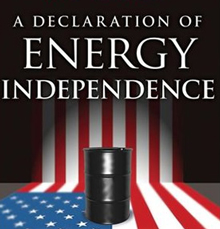
Big Oil, Partisan Politics Block Natural Gas and Electric Vehicles Bill


Reducing dependence on foreign oil is critical to America's economic health and national security. Partisan politics and short-sighted thinking has stood in the way of a real plan for energy independence. Daniel J. Weiss, a senior fellow at the Center for American Progress, argues for passage of legislation to encourage a switch to natural gas and electrical vehicles.

Weiss writes:

The Senate has one last chance to pass clean energy measures before the 111th Congress adjourns for the year. Many other clean energy and climate measures were blocked in this Congress, but there’s hope for a better ending to this clean energy legislative tragedy: The pending bill currently is composed of proposals with bipartisan authors.

On Tuesday, Senate Majority Leader Harry Reid (D-NV) canceled a cloture vote that would have allowed passage of his Promoting Natural Gas and Electric Vehicles Act, S. 3815. Instead, he is reportedly conducting talks with one of the bill’s co-sponsors, Sen. Orrin Hatch (R-UT), to see if a bipartisan agreement over the bill’s passage is possible. It is a modest proposal that would increase incentives for natural gas trucks, create a pilot program for electric vehicle recharging infrastructure, and raise the oil spill liability fee from 8 cents to 21 cents per barrel.

Sen. Reid’s bill is based on several bipartisan proposals. Its natural gas vehicles provisions are drawn from the NAT GAS Act, S. 1408. It would provide money for rebates to purchase natural gas cars and trucks. CAP estimates that the conversion of trucks to natural gas could save 1.2 million barrels of oil per day by 2035. The Senate Democratic Policy Committee notes that, “The natural gas industry ... estimated that this program will create more than 100,000 direct manufacturing and labor jobs and more than 450,000 indirect jobs.” Its cosponsors include conservative Sens. Tom Coburn (R-OK), Lisa Murkowski (R-AK), George LeMieux (R-FL), and Hatch.

The electric vehicle provisions in S. 3815 are based on The Electric Vehicle Deployment Act, S. 3442. It would speed the transition to electric vehicles by creating a pilot program to help some communities create electric vehicle recharging infrastructure for plug-in hybrid and all-electric vehicles, such as the Chevrolet Volt and Nissan Leaf. Its cosponsors include Sens. Lamar Alexander (R-TN), Susan Collins (R-ME), and LeMieux.

The cost of these programs would be offset by a fairly small increase in the oil spill liability fee from 8 cents to 21 cents per barrel. This would lead to an increase in gasoline prices of no more than one-thirteenth of a cent per gallon. In other words, it would boost the price of seven and a half gallons of gasoline by a single penny. To put this in perspective, gasoline prices rose 7 cents per gallon over the past month.

Big Oil companies oppose this because it would reduce oil use and increase their oil spill liability fee by a pittance. Nonetheless, Big Oil’s opposition to this tiny fee hike could be enough to convince senators to vote against this very modest bill. The negotiations over the legislation are focusing on whether to levy this small fee increase or use some other mechanism to offset its cost.

Republican senators face pressure from their leaders to oppose the bill to deny President Barack Obama even a small victory in addition to demands from Big Oil. Senate Minority Leader Mitch McConnell (R-KY) made it clear that politics trumps progress when he said that, “The single most important thing we want to achieve is for President Obama to be a one-term president.” It is easy to imagine GOP Senate leaders following this dictum by strong-arming their caucus to vote against ending debate and passing this bill.

Republican senators who supported the NAT Gas Act and Electric Vehicle Development Act should also support S. 3815 if there is an agreement between Sens. Reid and Hatch. The bill would then pass. If past is prologue, though, enough of these senators could follow Big Oil and their Senate leadership to kill this common sense, low-cost legislation that would reduce our dependence on foreign oil. It would join comprehensive global warming and clean energy legislation along with other essential clean energy jobs proposals on the scrap heap of bills Big Oil and Senate Republican leaders opposed.

Let’s hope such a sad fate for clean energy can be avoided in this Congress.

http://www.americanprogress.org/issues/2010/11/final_act.html

Saturday, November 20, 2010

Atomic Insights: Nuclear Industry Can Lead a Revival in U.S. Manufacturing


The informative blog Atomic Insights calls attention to nuclear power's potential role in revitalizing the U.S. industrial base:

Nuclear Industry Can Lead a Revival in Skilled Labor and Manufacturing in the United States

by Rod Adams

The Nuclear Energy Institute, the American Nuclear Society and the North American Young Generation in Nuclear have been investing time and money into focused workforce development programs for several years. The people leading the effort are taking the action to ensure that there are educated and trained people who are ready to meet the challenge of continuing to reliably operate and maintain our existing fleet of 104 nuclear reactors at the same time that we are reestablishing our nuclear plant manufacturing and construction industry.

The below is an op-ed describing the effort by one of its leaders.


Nuclear Industry Workforce Education Revitalizes Skilled Labor and Manufacturing Careers
By Elizabeth McAndrew-Benavides
President
North American Young Generation

In 1950 manufacturing accounted for more than 30 percent of all U.S. employment. These skilled labor careers provided an unprecedented standard of living for more than two decades following the end of World War II, allowing millions of Americans to purchase homes and autos and pay for their children to go to college.

By 2006, manufacturing employment shrunk to a mere 10 percent of U.S. employment and with it the bulk of America’s well-paying skilled labor careers. Prognosticators predicted manufacturing’s ultimate demise as a significant driver of the American economy. But a look at the U.S. nuclear industry tells a different story: a narrative where job growth in the skilled trades is on an upward trend and the industry can serve as a role model for the revitalization of the U.S. manufacturing sector through the creation of new careers and economic expansion. In fact, it already has.

At this point 13 license applications for up to 22 new reactors have been filed with the U.S. Nuclear Regulatory Commission (NRC), and the industry expects four-to-eight new plants to be operating by the end of the decade. Construction activities already have begun at plant sites in Georgia and South Carolina. As a consequence, over the past three years more than 15,000 careers, not just jobs, have been created as the nuclear industry has invested over $4 billion in new nuclear plant development. Plans call for the investment of another $8 billion to be in position to supply the materials needed to begin large-scale construction in 2011-2012. Many of these careers don’t require a college degree, but have earnings potential that equals, and even exceeds, that of college graduates. Teachers can play an instrumental part in creating awareness among their students of these careers.

K-12 educators should incorporate what we call “Energy Literacy” into their teaching plans and thus can play a significant role in encouraging their students to consider the career possibilities as electrical and mechanical technicians, radiation monitors, health physicists and engineers of all kinds. The nuclear industry has resources to help educators explain to students what career opportunities are available in nuclear power. For example, FREE curriculum and lesson plans are available from groups such as the National Education Foundation and The Ford Foundation on all sectors of energy production including nuclear power. The industry offers expert speakers from diverse nuclear-oriented groups including Women in Nuclear, the North American Young Generation in Nuclear and the American Nuclear Society, and there is a successful nuclear energy mentoring program known as Power Set that could be replicated around the country.

But is there proof of a revival in the American nuclear industry that warrants teachers’ interest? You bet there is.

For example, Alstom just opened a new $300 million turbine manufacturing facility in Tennessee to supply turbines for use in North American power plants; Shaw Modular Solutions constructed a 410,000-square-foot nuclear modernization facility in Louisiana to assemble structural, piping, equipment and other modules for new nuclear plants that will employ 700 to 1,400 assembly line and skilled technical workers at full capacity. AREVA and Northrop Grumman Shipbuilding broke ground last summer on a $360-million manufacturing and engineering facility in Newport News, Va., that will manufacture heavy components such as reactor vessels, steam generators and pressurizers. Expected to open in 2012, this facility will create more than 500 skilled hourly and salaried careers. And this is only the beginning.

Over the next five years, 38 percent of the current nuclear industry work force employed at the nation’s 104 operating plant will be eligible for retirement, leaving a shortfall of more than 25,000 skilled workers. In addition, each new nuclear plant will create up to 2,400 temporary and highly-paid positions over the five-year construction period and 400-to-800 new permanent careers.

Much as a major league baseball team must build a pipeline of young players in their farm system years in advance so they’ll be ready to replace retiring players, so must the nuclear industry replenish its work force to avoid any skills shortage and be ready for expansion. The nuclear industry realized this trend years ago and is doing just that.

The industry is keeping close track of the job openings and student enrollments to ensure that the pipeline of new workers fits the number of careers available. The industry has set up partnerships with 43 community colleges across the country and implemented what’s known as a uniform curriculum program to ensure that the proper educating and training of the next generation of nuclear industry workers is done in a cohesive manner. This past May, the first graduates of this program at Chattanooga State and Salem Community College in New Jersey moved into careers with average salaries ranging from $66,000-to-$72,000 a year. Since nuclear plants operate for up to 60 years, it’s as close to a lifetime guarantee of employment as possible.

The world has changed dramatically since the golden age of U.S. manufacturing and the high percentage of skilled labor and blue collar careers of the 1950s through the ‘70s. But the revitalization of the nuclear industry in America, where we expect to see dozens of new plants built over the next two decades, offers proof that, to paraphrase Mark Twain, the reports of manufacturing’s death in the United States are greatly exaggerated.

Read the full post at:
http://atomicinsights.blogspot.com/2010/11/nuclear-industry-can-lead-revival-in.html

Sacramento Business Journal: Don't let unemployment benefits expire


The Sacramento Business Journal explains why Congress must extend unemployment compensation benefits:

Allowing federally supported unemployment insurance benefits to expire would deliver a sharp blow to the economy and could endanger the fragile economy, a report released Friday by the California Budget Project concludes.

The benefits provide a substantial boost to the economy because jobless workers spend the money quickly and locally. They pay the mortgage or rent, buy groceries, pay the heating bill and put gas in the car.

Unless Congress acts, emergency measures that provide additional weeks of federally supported benefits to unemployed workers who exhaust their regular state benefits are set to expire Nov. 30.

If this happens, more than 400,000 unemployed Californians will lose access to federally supported UI benefits next month alone, the CBP reports.

Discontinuing the benefits before the job market shows strong signs of recovery would force unemployed workers and their families to cut spending. As a result, businesses would have fewer customers and weaker sales — and that could ultimately cost jobs, according to the report.

California’s unemployment rate was 12 percent in October, preliminary data from the state Employment Development Department show. That’s down slightly from a revised 12.2 percent in September. The unemployment rate in the Sacramento metropolitan area was an average of 12.1 in October, down fro a revised 12.5 percent in September.

“Congress has never before cut off emergency UI benefits at a time when the unemployment was this high,” the report concludes.

http://www.bizjournals.com/sacramento/news/2010/11/19/budget-project-dont-let-unemployment.html

Following a failed vote in the House of Representatives to renew federal unemployment insurance for only three months, the National Employment Law Project (NELP) reissued its call for a full‐year renewal of the existing programs and pointed to a rush of new federal research that supports extending the program through 2011. Newly released studies by the Department of Labor and the Congressional Budget Office affirm, yet again, the vital role unemployment insurance has played in combating the recession and rebuilding the economy.

“Everything we know about unemployment, the economy and the costs and benefits of federal unemployment insurance dictates renewing the programs for a full year – and ending the game of chicken Congress has played with America’s unemployed workers, their families and communities for the last several months,” said Christine Owens, executive director of the National Employment Law Project.

“Sadly, Congress is once again heading out of town just as the federal unemployment insurance programs are slated to expire, this time right as the holiday season begins. It is critical that a full‐year renewal of the program moves to the top of the agenda when Congress returns on November 29th, to minimize the hardship and disruption to families and the economy that will result from the November 30th cut‐off,” said Owens.

“Several new federal studies are just the latest proof that Congress should enact a meaningful, year‐long reauthorization of the federal unemployment insurance programs that expire November 30th, or else the economy – and millions of out‐of‐work Americans – will take a giant step back,” said Owens. “Short‐term stop‐gap measures, like the three‐month continuation the House defeated today, are ill‐advised and however well intentioned could ultimately do more harm than good.”

On Tuesday the Department of Labor issued an independent study commissioned by the Bush Administration and co‐authored by the chief economic advisor to John McCain’s Presidential campaign, finding that since mid‐2008, the federal unemployment insurance programs have saved 1.6 million jobs in every quarter – averting 1.8 million layoffs per quarter at the height of the downturn – and that the programs reduced the unemployment rate by 1.2 points.

The DOL study also affirmed the multiplier effect of unemployment insurance: “For every dollar spent on unemployment insurance, this report finds an increase in economic activity of two dollars,” it states.

A new Congressional Budget Office study this week echoed the DOL findings, saying that “the extensions of unemployment insurance benefits in the past few years increased both employment and participation in the labor force over what they would otherwise have been in 2009."

A Census Bureau report in September found that 3.3 million people, including 1 million children, were kept out of poverty with income support provided through unemployment insurance, a NELP analysis of the study explained.

Goldman Sachs analyst Alec Phillips has projected that allowing the federal unemployment insurance programs to expire will cut consumer spending significantly and reduce already‐languid GDP growth by half a percentage point.

A Congressional Budget Office report from January ranks unemployment insurance as the most effective stimulus to the economy, generating $1.90 in economic activity for every $1 the government spends. The report ranks tax cuts for wealthy Americans as the least effective method of economic stimulus.

“There is a real disconnect in those calling for unpaid‐for millionaire tax cuts – adding $700 billion to the deficit – but then refusing to commit $65 billion for the long‐term unemployed hanging on by a thread, even though the spending on unemployment insurance produces twice its cost in new economic growth. As the CBO has reported earlier, tax cuts to the wealthy are the least effective form of economic stimulus, whereas unemployment insurance is far and away the most effective,” said Owens.

These studies parallel strong public support to continue the unemployment insurance programs. A poll released Monday, conducted by Hart Research Associates, found that Americans overwhelmingly believe Congress should continue providing federal unemployment insurance to workers who have exhausted their state benefits and are still unemployed, and that Americans firmly reject the idea that deficit concerns should lead to cuts in support for the jobless when the unemployment rate remains so high.

www.unemployedworkers.org

Thursday, November 18, 2010

U.S.-China Economic Security Review Commission Report Released to Congress


The U.S.-China Economic and Security Review Commission released its 2010 Report on Wednesday to Congress. The Commission’s Chairman and Vice Chairman discussed the Commission’s findings and recommendations.

In his opening statement, Commission Chairman Dan Slane said “The 2010 Annual Report reflects the Commission’s conclusions that China has failed in some notable areas to fulfill the promises it made nine years ago when it joined the World Trade Organization. Specifically, China is adopting a highly discriminatory policy of favoring domestic producers over foreign manufacturers. Under the guise of fostering “indigenous innovation” in its economy, the government of China appears determined to exclude foreigners from bidding on government contracts at the central, provincial, and local levels. In addition, China has proposed that its many state-owned corporations be exempt from WTO rules on procurement. The Chinese government quite simply intends to wall off a majority of its economy from international competition.”

In her opening statement, Vice Chairman Carolyn Bartholomew commented on China’s military modernization, saying “As a result of China’s improved offensive air and missile capabilities, the Chinese military has strengthened its capacity to threaten U.S. forces and bases in the region. Currently, China’s conventional missile capabilities alone may be sufficient to temporarily knock out five of the six U.S. air bases in East Asia. Saturation missile strikes could destroy U.S. air defenses, runways, parked aircraft, and fuel and maintenance facilities. Complicating this scenario is the future deployment of China’s anti-ship ballistic missile, which could hold U.S. aircraft carriers at bay outside their normal operating range.”

Among the topics in the 316-page report:

Economics and Trade Issues:

China’s ‘indigenous innovation’ policy to promote favored industries and limit imports.
China’s currency manipulation and its effects on the United States.
China’s purchases of U.S. Treasury securities and the implications for the United States.
China’s measures to restrict rare earth element exports.

China’s past and future role in the World Trade Organization.
National Defense Issues:

China’s growing air and missile capabilities, and the increasing capacity to strike U.S. bases and allies in the region.
China’s improving commercial aviation manufacturing capabilities, and the spillover benefits for China’s defense aviation industry.
The increasingly sophisticated nature of malicious computer activity associated with China.

Foreign Affairs Issues:

China’s increasing political, economic, energy and security interactions with Southeast Asia, and the implications for U.S. interests in the region.
Recent developments in the China-Taiwan relationship, and implications for the United States.

Energy and Environmental Issues:

China’s efforts to promote green energy in order to increase its energy security, prevent environmental degradation, and develop a globally competitive green energy industry.
Ohio’s response to China’s promotion of its alternative energy industries.
Censorship Issues:

How China’s revised state secrets laws may conflict with U.S. disclosure requirements and put U.S. investments in Chinese firms at risk.
For more information and a copy of the 2010 Report, please visit www.uscc.gov

The U.S.-China Economic and Security Review Commission is a bipartisan Congressional Commission established in 2000 to investigate, analyze and provide recommendations to Congress on the economic and national security implications of the U.S.–China relationship

Saturday, October 30, 2010

Jim Webb calls for strong financial reforms


Senator Jim Webb D-VA), a member of the Joint Economic Committee, called on federal regulators to implement strong reforms to prevent high-risk investing from again endangering the national economy. Webb joined 17 other senators in submitting comments to the Financial Stability Oversight Council (FSOC) yesterday to ensure that proprietary trading restrictions of the Restoring American Financial Stability Act are implemented as intended by Congress.

“After taxpayers were forced to bail out banks and other systemically significant financial companies whose proprietary trades went awry, we determined that the economy and taxpayers need strong protections against an increasingly casino-like financial system,” the senators wrote. “High-risk investing is an appropriate and legitimate activity in a free market system, but it cannot again imperil our nation’s economic well-being.”

The restrictions were added to the financial reform law to address speculative proprietary trading by bank fund managers, which creates tremendous risks for the institutions themselves and conflicts with the interests of their customers. The group of senators provided detailed guidance to regulators to help them effectively implement and enforce the statutory language. The group also provided copies of the implementation instructions to the heads of the federal agencies responsible for implementing Wall Street reform.

The FSOC is a collaborative body established as part of the financial reform legislation to monitor and address risks to financial stability. The FSOC is chaired by the Secretary of the Treasury and authorized to facilitate regulatory coordination, recommend stricter standards, and break up firms that pose a “grave threat” to financial stability, among other responsibilities. The FSOC is currently requesting comments regarding the implementation of the Merkley-Levin provisions to restrict proprietary trading, also known as the “Volker Rule.” Sen. Webb cosponsored the Merkley-Levin provision during the Senate floor debate on financial reform.

“Despite having just emerged as a nation from the worst financial crisis since the Great Depression, powerful interests will seek to weaken the Merkley-Levin Volcker Rule protections,” the senators wrote. “We in Congress resisted those efforts and provided you with a clear mandate and broad authority to act. The American people are now relying upon you to fully carry out the law.”

The text of the letter follows:

Dear Members of the Financial Stability Oversight Council:

The Dodd-Frank Wall Street Reform and Consumer Protection Act sets forth a clear mandate to end high-risk, conflict-ridden financial activities at our nation’s banks and systemically significant nonbank financial companies. It does so by ending proprietary trading within our nation’s banking entities, limiting their relationships with hedge funds and private equity funds, and restricting such activities at systemically significant nonbank financial companies, as well as explicitly prohibiting conflicts of interest.

As co-sponsors of the Merkley-Levin Amendment, which ultimately became Section 619 of the Dodd-Frank Act, we urge the Financial Stability Oversight Council (FSOC) to provide guidance to regulators that can help them effectively implement and enforce the statutory language as Congress intended.

After taxpayers were forced to bail out banks and other systemically significant financial companies whose proprietary trades went awry, we determined that the economy and taxpayers need strong protections against an increasingly casino-like financial system. High-risk investing is an appropriate and legitimate activity in a free market system, but it cannot again imperil our nation’s economic well-being.

To ensure that the Merkley-Levin proprietary trading restrictions (also called the “Volcker Rule”) are most effectively applied, Section 619 directs the FSOC to conduct a study and make recommendations on how to best implement its provisions. (Bank Holding Company Act of 1956 (12 U.S.C. 1841 et. seq.), §13(b), as added by the Dodd-Frank Wall Street Reform and Consumer Protection Act, Pub. L. No. 111-203, §619 (2010).) As one of the FSOC’s initial tasks, this study will be a critical test of whether the FSOC lives up to its statutory mandate of independence, regulatory cooperation, and professional analysis. We hope that each member of the FSOC, voting and non-voting, will participate fully in this effort.

In crafting recommendations to ensure the Merkley-Levin provisions are implemented as intended, the FSOC will undoubtedly need to address many issues. We would like to focus your attention, however, on a few critical points:

The term “trading account” should cover all types of accounts that may be used to conduct proprietary trading.

The extent of permitted activities, particularly “market making” and “risk mitigating hedging,” should be strictly and clearly delineated to ensure that high-risk proprietary trading stops, while economically beneficial and risk-reducing activities continue. Capital charges governing these permitted activities should also be vigorous enough to protect the economy and U.S. taxpayers from risks arising from them.

The relationships between covered financial firms and the private funds they manage or sponsor should be carefully circumscribed to prevent those private funds from being used to circumvent the law’s limits.The terms “material conflicts of interest” and “high risk” assets and trading strategies need to be meaningfully defined so as to safeguard U.S. taxpayers from unfair practices and systemic risk.

Capital charges and quantitative limits for systemically significant nonbank financial companies should be vigorous so as both to discourage and to reduce the risks and conflicts of interest from proprietary trading at these entities.
The law’s anti-evasion provisions should be implemented in a way to ensure regulators have clear authority to prevent abusive and evasive tactics from undermining the Merkley-Levin provisions.

Implementing these provisions also means establishing a regulatory structure capable of meaningful enforcement. We urge you to consider recommending a two-tiered, cooperative regulatory structure. At the first tier, regulators should conduct real-time monitoring and enforcement. Trading and markets regulators, such as the Securities and Exchange Commission and Commodity Futures Trading Commission, may be in the best position to take a leadership role in monitoring trading and positions, much like they do for insider trading, position limits, and other trading provisions. The newly-created Office of Financial Research may assist in standardizing the data collection and review efforts. At the second tier, regulators should review firms’ policies and procedures and conduct in-depth portfolio-level examinations. Banking regulators, such as the Federal Deposit Insurance Corporation, the Comptroller of the Currency, and the Federal Reserve Board, may be in the best position to conduct these broader reviews of firms. This type of two-tiered, cooperative approach would enable regulators to share the implementation burdens and also play to their traditional strengths.

You have been assigned to a vital task: to protect the American people from a financial system that has too often been distorted by proprietary trading practices and conflicts of interest that placed a firm’s own interests ahead of the interests of its clients. We recognize that reining in these practices will not be easy. Despite having just emerged as a nation from the worst financial crisis since the Great Depression, powerful interests will seek to weaken the Merkley-Levin Volcker Rule protections. We in Congress resisted those efforts and provided you with a clear mandate and broad authority to act. The American people are now relying upon you to fully carry out the law.

Thank you for this opportunity to comment on the FSOC study to implement Dodd-Frank Section 619.


Sincerely,

John Kasich covers up anti-gun record


John Kasich is very consistent about some things. Kasich has never wavered in his support for job destroying "free trade" agreements and corporate outsourcing. The former Congressman loves sending Ohio jobs to China but lacks the same passion when it comes to defending the right of citizens to keep and bear arms. Kasich seeking the Ohio Governorship and Mike Dewine (running for Attorney General) have a track record of support gun control legislation.

Ohio gun owners are getting fired up about the upcoming elections, and for Kasich and DeWine, this is not good news.

Recent campaign tactics by Republicans have riled gun owners and bolstered support for Democratic candidates Ted Strickland for Governor and Richard Cordray for Attorney General.

"Until recently, Kasich and DeWine have had no use for gun owners in Ohio," said Jim Irvine, Chairman of Buckeye Firearms Association. "But as election day gets closer and the polls get tighter, they're suddenly treating us like long-lost friends. It's like they're saying to gun owners, you're stupid. Ignore our anti-gun records and vote for us."

According to Irvine, the Ohio Republican Party has been sending mailers talking about each candidate's respective stance on guns.

"It's laughable," said Irvine. "In fact, it's outright insulting. Even though Kasich and DeWine are Republicans, they both have a long and infamous record of working against Ohio gun owners. Democrats Strickland and Cordray are proven, steadfast friends."

According to Irvine, Kasich has a terrible voting record. "Kasich voted for handgun restrictions in 1986, voted for a ban on deer hunting in 1992, and voted for the Clinton/Schumer Gun Ban and earned an F rating from the NRA in 1994.

"He went on to vote against stopping the harassment of law-abiding gun owners by the BATFE in 1995, voted against big game hunting in 1997, voted to restrict gun shows in 1999, and voted twice to increase background checks aimed at closing down gun shows.

"Maybe the worst came in 1999," said Irvine shaking his head, "when Kasich voted for the D.C. Gun Ban. It's not just one vote, it's a pattern of hostility toward gun owners. You just can't run from a record like that."

The National Rifle Association's John Hohenwarter observed, "Kasich's stance on the Second Amendment changes from year-to-year like the weather changes from day-to-day."

And what about DeWine? Irvine says it's even worse.

"Mike DeWine was thrown out of his U.S. Senate seat by voters in 2006 after being endorsed by the anti-gun Brady Campaign because his record 'really wowed' them. That's because he consistently cast his votes with the most anti-gun legislators in the Senate.

"In 1999, he voted to require background checks on all guns sold at guns shows yet voted against more penalties for drug and gun crimes. He opposed legislation to protect gun manufacturers, distributors, dealers and importers from frivolous lawsuits designed to put them out of business.

"Human Events Online named DeWine among the top 10 anti-gun U.S. Senators because he was consistently the only Republican to stand up on the Senate floor and speak in favor of gutting the Second Amendment."

Political pundits frequently talk about the long memory and voting power of gun owners. So even though voters are focused on jobs and the economy, Ohio's election could actually turn on the gun issue. That would help Ted Strickland and Richard Cordray, two Democrats with a long history of supporting gun rights, be re-elected next week.

This is clear from pre-election polls showing Strickland and Cordray as the only statewide Democratic candidates in statistical dead heats.

Irvine said, "It's shaping up to be a terrible year for Democrats nationwide. But the strong pro-gun history of these two Democrats is what's keeping them in the race."

Buckeye Firearms Association (www.BuckeyeFirearms.org) is a grassroots political action committee (PAC) dedicated to defending and advancing the right of Ohio citizens to own and use firearms for all legal activities, including self-defense, hunting, competition, and recreation. They work to elect pro-gun candidates and lobby for pro-gun legislation.

Tuesday, October 26, 2010

Durango Herald News: Why does the GOP hate the middle class ?


Nate Hodgson sums up the Republican war against the middle class perfectly in a letter from the Durango Herald News editorial page:

Why does the Republican Party hate middle America? According to 2008 census data, Americans' median household income was $52,000 with 13 percent of the population living below the poverty level - below $21,000 for a family of four. Coloradans fared a little better with a median household income of $57,000 and 11 percent in poverty.

With the Bush tax cuts enacted in 2001 and 2003, the divide between the "haves" and "have nots" in America has skyrocketed. According to 2010 census figures, less than 5 percent of Americans earned more than $180,000 a year and they added to their annual incomes last year, while the overwhelming majority of families at the median level, $50,000, slipped closer to poverty.

The Obama administration, to its credit, has proposed closing this gap by extending the Bush tax cuts only to individuals making less than $200,000 and families making less than $250,000. The Republican Party, on the other hand, has championed tax relief for the über-wealthy at the expense of the middle class. In fact, Republicans pride themselves on a political platform that ensures the richest 1 percent will continue to own 40 percent of all American wealth.

The Republicans are supported by FOX News and AM radio hosts who bombard American airwaves with anti-tax rhetoric. Many of these self-proclaimed "conservative" celebrities would continue to see a direct personal benefit from an extension of Bush era tax cuts. These defenders of the rich, while daily skewering Obama, remain notoriously tight-lipped about the rampant wealth redistribution tactics of the upper class - for example, the wealthy executives at Goldman Sachs, JP Morgan Chase, Morgan Stanley and Bank of America who personally benefited from the Bush-era bank bailout, even giving themselves $10 million bonuses, while the overwhelming majority of Americans saw a precipitous decline in income.

At a time when middle America is seeing a decline in income, it is time that the Republican Party do more than simply bash Obama and defend continued bail-out and tax relief for America's super-wealthy. Americans of all classes need to pull together and do their part.

http://durangoherald.com/sections/Opinion/letters_to_the_editor/2010/10/26/Why_does_the_GOP_hate_the_middle_class/

Thursday, October 14, 2010

Right to Rent Legislation Would Slow Growing Rate of Foreclosure


As the number of homes around the country entering the foreclosure process continues to steadily rise, a recent report from the Center for Economic and Policy Research (CEPR) suggests that giving homeowners the right to rent their house at a fair market price may be one of the best ways to address the nation's foreclosure crisis.

"With roughly one-in four mortgages underwater, the loan modification plans put forth so far have done little to help homeowners facing foreclosure," said Dean Baker, Co-Director of CEPR and an author of the report. "Right to Rent, on the other hand, would benefit millions, provide families with real housing security, and could go into effect immediately."

The report, "The Gains from Right to Rent in 2010," analyzes the costs of renting versus owning a house in several major cities and finds that the Fair Market Rents in these metropolitan areas is often much lower than the cost of ownership.

"Ordinarily, the gap between owning and renting is not that large." continued Baker. "Due to the enormous run-up in house prices over the housing bubble years, however, ownership costs now vastly exceed rental costs in many of the bubble markets and homeowners in these markets have much to gain from having the opportunity to remain in a home as a renter following a foreclosure."

The report documents the costs of renting and owning before and after taxes in 16 metropolitan statistical areas (MSAs) and details substantial savings gained from renting across all scenarios depicted. The various scenarios consider the costs of mortgage payments, property taxes, insurance and maintenance costs, and mortgage deductions. An appendix is included that compares ownership and rental costs across 100 MSAs as well.

Under Right to Rent legislation, such as HR 5028, sponsored by representatives Grijalva (AZ) and Kaptur (OH), Congress would temporarily alter foreclosure laws to let foreclosed homeowners remain in their homes as renters for a substantial period of time. This would save families from being kicked out of their homes and would go far to stop the blight of foreclosures affecting many of our communities. This plan requires no taxpayer dollars and no new bureaucracy to implement.

More details on the Right to Rent plan can be found at: http://www.cepr.net/index.php/component/option,com_issues/Itemid,22/issue,35/lang,en/task,view_issue/

President Obama signs Congressman Bart Gordon's anti-methamphetamine bill into law


WASHINGTON – Congressman Bart Gordon’s bill closing loopholes in federal law that have been exploited by meth producers was signed into law on Tuesday by President Obama.

“Every year, Tennessee is one of the top states when it comes to meth production, use and busts,” said Gordon. “To combat this epidemic, we have to go straight for the source, making it more difficult for the producers of this drug to get their hands on precursor materials.”

The Combat Methamphetamine Enhancement Act (H.R. 2923) requires all retailers of pseudoephedrine and ephedrine products, products used to make meth, to register with the U.S. Attorney General, and requires distributors of these products to sell only to retailers who are registered to sell controlled substances. It also provides the Department of Justice legal basis to fine those not in compliance with the law. These regulations close significant loopholes in a 2006 law that first brought these products behind the counter.

“Four years ago, Congress began to tackle this issue head on,” Gordon added. “It takes a multi-pronged approach to fight meth through regulation, education and prevention. This bill is another step in the right direction.”

As Chairman of the Science and Technology Committee, Gordon has fought the spread of meth and worked to reduce its impact on communities. His committee has held hearings and advanced legislation aimed at developing partnerships and cooperation among local, state and federal agencies.

In 2007, Gordon authored the Methamphetamine Remediation Research Act, which directed the National Institute of Standards and Technology to develop meth detection equipment for field use. The law further required the Environmental Protection Agency to develop model, voluntary, health-based clean-up guidelines for use by states and localities with the goal of making sure the sites of former meth labs are safe and livable.

During his time in Congress, Gordon has led efforts to address and curb drug abuse in Middle Tennessee. Gordon has secured more than $1 million in federal funding to help local law enforcement crack down on meth production. He has also helped implement juvenile drug court programs in Middle Tennessee communities and worked to make drug education information more available in Tennessee’s public schools.

Republican-oriented Susan B. Anthony List faces sanctions for distorting record of pro-life Democrat


Faith in Public Life reports:

FPL has extensively documented the lengthy misinformation campaign over the course of the health care debate, starting last year when opponents of reform argued that the bill included federal funding of abortion. These attacks have continued unabated in the run-up to the November election - as predicted months ago.

But now one of these groups, The Susan B. Anthony List - which is spending over $1.5 million on a campaign alleging that pro-life Representatives who supported health care reform voted for federal funding of abortion - may have broken the law in their deceptive campaign. The Cincinnati Enquirer reports today:

A three-member panel of the Ohio Elections Commission ruled in favor of U.S. Rep. Steve Driehaus today in his complaint against the anti-abortion group Susan B. Anthony List.
The panel's "probable cause" finding means there will be another hearing to determine if the group broke Ohio law that bars making false statements in campaigns. Driehaus is up for re-election on Nov. 2. In the meantime, attorneys for both sides can begin taking sworn depositions.

Driehaus, a Democrat from West Price Hill, is fighting the group's plans to erect four billboards saying he favored taxpayer-funded abortions because he voted for the national health care bill.

Driehaus' Cincinnati attorney, Paul DeMarco, intends to depose SBA members to find out what they consider federal funding of abortions.

"They're actually conceding the argument that there is no new federal funding," Driehaus said.

The 1970 Hyde Amendment allowed federally-funded abortions in cases of rape, incest or to save the life of the mother.

A date has not been set for another Elections Commission hearing where evidence will be argued. The commission can then recommend a public reprimand or prosecution, which can result in fines or jail time.

"This is a big deal," Driehaus said today. "The media made a big deal about this, (Steve) Chabot calling me a liar and now the Ohio Elections Commission came out on my side."

Driehaus has said the group is attacking any pro-life Democrat who supported the federal health care bill "because they're partisan."

The group's spokesman was not immediately available for comment today.

Ohio law allows the elections commission to issue a public reprimand, or refer the case to the Franklin County prosecutor. A criminal conviction for making false campaign statements is punishable by up to six months in jail and/or a fine of up to $5,000.

We'll be keeping a close eye on this story as it develops

http://blog.faithinpubliclife.org/2010/10/susan_b_anthony_list_facing_sa.html

Chet Edwards calls for Social Security cost-of-living increases


U.S. Representative Chet Edwards (D-Texas) said the expected announcement Friday that the Social Security Administration will not be increasing the cost-of-living-adjustment (COLA) for Social Security recipients in 2011 requires Congress to act to protect seniors. The marks the second year in a row that seniors have not received a COLA update for Social Security. Edwards has cosponsored legislation, H.R. 5987, the Seniors Protection Act to provide a $250 payment to 54 million Americans who rely on Social Security including 118,084 in District 17.

Congressman Edwards said, “Monthly expenses for prescription drugs, medical costs, and utilities continue to rise for seniors and their Social Security benefits should keep up. There is no reason an increased burden should fall on seniors and people with disabilities, especially during tough economic times. I have helped pass into law a $250 payment for seniors this year and we should continue that policy until Social Security cost-of-living-adjustments are updated.

In 2009, Edwards helped pass into law a one-time $250 payment to Social Security recipients to assist seniors living on fixed incomes. Edwards has also supported House passage of legislation that would freeze Medicare Part B premium increases to prevent seniors from taking on additional financial burdens during tough economic times especially since there was no Social Security cost-of-living increase this year. After passing the House, the legislation freezing Medicare Part B premiums stalled in the Senate.

Social Security was the primary source of income for 64 percent of retirees who got benefits in 2008, according to the Social Security Administration. A third relied on Social Security for at least 90 percent of their income. The cost-of-living adjustments, or COLAs, are automatically set each year by an inflation measure that was adopted by Congress back in the 1970s. Based on inflation so far this year, the trustees who oversee Social Security project there will be no COLA for 2011.

Edwards concluded, “Congress should address the COLA issue as soon as we return in November. Seniors are the foundation of our communities and protecting their retirement security and the guaranteed benefits of Social Security should be one of our highest priorities. The fact is that while other retirement savings lost an average of 32% of their value during the recession, Social Security continued to provide a reliable income for our seniors. We need to make sure it stays that way.”

Tuesday, October 12, 2010

New Database Exposes Job Losses Due to Outsourcing and Flawed Policies


***www.WorkingAmerica.org/JobTracker***

AFL-CIO and Working America release first-of-its-kind, zip code searchable database

In the worst economic crisis in a generation, the AFL-CIO and Working America released a first-of-its-kind, zip code searchable database that illustrates how corporate outsourcing has hollowed out American towns and cities. The Job Tracker released by the AFL-CIO and its community affiliate Working America provides a new tool for people searching for information on the local impact of outsourcing. The dynamic interactive database lists information on more than 400,000 corporations and subsidiaries and uses data from dozens of public sources to allow visitors to find out which companies have exported jobs overseas, violated health and safety codes or engaged in discriminatory or other illegal practices.

On a conference call to release the database, speakers noted that experts and the public alike will now be able to easily search through a huge compilation of data on corporate outsourcing.

"Because of Job Tracker, corporations who have taken advantage of lax trade policies in America and abroad will no longer be able to hide behind the veils of bureaucracy," said Karen Nussbaum, Executive Director of Working America. "Every night on our neighborhood canvasses, we hear from people who want to know which companies are profiting off the loss of their jobs. Corporations have created a global race to the bottom and working people won't stand for it."

Visitors to the Job Tracker site can search the database by company name, zip code and industry. Within seconds, detailed results are culled from a database that draws from sources including U.S. Department of Labor's Trade Adjustment Assistance (TAA) records, Worker Adjustment and Retraining Notification (WARN) Act notices, Occupational Safety Health Administration records and more. The Job Tracker site also enables visitors to use Facebook and Twitter and email to report companies exporting jobs in their communities.

Since 2000, the United States has lost more than 5 million manufacturing jobs and 850,000 information sector jobs, many of which have been shipped overseas. Faulty trade and tax policies continue to lead to outsourcing as corporate executives boast record-breaking profits and salaries.

AFL-CIO President Richard Trumka noted the impact of faulty trade and tax policies that make it even easier for corporations to outsource jobs. He pointed to the benefits of such a tool for working people as they rebuild an economy that works for all and assess elected leaders' records in the election.

"We must demand that our leaders show that they stand with working families -- fighting to create jobs, rejecting unfair trade deals and putting us on a path to make things in America again," said Trumka. "For the first time, working people have one place to see the real impact of the failed policies of the past that gave corporations the ability to ship American jobs overseas. With this new data as a benchmark, working people will have the ability to separate the economic patriots from the corporate traitors at the ballot box."

As part of Job Tracker, Working America is also releasing a "white paper" entitled OUTSOURCED: Sending Jobs Overseas: The Cost to America's Economy and Working Families, which details how trade policies have outsourced good jobs. http://www.workingamerica.org/upload/OutsourcingReport.pdf Working America will share the results with members of Congress and the economic community as a new analysis on what policies must be passed to turn our economy around.

Working America, the community affiliate of the 12 million member AFL-CIO, represents workers without a union at work to mobilize around economic issues like health care and good jobs.

Pro-gun Democrats play critical role in protecting our Second Amendment rights


Writing at The Volokh Conspiracy, David Kopel explains how pro-gun rights Democrats play a critical role in protecting our Second Amendment rights:

Earlier this week, I wrote that NRA would be foolish obey the wishes of Republican activists who want the NRA to endorse only Republicans, and especially to not endorse endangered House Democrats. Here are some data on NRA endorsements, and some of the actions that dozens of House Democrats have taken to merit their endorsements:

NRA Senate endorsements in 2010: 23 Republicans, 2 Democrats.

NRA House endorsements in 2010: 197 Republicans and 61 Democrats.

There were 251 Congresspersons who signed the pro-Second Amendment incorporation congressional amicus brief in McDonald v. Chicago. Of the signers, 81 were House Democrats, and 19 were Senate Democrats, including Majority Leader Harry Reid.

A top NRA priority in Congress is H.R. 2296, to reform the Bureau of Alcohol, Tobacco, Firearms & Explosives. Of the 243 cosponsors, 76 are House Democrats.

Another NRA-favored bill is H.R. 442, the “Veterans’ Heritage Firearms Act,” would create an amnesty period to allow the registration of war trophies (e.g., an automatic rifle captured from the North Vietnamese Army) that were brought into the United States between 1934 and 1968. There are 211 cosponsors, 66 of whom are House Democrats.

The bill that would have the most significant practical effect for most gun owners is H.R. 197, the “National Right-to-Carry Reciprocity Act .” Sixty-five House Democrats are among the 209 cosponsors.

Early in the Obama adminisration, Attorney General Eric Holder said that the 1994 ban on so-called “assault weapons” and magazines holding more than 10 rounds, which sunset in 2004, should be re-enacted. Sixty-five Democratic Congressmen signed a letter to the Attorney General, opposing a new ban. In addition, Ike Skelton, the Missouri Democrat who chairs the Armed Services Committee, sent a separate letter to Speaker Pelosi and Majority Leader Hoyer expressing his opposition to the Attorney General’s remarks. The show of Democratic opposition demonstrated that there was no chance that a ban could pass Congress. Since then, Attorney General Holder has not made any public statements in favor of gun bans.

As the numbers above illustrate, Democrats constitute an indispensible part of the pro-Second Amendment majority of the current Congress. Without the NRA’s strong working relationship with so many Democrats, 2009-10 would have seen the enactment of destructive legislation for gun rights, rather than the constructive legislation which has become law.

http://volokh.com/2010/10/08/nra-supports-democrats-and-democrats-support-the-second-amendment/

The following pro-gun rights Democrats have received the NRA endorsement:

AL-2: Bobby Bright
AR-4: Mike Ross
Ca-18: Dennis Cardoza
CO-3: John Salazar
CO-4: Betsy Markey
FL-2: Allen Boyd
Ga-2: Sanford Bishop
Ga-8: Jim Marshall
Ga-12: John Barrow
IA-3: Leonard Boswell
IL-11: Debbie Halvorson
IL-12: Jerry Costello
IN-Senate-Brad Ellsworth
IN-2: Joe Donnely
IN-8: Trent Van Haaften
IN-9: Baron Hill
KY-6: Ben Chandler
MD-1: Frank Kratovil
MI-1: Gary McDowell
MN-1: Tim Walz
MS-1: Travis Childers
MS-4: Gene Taylor
MO-4: Ike Skelton
NC-7: Mike McIntyre
NC-8: Larry Kissell
NC-11: Heath Shuler
ND-At Large: Earl Pomeroy
NM-1: Martin Heinrich
NM-2: Harry Teague
NM-3: Ben Lujan
NY-20: Scott Murphy
NY-23: Bill Owens
NY-24: Mike Acruri
OH-Gov. Ted Strickland
OH-6: Charlie Wilson
OH-16: John Boccieri
OH-18: Zack Space
OK-2: Dan Boren
OR-5: Kurt Schrader
PA-4: Jason Altmire
PA-10: Chris Carney
PA-11: Paul Kanjorski
PA-12: Mark Critz
PA-17: Tim Holden
SD-At Large: Stephanie Sandlin
TN-4: Lincoln Davis
TN-8: Roy Herron
TX-17: Chet Edwards
UT-2: Jim Matheson
VA-2: Glenn Nye
VA-5: Tom Perriello
VA-9: Rick Boucher
WI-3: Ron Kind
WI-8: Steve Kagen
WV-Senate: Joe Manchin
WV-3: Nick Rahall

Democratic Senators Russ Feingold of Wisconsin and Harry Reid of Nevada are also proven supporters of gun rights.

http://feingold.senate.gov/opinion/10/20100708.htm

Letter from NRA praising Senator Reid for his defense of the right to keep and bear arms. http://media.lasvegassun.com/media/pdfs/blogs/documents/2009/07/15/Reid_-_NRA_Letter.pdf

Monday, October 11, 2010

Pro-life Democrat Kathy Dahlkemper refutes the lies


Congresswoman Kathy Dahlkemper (D-PA) is fighting back strongly and aggressively against lies about her record on abortion spread through an ongoing media assault featuring false information and financed by private organizations with undisclosed donors. Armed with the facts and the truth, Dahlkemper is telling the 3rd District not to believe the lies her opponents are selling.

To counter these unconscionable attacks, the Dahlkemper campaign is currently airing one new television ad and one radio ad in 3rd District media outlets. The ads sternly refute the falsehoods being spread about the Congresswoman's staunch pro-life principles by political organizations that are not required to disclose their funders and pay no regard to the truth or the facts.

Watch and listen to the ads at the following links: http://kathydahlkemperforcongress.com/videos/kathy-dahlkemper-life, http://kathydahlkemperforcongress.com/videos/kathy-responds-attacks, http://www.youtube.com/watch?v=W0OgCy921cA

"When you hear my opponents talk about my views on life, know that they are absolutely false,” Dahlkemper says in a television ad. “They should be ashamed to lie about this just to win an election.”

In the radio ad, Sister Mary, a Catholic nun who knows Kathy Dahlkemper personally, speaks out against the attacks, calling Kathy “an honest woman of strong character.”

Sister Mary makes a clear, unassailable statement affirming Kathy Dahlkemper’s pro-life values: “If anyone tells you that Kathy Dahlkemper is not a woman in favor of life, just know it is not true.”

“I am pro-life and I always have been. This is who I am. It is despicable that anyone would take this most sacred issue—the issue of life—and lie about it to gain points at the polls. Western Pennsylvanians deserve better than that,” said Dahlkemper. “These ads set the record straight about me and about the people who are willing to lie to win an election.”

With these new ads, Congresswoman Dahlkemper is personally explaining to 3rd District voters the truth about her lifelong pro-life beliefs, using facts, not falsehoods, about the new health care law. These news ads also make it clear that the Congresswoman will not allow any lie or misstatement to go unchallenged by the facts and the truth concerning her pro-life positions and record.

http://kathydahlkemperforcongress.com/

Congressmwoman Dahlkemper issued the following open letter earlier this year concerning her support for the health care reform and protecting the sanctity of human life.

An open letter from Congresswoman Kathy Dahlkemper about the ban on federal funding of elective abortions:

Dear Friends,

Protecting the unborn was, is and always will be one of my most deeply held personal values.

That's why when confronted with my own unplanned pregnancy at 21, I chose life. It's a decision I've never regretted.

I've taken my pro-life values with me to Washington and have fought to preserve the sanctity of life. I helped ensure that the first health care reform bill prevented federal funding of abortion. When the Senate refused to put those same protections in place for the unborn, I stood firm against pro-choice groups in Washington.

Pro-life Members of Congress like me kept a hard line: no federal funding could be used for elective abortion through the new health care reform. Period.

Our work paid off when the president signed a rock-solid executive order to do just that—clearly ban the use of federal funds for elective abortions in the new health care reform law.

Now, politically-motivated groups are making false claims that Pennsylvania's new high-risk insurance pool, which offers affordable health insurance to the people in our community who have been refused by private insurers because of a “pre-existing condition,” will use federal funds for elective abortions.

That is simply untrue.

The nonpartisan, independent fact-checking organization PolitiFact rated this claim as FALSE.

The Pennsylvania Insurance Department has clearly stated, “Pennsylvania will – and has always intended to – comply with the federal ban on abortion funding in the coverage provided through our federally funded high risk pool.”

The Department of Health and Human Services (HHS), the federal agency who will provide the funding, has clearly said, “In Pennsylvania and in all other states abortions will not be covered in the Pre-existing Condition Insurance Plan (PCIP) except in the cases of rape or incest, or where the life of the woman would be endangered.”

And just in case the message was not clear, I called on HHS Secretary Sebelius to explicitly tell the states that they must strictly follow the ban on federal funding of abortion, or lose their federal funding altogether.

It's all there in black & white: no federal funds will be used for elective abortions in Pennsylvania or anywhere else in the United States.

Preserving the sanctity of life is an issue that Western Pennsylvanians care about passionately, and so do I. That's why I wanted to give you the facts.

If you would like further information about this or any other topic, please email me or call my office at 1-877-KATHY 4U (528-4948).

Sincerely,

Kathy Dahlkemper

http://rightdemocrat.blogspot.com/2010/07/health-care-reform-is-pro-life.html

$50 Billion for Infrastructure Good Start, But Not Enough, Expert Says


President Obama's plan for fixing America's intrastrucure has drawn praise from the American Society of Civil Engineers. ASCE's Exective Director Patrick J. Natale stated: "Our nation’s economy can’t survive without the stable foundation infrastructure provides. It allows goods to move across the country, water to flow from our taps and energy to be accessed with the flip of a switch. But, for decades, we have allowed that foundation to crumble."

Natale called for a dedicated source of funding and an increase in federal leadership on infrastructure and urged Congress to work with the Obama Administration on this critical national issue.

A civil engineering expert says that $50 billion is a good start but not enough to reverse the deterioration of our roads, bridges, water and sewer systems.

"All of the various components of our infrastructure are in serious need of attention and should be given priority, even in times of fiscal belt-tightening," says Henry Petroski, a Professor of Civil Engineering at Duke University.

"President Obama's call for spending $50 billion on America's transportation infrastructure is good news, but the amount is far from the $2.2 trillion that the American Society of Civil Engineers has estimated it would cost to bring the nation's total infrastructure up from the poor grade of D that it received in 2009 to a level that would enable the country to remain strong and prosperous."

"It is not only our roads, railways and airports that are in serious need of repair and renewal. As recent events have demonstrated, the aging water and gas lines buried beneath our streets can break without notice and give rise to flooding, fire, destruction and death. All of the various components of our infrastructure are in serious need of attention and should be given priority, even in times of fiscal belt-tightening. What we do not maintain today will surely cost much more to repair in the future."

Dr. Petroski recently elaborated on the U.S. infrastructure crisis in The Chronicle Review:

The present state of the American infrastructure—roads, bridges, water supply, and the like—has been given an overall grade of D by the American Society of Civil Engineers, which regularly issues infrastructure report cards. The engineers' estimate of how much it will cost to raise the grade from poor to acceptable is $2.2-trillion over a five-year period. Such a vast amount of money is unlikely to be available over the next decade.

When the American Recovery and Reinvestment Act, commonly known as the stimulus bill, was passed in 2009, the word "infrastructure" was frequently invoked. Since then, prominent signs have gone up proclaiming that paving and other highway projects owe their very existence to stimulus money. However, less than $100-billion of the $787-billion total has in fact gone toward infrastructure construction projects.

In the meantime, our infrastructure continues to age and deteriorate. In many of our older cities, some of the cast-iron pipes that bring water to homes and businesses are a century old. Earlier this year a burst water main in the Boston area resulted in an eight-million-gallon-per-hour leak and led the governor to declare a state of emergency. Affected residents were warned to boil their water before drinking it.

As surely as water runs downhill, so will our infrastructure over the coming decade. Putting off preventive maintenance and replacing obsolete equipment are tempting ways to find cuts in a deficit-ridden municipal budget. New York City took that path during its fiscal crisis of the 1970s, and large and small cities across the country can be expected to do so in the coming years. Even if such action helps local economies recover by the year 2020, the infrastructure will be in such a sorry state that it will be near impossible for it to earn a passing grade.

Potholes know no politics; they will continue to develop as surely as rain turns to ice in winter. Bridges will corrode and collapse. Pipes will crack and burst. The physical foundations of our civilization will crumble under the weight of our complaints about it and our neglect of it. It will happen so fast that it will be impossible to keep up with its repair.

Infrastructure is a fancy contemporary term for what used to be known as public works. The change in terminology may have helped distract the voting public from seeing it as their collective obligation and a civic responsibility. But no matter what it is called, we will continue to depend upon our infrastructure for our safety and quality of life. If we do not recognize the urgency of maintaining it, we can expect the deterioration of our infrastructure to be a defining idea of what it means to be a citizen in a declining civilization.

http://chronicle.com/article/Declining-Infrastructure-D/124137/

Petroski is an expert on the history of engineering and technology, and the author of several books, including "The Essential Engineer: Why Science Alone Will Not Solve Our Global Problems" (2010); "Success through Failure: The Paradox of Design" (2006); and "Pushing the Limits: New Adventures in Engineering (2005).