Saturday, April 28, 2007

Biden strong in debate, unveils Iraq plan


In the recent televised debate of Democratic Presidential candidates for South Carolina, Joe Biden stood out as the most confident and well prepared. While I recognize that Biden remains very much a "long shot" in his bid for the Democratic Presidential nomination, his strong performance gives rank and file Democrats a reason to take a second look at this long-time Senator from Delaware.

One of Biden's advantages is historical perspective, he has served in the U.S. Senate during seven presidencies and can recall an era of less intense partianship and idelogical polarization. Biden worked with great leaders of both parties like Sam Ervin, Barry Goldwater, Hubert Humphrey, Jacob Javits, Scoop Jackson and Daniel Patrick Moniyhan.

Biden has firm grasp of defense and national security issues. "The American people are looking for us as Democrats,” said Biden, chairman of the Senate Foreign Relations Committee “They’re looking for someone literally, not figuratively, to restore America’s place in the world.” During the South Carolina debate, Biden was the only candidate to clearly outline what a plan to resolve the Iraq War.

Joe Biden gave more details on his five point plan for Iraq in a speech to the Brookings Institute:

First, maintain a unified Iraq by decentralizing it and giving Kurds, Shiites and Sunnis breathing room in regions – as the Iraqi constitution provides. The central government would be responsible for common concerns, like guarding Iraq’s borders and distributing its oil revenues.

Second, secure support from the Sunnis – who have no oil – by guaranteeing them a fair share of oil revenues. Allow former Baath party members to go back to work and reintegrate Sunnis with no blood on their hands.

Third, increase economic assistance to Iraq and its regions. Insist that the oil-rich Gulf states put up most of the money, tie it to the protection of minority rights, and create a major jobs program to deny the militia new recruits.

Fourth, initiate a major diplomatic offensive to enlist the support of Iraq’s neighbors. Create an oversight group of the U.N. and the major powers to enforce their commitments. These countries have a profound stake in preventing chaos in Iraq and the credibility we lack to press for compromise by all Iraqis. If a political settlement fails to take hold, these same countries are vital to any strategy to contain the fall out within Iraq.

Fifth, instruct the military to draw up plans for withdrawing U.S. combat forces from Iraq by 2008. Leave behind a small force to take on terrorists and train Iraqis. The best way to focus Iraq’s leaders on the political compromises they must make is to make it clear to them that we are leaving. http://tinyurl.com/2eeyjq

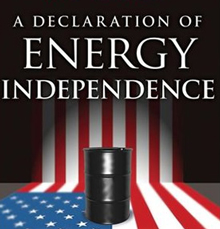
Another good thing about Joe Biden is that he is serious about global warming and has supported nuclear power. To reduce CO2 emissions which contribute to global warming, for our energy independence and national security, we need to have nuclear power. Here is what the African American Environmentalist Association had to say about Biden:

"We really like Senator Joe Biden. Joe Biden is probably the best foreign policy expert in the United States. As the new chair of the Senate Foreign Relations Committee, he will have significant input and a very visible platform for expressing his views. And as we all know, Senator Biden has no problem expressing his views. Senator Biden is also approachable and willing to chat on the elevator with the average citizen. Moreover, Joe Biden is serious about climate change and we believe he is willing to promote nuclear power as a primary solution to the problem. Joe Biden would be a very good president."

"Senator Biden seems to be okay with nuclear power because he voted for the Energy Policy Act of 2005. Biden was a cosponsor of the McCain/Lieberman Climate Stewardship Act and he voted for the very nuclear-friendly Climate Stewardship and Innovation Act." http://tinyurl.com/2lnpbq

Biden appears to be in touch with mainstream American values. He has favored school choice which would give low-income parents the option of receiving vouchers to remove their children from failing public schools. This is a bold stand for a Democratic candidate but it is a position of fairness and true populism. Poor children should have the same opportunity to a decent education as rich kids.

While clearly being pro-choice on abortion rights, Biden has voted to ban the barbaric "partial birth" abortion procedure. Again, Biden is taking a brave stand in a party where many activists make absolute abortion rights a top priority. By opposing partial birth abortion, Biden is well within the mainstream of public opinion. Polls show the vast majority of Americans favor a ban on partial birth abortion.

On the issue of gun control, Radio Iowa reports that Biden recognizes that gun control has been a political liability for Democrats. Biden opposes registration of firearms and affirms the Second Amendment. Biden does favor a ban on assualt weapons (which I oppose) but seems to be open to pro-gun rights arguments.

During the 90's, Biden did unfortunately support the "free trade" agenda of Bill Clinton and the Republican Congress. Biden voted for NAFTA and to ratify the 1994 GAAT agreement although he has since moved toward a fair trade stance. In recent years, Biden has voted against free trade agreements. And Biden has a most impressive rating of one hundred percent from the AFL-CIO.

Right Democrat has not endorsed any Presidential candidate. My first choice for President would be Senator and former Navy Secretary Jim Webb who is not running this time around although I suspect that he is gearing up for 2012. I really like John Edwards' economic populism but fear that he is moving too far to the left on some issues to win in 2008. Edwards had my support the last time around in 2004 after Dick Gephardt dropped out of the Presidential race.

Edwards is still probably the most electable of the top three contenders but I am very disappointed in his vigorous defense of partial birth abortion, opposition to nuclear power expansion and $400 haircuts from campaign funds. Biden is clearly sensibile on the issues and effective in debate although still facing probably 100 to 1 odds against winning the Presidency. It appears likely that Al Gore will enter the race which is not good news for a Democratic victory in 2008. Gore was once seen back in his Senate and House days as a socially moderate, Southern populist but is now stereotyped as a "gun grabber" and "tree hugger." Democrats need a candidate who can win some red states and connect with Middle American voters.

Friday, April 20, 2007

Pro-life Democrats applaud partial-birth abortion ruling


A federal law banning partial birth abortions has been upheld by the U.S. Supreme Court. The late Sen. Daniel Patrick Moynihan (D-NY) once described partial-birth abortion was "as close to infanticide as anything I have come upon in our judiciary."

The Partial Birth Abortion Ban Act was passed by Congress in 2003 with the support of 63 House Democrats and 17 Senate Democrats including then Senate Democratic leader Tom Daschle (D-SD) and current Majority Leader Harry Reid (D-NV). Public opinion surveys such as the Gallup Poll in 2003 found that a solidly majority of Americans favored a law prohibiting partial birth abortions.

Nebraska' Democratic Senator Ben Nelson voted for and was a co-sponsor of the legislation. The law had previously been challenged by federal courts in Nebraska, New York and California. The decision on Wednesday overturned those rulings.

Nelson issued the following statement on the court's decision:

"I agree with today's decision by the Supreme Court and I disagree with federal Judge Richard Kopf and others who have struck down the ban on partial birth abortion. I am pleased that the U.S. Supreme Court's final say overturns poor decisions made by lower federal courts.

"When Justices John Roberts and Samuel Alito sat in my office before their confirmation hearings, they pledged they would interpret the law, not make the law. Today's decision is a victory over judicial activism."

Democratic Sen. Bob Casey of Pennsylvania said he also supports the ban, but he added that America "must do more to reduce the number of unintended pregnancies."

As expected, Kristen Day issued a statement following the court ruling as Executive Director of Democrats for Life:

"Democrats For Life applauds the Supreme Court for the landmark ruling that upheld the ban on partial birth abortion. The decision closes the book on partial birth abortions in America and finally puts this deplorable procedure in the history books where it belongs. That said, we are of the opinion that just banning partial birth abortions does not do enough to prevent abortion in America. That's why we are proud to be leading the fight to reduce the abortion rate in America by 95 percent over the next 10 years by endorsing the 'Pregnant Woman Support Act'. This legislation will be introduced in the House and Senate just before Mother's Day and will do what the Supreme Court couldn't do this week: dramatically reduce the number of abortions and crisis pregnancies in America."

Jim Wallis of the progressive faith organization Sojourners called for pro-life and pro-choice Americans to unite and work together toward the common goal of reducing the abortion rate in an excellent Huffington Post column. http://tinyurl.com/26fnr3 Wallis notes that despite the euphoria among pro-life activists and the hysteria of pro-choice leaders that the partial birth abortion ban will have little impact on the number of abortions performed in the United States.

"The procedure involves very few abortions - about 2,200 out of 1.31 million in 2000, the last year for which numbers are available. And simply banning one procedure means that there are alternative procedures that will now be used. But the furious arguments on both sides again show how mostly symbolic the abortion debate remains when focused on primarily legal questions. After ten years of heated debate, the Court's decision does nothing to reduce the number of abortions."

"Most Americans are alarmed at the nation's high abortion rate, but don't support criminalizing it. They want to keep abortion legal, but make it genuinely rare. In 2005, 68 percent of Americans agreed that abortion should be legal, at least in the first three months of pregnancy. We have supported a "consistent life ethic" - which seeks a dramatic reduction in the actual abortion rate in America, without criminalizing what is always a tragic choice and often a desperate one. Others also question if total abortion bans are really pro-life because of the likely consequences of back-alley abortions, especially for poor women."

"It's time for concrete action that would actually and seriously reduce the number of abortions in America. A better approach than the symbolic legal battle would be to gather new energy for a commitment to advancing real solutions. A constructive dialogue should include how best to prevent unwanted pregnancies, support pregnant women who find themselves in an unexpected situation, and effectively reduce the abortion rate."

"Legislation that could make a real difference in changing the circumstances that make abortions more likely has been introduced again in the new Congress. The Reducing the Need for Abortions and Supporting Parents Act, introduced by Reps. Tim Ryan and Rosa DeLauro "aims to reduce the abortion rate by preventing unintended pregnancies, supporting pregnant women, and assisting new parents. One in five abortions are obtained by a teenager and 60 percent are obtained by women with incomes below 200 percent of the poverty line." We supported this legislation in the last Congress and will again. Other legislation may be introduced again by Rep. Lincoln Davis, and Democrats for Life continues to promote its 95/10 Initiative, which is still a good one."

"It's time that both pro-life and pro-choice supporters come together and support these measures, and actually do something serious and substantial in reducing the number of unwanted pregnancies and dramatically reducing the abortion rate. Who could be against that?Let's indeed save unborn lives. It's time to move from symbols to substance."

I agree. It is time to do something about the abortion rate. Democrats need to support the 95/10 initiative promoting alternatives to abortion. We need to expand the safety net for expectant mothers, require health insurers to cover pregnancy, expand adoption tax credits and strengthen child support enforcement efforts to assure that deadbeat dads help provide for their kids.

Sunday, April 15, 2007

Edwards stresses working class, Southern roots during GA visit


John Edwards brought his Presidential campaign to middle Georgia yesterday and unveiled a plan to help rural America. The Macon Telegraph reports that Edwards stressed his Southern, working class roots:
http://tinyurl.com/23qme9

It's where I'm from and I take it very personally," said the former North Carolina senator. "I grew up with eating fried chicken for dinner, going to Friday night high school football games, going to church on Sunday morning, Sunday night, Wednesday night.

"I know very well what it means to grow up in the rural South. I think the president has a responsibility to help strengthen the rural areas of America."

The son of a textile mill worker, Edwards said he spent part of his childhood in Thompson before the family settled in North Carolina where he attended middle school.

Because of his upbringing, Edwards said he also understands the economic struggles brought on when manufacturers close the doors to their rural factories and relocate elsewhere. He likened Middle Georgia to the community where he grew up in Robbins, N.C., where manufacturers left town and many people were out of a job.

Edwards said he plans to introduce on Monday a specific agenda to create incentives for employers to locate in rural areas and to provide the infrastructure to support their success.

"That means tax incentives to come there and it also means having a technology infrastructure, broadband, having water and sewer infrastructure, having highway infrastructure and having all the pieces you need that will support the relocation of new employment opportunities," he said.
As president, Edwards said his hope would be to increase the number of opportunities available to not only Americans living in rural areas, but everywhere.

"I want everybody in the country, no matter where they live or the color of their skin to have the same chances I have had," he said. "I came from nothing to having everything.
"I think that's increasingly hard in America," Edwards said. "I think we have lots of work to do to make sure that opportunity is available to everybody." http://www.macon.com/

The Macon Telegraph also reported that Edwards received a strong endorsement from Blue Dog Democratic Congressman Jim Marshall during his Georgia visit. "I think Senator Edwards has an excellent chance of being the next president of the United States," Marshall stated.

A new poll by Angus Reid Global View supports the opinion of Congressman Marshall that John Edwards may be the strongest Democratic contender. The poll showed Edwards leading former New York Mayor Rudy Guiliani by a 49 to 43 margin and a 14 point lead over former U.S. Senator Fred Thompson. http://tinyurl.com/2d9e9t

Among the serious Democratic contenders, only Edwards has taken a strong stand for fair trade policies to protect American workers.

I don't always agree with David Sirota but he makes an excellent case as to why Edwards is the best hope for working and middle Americans. Sirota points out in a recent Huffington Post column that the Wall Street interests favor the candidates in both parties who support the economic status quo that has given us the greatest income inequality since 1928. http://tinyurl.com/32jnvu

Back in 1992, the famous campaign mantra was "it's the economy, stupid." This was the seemingly populist motto that people like Wall Street CEO Bob Rubin piggybacked on to help vault Bill Clinton into the White House, and himself into the corner suite at the Treasury Department. Today, there is Today, there is a slightly amended motto operating in advance of the 2008 election: "It's the economic ideology, stupid."

The variation may appear semantic. But like the differences between the classic TV show What's Happening!! and its can't-conjure-the-old-magic update What's Happening Now!!, there is a vast chasm between the two economic campaign slogans. Whereas in the good ol' days of 1992, candidates were campaigning against the real-life consequences of a crushing recession on working folks and for concrete real-world goals to help working folks, today candidates are campaigning against even recognizing real life, and for an ideology that their own economic advisers acknowledge has no connection to actual information.

A new piece in Businessweek gives you a good idea of how this works. The article starts out exploring how a number of Wall Street CEOs are "refining" the presidential candidates' economic positions (ha! and you thought the candidates decided their own positions). We are asked to sympathize with the plight of these CEOs because the presidential campaign has gotten off to an earlier start, and they are a little behind on shaping the key positions of the candidates they finance. After the obligatory threats against candidates who dare challenge "free" trade fundamentalism, we get this nugget:

"Like most voters, Wall Streeters are also trying to size up candidates' personal qualities. At a meeting on Feb. 3 in Manhattan, bankers grilled Obama about how he makes decisions. Present were Eric Mindich of Eton Park Capital, Frank Brosens of Taconic Capital Advisors, Michael Froman of Citigroup Alternative Investments (C ), and James S. Rubin of JPMorgan Chase's (JPM ) private equity fund, among others.

Obama said a President must be able to make important decisions with little information...That message 'appealed to them because it was similar to the decisions that they make every day about risk, returns, and probability of various outcomes,' says Froman, a law school classmate of Obama. Similarly, Dalio, the Bridgewater chief who trades currencies, debt, and stocks around the world, likes the way McCain arrives at his positions. It's different from relying on academic knowledge or creative brilliance, says Dalio."

Scores of lobotomized politicians doing exactly what they are told, making information-free decisions, without looking at the hard data - this is K Street's dream. It is the domestic version of the Bush administration's reality-free march to war, with Wall Street financiers playing the role of preening neoconservative think-tankers. Remember this from Ron Suskind's now-famous New York Times article about the Bush White House:

"The aide said that guys like me were 'in what we call the reality-based community,' which he defined as people who 'believe that solutions emerge from your judicious study of discernible reality.' ... 'That's not the way the world really works anymore,' he continued. 'We're an empire now, and when we act, we create our own reality. And while you're studying that reality--judiciously, as you will--we'll act again, creating other new realities, which you can study too, and that's how things will sort out. We're history's actors . . . and you, all of you, will be left to just study what we do.'"

No wonder Ways and Means Committee Chairman Charlie Rangel (D-NY) had absolutely no idea how many new freshman Democrats were elected on platforms against lobbyist-written trade deals.

No wonder Democratic politicians trumpet Bob Rubin as a great guru of job creation at the same time his company is laying off tens of thousands of American workers. No wonder Finance Committee Chairman Max Baucus (news, bio, voting record) (D-MT) is huddling with corporate lobbyists for strategy sessions on Capitol Hill about how to pass President Bush's request to reauthorize fast-track trade authority at the very moment his own state has the lowest wages in the United States. No wonder Hillary Clinton and Barack Obama (news, bio, voting record) and John McCain (news, bio, voting record) and Mitt Romney are running for the highest office in the land, and yet are simultaneously refusing to offer anything other than "world is flat" propaganda about globalization - the most important economic issue facing the planet. Why should they behave any differently? To paraphrase the Bush White House, they don't live in the reality-based community anymore. http://huffingtonpost.com/

Trade was a major issue benefiting Democrats in key 2006 contests as noted by Chris Slevin and Todd Tucker in the Democratic Strategist:

2006 has shown us that fair trade is not only good policy, it's smart politics. A fair trade position showed that a candidate was willing to fundamentally challenge the outdated corporate consensus that government must be hands-off when it comes to supporting the middle- and working-class, while being hands-on when pushing policies like NAFTA and WTO that redistribute income upwards. Contenders and donors in 2008 hoping to sweep even more elected offices will have to recognize that voters are ready to move beyond "staying the course" on the failed trade policies of the past and to embrace an agenda which promotes economic security and mobility for all. http://tinyurl.com/268cd3


Thursday, April 05, 2007

Tonelson: Democratic trade plan needs more work

Like other economic populists, I had high expectations that our new Congress would take a harder line on trade policy to protect American jobs. Alan Tonelson, a economist with the U.S. Business and Industry Council Educational Foundation, has analyzed the Democratic Congressional trade policy and found it lacking. Tonelson suggests that Democrats are still more likely than Republicans to reform our self-destructive trade policies but the new majority Congressional leadership is far from having the correct approach to dealing with the trade deficit. Half-hearted symbolism and feel-good policies that give the appearance of aiding residents of developing countries will do nothing to protect American jobs.

Democrats' Trade Plan Needs More Work
Alan Tonelson
American Economic Alert

Wednesday, April 04, 2007

After several re-readings of the new House Democratic trade plan, I’m still thoroughly confused by the policy proposals developed by Ways and Means Committee trade czars Charles Rangel (D-NY) and Sander Levin (D-MI), and endorsed by the House Democratic caucus. With a handful of exceptions, their prescriptions look either downright contrary to or utterly irrelevant to the goal of changing trade flows to benefit U.S. producers and their employees significantly.

In fairness, no one should rush to judgment of “A New Trade Policy for America.” In the first place, the plan is awfully general in nature. Only one page long, it’s little more than a wish list that leaves open nearly every major question concerning how actually to devise a trade policy that finally benefits domestic American manufacturing, service, and agricultural businesses.

Admittedly though, it’s hard to spell out how to reverse more than 30 years of destructive trade and economic policies in a single page. In addition, the exact intent behind the document is unclear, despite its modest substance. No one is calling the plan a take-it-or-leave-it proposition, and no one is calling it a simple opening gambit in a protracted negotiation between the House Democrats and the Bush Administration.

Even less clear is the outcome desired by Speaker Nancy Pelosi (D-CA) and Majority Leader Steny Hoyer (D-MD) – who will decisively influence the final result. In fact, these leaders may not yet know themselves – because trade policy is not one of their leading priorities. Yet given these unknowns, plus the confusion bound to result from posturing and grandstanding by individual Members on both sides of the trade/jobs/outsourcing issue, it is still important to understand how risky tactically and how conceptually deficient a starting point

“A New Trade Policy” seems to be – either for evaluating the string of recently completed or nearly completed trade agreements or for judging the president’s upcoming request for renewed Fast Track trade negotiating authority.It’s entirely possible that what really counts in this document is a handful of ideas that the White House, the outsourcing lobby, and its hired hands in Congress could view as outright deal-killers.

Some trade critics sound confident (confidentially, of course) that their opponents will dig in over these issues even if it dooms to defeat the upcoming trade agreements or Fast Track renewal.If this is the Democratic strategy, however, it could be too clever by half.

For example, “A New Trade Policy” clearly calls for making vital medicines more readily available to impoverished third world populations by granting low-cost third world drug companies more access to the formulas and other intellectual property of their U.S. and other rich-country competitors.

Totally unacceptable to the huge and powerful American pharmaceutical industry, right? Not exactly. Big Pharma not only has long feared suffering a public relations disaster on this issue, but also won’t or can’t explain effectively that, without strong intellectual property protection, drug discovery efforts, which will benefit all of humanity, will grind to a halt. As a result, the pharmaceutical industry has rolled over on this issue before and could well again.

Similarly, the multinationals may actually agree to Democratic environmental proposals that look like an effort to gain Congressional approval of the Kyoto global warming treaty through the back door. A growing number of these firms already are sporting more green than New York City cops on St. Patrick’s Day.

More worrisome, the outsourcers’ camp may finally wise up and acknowledge that even if the Democrats’ proposals on improving worker rights and conditions in the third world – which have loomed so large in the trade policy debate for so long – are strengthened considerably, not one is even remotely fully enforceable. Therefore, the outsourcers can safely support them after all, without worrying about the implications for their overseas factories.

Most Democrats and their constituencies have focused so tightly on workers’ rights issues that they’ll have few credible objections left if their adversaries “Just Say Yes” to such provisions.

Even more tightly boxed in are most of the hard-core Democratic trade critics in Congress and in the non-government organization (NGO) world. They could easily find themselves in the unenviable position of having to explain to the vastly more numerous centrist or more apathetic Congressional Democrats exactly why labor language supported by both their leadership and many Republicans doesn’t cut the mustard. Even dicier for them is the argument that, although the labor and environmental provisions are good enough for the Peru, Panama, and possibly Colombia Free Trade Agreements, they aren’t strong enough to merit renewal of Fast Track negotiating authority.

Aside from these tactical considerations, serious substantive flaws riddle “A New Trade Policy” as well. For example, the document strongly supports three of the worst examples of outsourcing-focused trade deals of the last decade – the agreements with four Andean narcotics-producing countries in South America, with sub-Saharan Africa, and with Haiti.

The stated pretext for these trade deals was that by aiding third world regions with trade breaks, we were in effect preventing the growth of extremist forces and thereby strengthening U.S. national security – which, of course, was one of the Bush administration’s main selling points for Fast Track renewal five years ago in the wake of 9/11. Yet these three trade agreements typify virtually everything wrong with U.S. trade policy from NAFTA forward.

The trade model embodied in all these deals involved targeting penny-wage countries and regions far too poor to provide consumer markets for U.S.-made goods and services, but entirely capable of flooding the U.S. market with labor-intensive goods. Yet because many other low-income nations have received expanded access to the American consumer – including more potent competitors, the intended beneficiaries of the three aforementioned trade deals have gained little or nothing from trade liberalization.

To add insult to injury, these deals tend to be so sloppily written that they allow Chinese and other companies from mercantilist Asian countries to use loopholes to capture most of the gains. If Democrats really want U.S. trade policy to benefit needy countries, they’ll call for clear geopolitical priorities to be set and for hard choices to be made in doling out trade breaks..

Just as misguided is “A New Trade Policy’s” call for more effective U.S. diplomacy in the currently stalled Doha Round of world trade talks. Instead, these negotiations, conducted under World Trade Organization’s auspices, need to be completely overhauled. The Doha Round’s mandate explicitly aims at channeling most of the benefits of trade liberalization to developing countries.

The interests of America’s domestic manufactures, farmers, and working families literally aren’t even on the screen. It falls to the Democrats, since the Bush administration won’t act, to put them there.Unless the U.S. government declares that accepting the Doha framework was completely mistaken, and that it must be replaced by one based on full reciprocity, developing countries simply won’t agree to meaningful market-opening. Yet how can this happen unless the Democrats, with their majorities in both house of Congress, take the lead and force the hand of the Bush administration?

By the same token, the Democrats need to make clear that the WTO’s one-country-one-vote governance and dispute-resolution procedures are utterly unacceptable, and must be replaced by rules reflecting the real balance of economic power in today’s world. Without the Democrats’s injecting some realism into the process – which “A New Trade Policy” fails to do, any Doha agreement will turn into yet another engine of deficit expansion, and job and production exporting.

Just as important, already dangerous global economic imbalances will be worsened, and the world brought that much closer to an economic crack-up – which will hurt most of all developing countries, about which the Democrats profess to be concerned.

Other provisions of the Democrats’ trade guidelines suffer from a bewildering confidence in policy tools that proved their ineffectiveness long ago. Why, for example, bother to “press for immediate [emphasis in original] Administration action” against Asian currency manipulation? The White House has made unmistakably clear its determination to engage in chit-chat diplomacy while American manufacturing continues to get clobbered. If the Democrats don’t understand by now that swift, concerted action by the House and Senate is the answer, when will the light go on?

The call to break down foreign trade barriers by filing lots of new WTO cases, meanwhile, springs from a view of the trade body just as unrealistic as the Bush Administration’s – i.e., that this Clinton-era creation is like an American court of law, where all parties to a dispute can be assured of getting a fair shake from impartial magistrates. The Democrats must recognize the WTO for what it is: a politically-motivated, anti-American body, whose membership desperately needs to wrack up trade surpluses with the United States to keep their own economies growing. Without such recognition, the multilateral portions of the Democrats’ trade agenda will remain recipes for futility.

Finally, as indicated in the above discussion of the plan’s politics, the rest of “A New Trade Policy” continues the bad habit of confusing symbolism with substance. In line with every pronouncement from left-of-center trade critics since the NAFTA debate fifteen years ago, the Democratic plan insists on trade agreements that “raise standards of living” and thereby “create new markets for U.S. goods” by conditioning third world access to America’s economy to more genuinely enforced rights for workers.

Presumably, major pay increases would follow with concomitant purchases of U.S.-made goods and services.Unfortunately, however, even the “right kind” of U.S.-third world trade won’t create vast new consuming populations that will Buy American and thereby re-balance dangerously one-sided world trade flows.

The global labor market will be glutted for decades due to the sheer size of the developing countries’ populations and workforces, to their youthfulness, to their sky-high levels of un- and underemployment, and to the NAFTA-like trade deals that have been steadily making these workers available to global businesses. Strong downward pressure on wages everywhere is the inevitable result. The inclusion of feel-good wording in trade expansion deals won’t change the inexorable realities of the labor markets.

Soaring global worker supply will produce the same effects for highly productive and educated workers, too, though the inevitable market glitches will create periodic supply-demand mismatches and temporary wage spikes. In fact, even if all third world workers enjoyed Nordic-level rights to organize and bargain collectively and strike, the price of their labor would remain orders of magnitude cheaper than their counterparts in the lightly populated developed countries for the foreseeable future.

As a result, without much more fundamental trade policy changes, wage and pricing pressure would continue to disadvantage domestic American companies and their workers, and global economic imbalances would keep growing.The labor-standards approach is impossible to implement as well.

How, for instance, could these provisions possibly be enforced? How many zillion American officials would need to be dispatched to China and India and Vietnam and Pakistan and Bangladesh and Indonesia and Brazil and Mexico and scores of other countries to inspect how many zillion factories? How many more bureaucrats would have to read their reports, and catalogue and process violations, and litigate or arbitrate disputes and appeals?

Moreover, achieving these goals in the United States – a large but reasonably orderly country – has been difficult enough for Washington. How can it be feasible in the generally chaotic environments of developing countries? These problems, moreover, would be insuperable no matter what particular set of labor standards is used for trade agreements – ostensibly a major bone of contention between House Democrats and the administration at this point.

A House Democratic caucus genuinely determined to improve U.S. trade policy would understand that candor and realism are the best guides to action. The candor entails declaring front and center that:– The well-being of the United States, its citizens, and its producers – not foreign workers – is the paramount priority of American trade policy. A failure to bring global trade flows into sustainable balance soon increasingly risks economic disaster for rich and poor countries alike in the form of a crisis triggered by China and others bailing out of their dollar holdings.

The United States simply cannot bear much longer its current and unmanageable burden of global importer of last resort.– And the pace of economic progress in the developing world will need to proceed more slowly as the United States revamps its trade policies – unless these countries can adopt growth models that involve increasing domestic demand, or Japan and Europe start absorbing many more third world imports. The realism entails acknowledging that:– The United States will almost surely need to act unilaterally to safeguard its interests and re-stabilize the world economy – if only to kick-start meaningful multilateral cooperation; – Limiting foreign access to America’s own market is an inescapable part of the solution.

Such limits will be much easier to develop and implement than embarking on social engineering projects in – and requiring the cooperation of – the vast developing world; and – Time and energy should not be squandered devising – and certainly not negotiating – elaborate, legalistic criteria for imposing limits on trade. The United States must act quickly and forthrightly to protect its own interests.The Bush administration has proven that it is incapable of providing the necessary vision and leadership to ensure that globalization brings benefits to all Americans through higher standards of living.

“A New Trade Policy for America” reveals that the House Democrats have a long way to go as well. But of the two, the Democrats stand a better chance of formulating the policies that will get the country to that point – if they put aside their hobbyhorses and shift their focus to American producers and workers. http://americaneconomicalert.org

Wednesday, March 28, 2007

AFL-CIO joins with NRA in defending worker gun rights

Today's Tampa Tribune reported that the AFL-CIO has joined the National Rifle Association in supporting a proposed law to protect the gun rights of Florida workers. One of the leading opponents of gun rights in Florida is the state's Chamber of Commerce. Big business leaders feel that that employees should not have the right to keep and bear arms while traveling to and from work. http://tinyurl.com/2xuej3

By KEVIN BEGOS The Tampa Tribune
March 28, 2007

TALLAHASSEE - The issue was whether employees have the right to keep guns in their cars at work, and the National Rifle Association got help from an unexpected ally at a committee hearing Tuesday: the AFL-CIO labor union.

The business community strongly opposes the new NRA-supported legislation, but that's no surprise, said AFL-CIO spokesman Rich Templin, who said big businesswants sweeping new property rights.

"They're seeking to put the rights of dirt over the rights of people," Templin said. "They're seeking to say that the rights of Floridians stop at the boundaries of our property. People should not have to lose their rights simply to keep a job."

Templin said the labor group was motivated by situations in other states in which workers were fired for having union material in cars.

The Florida Chamber of Commerce and other business groups said the bill attacks their right to regulate behavior on private property. The bill sponsor is Sen. Durell Peaden, R-Crestview, and an identical House bill is sponsored by Rep. Dennis Baxley, R-Ocala.

Peaden said the right to bear arms is the core issue in the bill.

Chamber Executive Director Mark Wilson said the bill is the biggest assault on private property rights the Legislature has been asked to consider. He noted that for many years his group and the NRA were partners in fighting to limit government power.

"When the NRA sides with labor unions for bigger government, we have a problem," Wilson said.

Sen. Nancy Argenziano, R-Crystal River and Criminal Justice committee chairwoman, said businesses aren't the only ones with property rights.

"I think there's two property rights," Argenziano said, referring to the owner of a car and the owner of a parking lot. "I think it's a great bill."

The committee voted 7-1 to approve Peaden's bill, but with an amendment that requires the guns or other private material to be kept out of sight in the car.

The vote doesn't guarantee the bill will pass. Last year a similar bill passed initial committee stops, but it stalled later and was not brought to a full floor vote. http://www.tbo.com

A survey of union members would likely show strong support for the right to keep and bear arms among the rank and file. Let's hope that the AFL-CIO endorsement of the Florida gun rights bill is just the start of a long-term partnership between the NRA and labor.

Friday, March 23, 2007

Coalition Co-Chairs applaud key Blue Dog priorities in Democratic budget

WASHINGTON, DC – The Co-Chairs of the fiscally conservative, Democratic Blue Dog Coalition have commended House Budget Committee Chairman John Spratt for including key Blue Dog budget priorities in the Democratic Budget Resolution.

The Blue Dog Co-Chairs applauded Chairman Spratt for including the following Blue Dog-advocated budget priorities:

Adherence to pay-as-you-go (PAYGO) budget discipline, a principle long advocated by the Blue Dogs as a solution for putting an end to deficit spending and reducing the nearly $9 trillion national debt;

A commitment to the extension of statutory PAYGO requirements, a tool that was instrumental in the return of budget surpluses during the 1990s;

A commitment to provide adequate funding for our government’s number one priority: the defense of our country and our citizens. This budget provides for a strong national defense, matching the funding request in the President’s budget and providing increases in homeland security funding levels;

Holding the line on mandatory spending levels, putting our country back on the path to fiscal responsibility; and,

Putting an end to irresponsible deficit spending, providing for a budget surplus by 2012 and greater deficit reduction than the President’s budget over 5 years.

“I applaud Chairman Spratt for his commitment to two principles we as Blue Dogs believe are essential if a government is to be accountable to its people – a strong national defense and fiscal responsibility” said Congressman Mike Ross (D-AR), Blue Dog Co-Chair for Communications.

“Since PAYGO requirements expired in 2002, out of control deficit spending has resulted in trillions of dollars in new national debt. By returning to PAYGO budget discipline, this Budget Resolution takes the first step toward balancing the budget and returning our government to a fiscally responsible course.”

“With the inclusion of key Blue Dog priorities in the budget resolution, it is clear that the Blue Dogs are enhancing the Democratic agenda and making headway to restore fiscal honesty and responsibility to our budget,” said Congressman Allen Boyd (D-FL), Blue Dog Co-Chair for Administration. “As we work to reverse the tide of deficit spending that we have seen over the past six years, the Blue Dogs will continue to play a strong and central role in restoring our fiscal house and plotting a path for a brighter fiscal outlook in the future.”

“As a member of the Budget Committee and Policy Co-Chair for the Blue Dogs, I am proud that Congress is finally returning to the principle of fiscal responsibility,” said Rep. Dennis Moore (D-KS). “Americans are not afforded the luxury of living beyond their means and our government should stop doing so at the expense of future generations. Strong PAYGO rules that the Blue Dogs fought for years to restore will help us achieve the first balanced budget proposed by Congress in six years.”

Blue Dog Whip Rep. Stephanie Herseth (D-SD) said, “Budgets are statements of our nation’s values and priorities. Unfortunately, for far too long, leaders in the House have had the wrong priorities and have been unwilling to make the tough choices necessary to balance the federal budget. By adopting strong PAYGO rules and making a commitment to fiscal responsibility, this budget takes key initial steps toward restoring our nation’s financial health.”

* BUSINESS GROUP CALLS FOR FAST TRACK REJECTION

The U.S. Business & Industry Council (USBIC) is urging Congress to reject President Bush's request for a one-year renewal of fast-track trade negotiating authority.Rather than continue fast track, the USBIC is calling for a complete moratorium on new trade agreements until the trade deficit is brought under control and balance is restored to the world trading system.

According to the USBIC, when the U.S. begins considering new trade agreements again, they should be made as the Constitution requires, with full input from domestic interests through their elected representatives—not by the Executive branch with the guidance of multinational corporations.

USBIC President Kevin L. Kearns stated that passing fast track severely limits debate on new trade deals and denies Congress the right to amend them.

Says Kearns, "Renewing fast track would allow the President to stay on a policy course that has wracked up nearly $3.6 trillion in merchandise trade deficits, lost huge chunks of vital domestic manufacturing markets to imports, and hemorrhaged millions of high-wage manufacturing jobs to foreign competitors."

Saturday, February 03, 2007

Jim Webb for President ?


Before watching his electrifying response to the Bush State of the Union address, I had no idea that Jim Webb was in the ranks of great communicators like JFK and Ronald Reagan. With a mix of populism and patriotism, Webb is the one of the few political leaders who have any grasp of how to restore America's sense of unity and purpose.

Maybe a Presidential candidacy this soon in his political career seems unrealistic, but Jim Webb impresses me far more than any of the current Democratic (or Republican) Presidential prospects for 2008. Webb could attract support from across the political spectrum. There is no other political figure that I am aware of getting praise from The Nation http://tinyurl.com/38qmc9 on the left and The American Conservative http://tinyurl.com/2sg5wt on the right.

Even most students of politics have probably forgotten that Ronald Reagan first sought the Republican Presidential nomination in 1968 - only two years after his election as Governor of California. And unlike Webb, Reagan had never served as Navy Secretary. If Nixon had lost the close 1968 election to Humphrey, Reagan might well have won the Presidency in 1972 instead of 1980.My guess is that John McCain is our most likely next President leaving another open Democratic race in 2012. Webb could run in 2008 and put himself a strong position to win another four years down the road.

Just in case you missed it, here is the text of Jim Webb's great speech:

Good evening.

I'm Senator Jim Webb, from Virginia, where this year we will celebrate the 400th anniversary of the settlement of Jamestown -- an event that marked the first step in the long journey that has made us the greatest and most prosperous nation on earth.

It would not be possible in this short amount of time to actually rebut the President's message, nor would it be useful. Let me simply say that we in the Democratic Party hope that this administration is serious about improving education and healthcare for all Americans, and addressing such domestic priorities as restoring the vitality of New Orleans.

Further, this is the seventh time the President has mentioned energy independence in his state of the union message, but for the first time this exchange is taking place in a Congress led by the Democratic Party. We are looking for affirmative solutions that will strengthen our nation by freeing us from our dependence on foreign oil, and spurring a wave of entrepreneurial growth in the form of alternate energy programs. We look forward to working with the President and his party to bring about these changes.

There are two areas where our respective parties have largely stood in contradiction, and I want to take a few minutes to address them tonight. The first relates to how we see the health of our economy -- how we measure it, and how we ensure that its benefits are properly shared among all Americans. The second regards our foreign policy -- how we might bring the war in Iraq to a proper conclusion that will also allow us to continue to fight the war against international terrorism, and to address other strategic concerns that our country faces around the world.

When one looks at the health of our economy, it's almost as if we are living in two different countries. Some say that things have never been better. The stock market is at an all-time high, and so are corporate profits. But these benefits are not being fairly shared. When I graduated from college, the average corporate CEO made 20 times what the average worker did; today, it's nearly 400 times. In other words, it takes the average worker more than a year to make the money that his or her boss makes in one day.

Wages and salaries for our workers are at all-time lows as a percentage of national wealth, even though the productivity of American workers is the highest in the world. Medical costs have skyrocketed. College tuition rates are off the charts. Our manufacturing base is being dismantled and sent overseas. Good American jobs are being sent along with them.

In short, the middle class of this country, our historic backbone and our best hope for a strong society in the future, is losing its place at the table. Our workers know this, through painful experience. Our white-collar professionals are beginning to understand it, as their jobs start disappearing also. And they expect, rightly, that in this age of globalization, their government has a duty to insist that their concerns be dealt with fairly in the international marketplace.

In the early days of our republic, President Andrew Jackson established an important principle of American-style democracy -- that we should measure the health of our society not at its apex, but at its base. Not with the numbers that come out of Wall Street, but with the living conditions that exist on Main Street. We must recapture that spirit today.

And under the leadership of the new Democratic Congress, we are on our way to doing so. The House just passed a minimum wage increase, the first in ten years, and the Senate will soon follow. We've introduced a broad legislative package designed to regain the trust of the American people. We've established a tone of cooperation and consensus that extends beyond party lines. We're working to get the right things done, for the right people and for the right reasons.

With respect to foreign policy, this country has patiently endured a mismanaged war for nearly four years. Many, including myself, warned even before the war began that it was unnecessary, that it would take our energy and attention away from the larger war against terrorism, and that invading and occupying Iraq would leave us strategically vulnerable in the most violent and turbulent corner of the world.

I want to share with all of you a picture that I have carried with me for more than 50 years. This is my father, when he was a young Air Force captain, flying cargo planes during the Berlin Airlift. He sent us the picture from Germany, as we waited for him, back here at home. When I was a small boy, I used to take the picture to bed with me every night, because for more than three years my father was deployed, unable to live with us full-time, serving overseas or in bases where there was no family housing. I still keep it, to remind me of the sacrifices that my mother and others had to make, over and over again, as my father gladly served our country. I was proud to follow in his footsteps, serving as a Marine in Vietnam. My brother did as well, serving as a Marine helicopter pilot. My son has joined the tradition, now serving as an infantry Marine in Iraq.

Like so many other Americans, today and throughout our history, we serve and have served, not for political reasons, but because we love our country. On the political issues -- those matters of war and peace, and in some cases of life and death -- we trusted the judgment of our national leaders. We hoped that they would be right, that they would measure with accuracy the value of our lives against the enormity of the national interest that might call upon us to go into harm's way.

We owed them our loyalty, as Americans, and we gave it. But they owed us sound judgment, clear thinking, concern for our welfare, a guarantee that the threat to our country was equal to the price we might be called upon to pay in defending it.

The President took us into this war recklessly. He disregarded warnings from the national security adviser during the first Gulf War, the chief of staff of the army, two former commanding generals of the Central Command, whose jurisdiction includes Iraq, the director of operations on the Joint Chiefs of Staff, and many, many others with great integrity and long experience in national security affairs. We are now, as a nation, held Hostage to the predictable -- and predicted -- disarray that has followed.

The war's costs to our nation have been staggering. Financially.
The damage to our reputation around the world.
The lost opportunities to defeat the forces of international terrorism.
And especially the precious blood of our citizens who have stepped forward to serve.

The majority of the nation no longer supports the way this war is being fought; nor does the majority of our military. We need a new direction. Not one step back from the war against international terrorism. Not a precipitous withdrawal that ignores the possibility of further chaos. But an immediate shift toward strong regionally based diplomacy, a policy that takes our soldiers off the streets of Iraq's cities, and a formula that will in short order allow our combat forces to leave Iraq.

On both of these vital issues, our economy and our national security, it falls upon those of us in elected office to take action.

Regarding the economic imbalance in our country, I am reminded of the situation President Theodore Roosevelt faced in the early days of the 20th century. America was then, as now, drifting apart along class lines. The so-called robber barons were unapologetically raking in a huge percentage of the national wealth. The dispossessed workers at the bottom were threatening revolt.

Roosevelt spoke strongly against these divisions. He told his fellow Republicans that they must set themselves "as resolutely against improper corporate influence on the one hand as against demagogy and mob rule on the other." And he did something about it.

As I look at Iraq, I recall the words of former general and soon-to-be President Dwight Eisenhower during the dark days of the Korean War, which had fallen into a bloody stalemate. "When comes the end?" asked the General who had commanded our forces in Europe during World War Two. And as soon as he became President, he brought the Korean War to an end.

These presidents took the right kind of action, for the benefit of the American people and for the health of our relations around the world. Tonight we are calling on this president to take similar action, in both areas. If he does, we will join him. If he does not, we will be showing him the way.

Thank you for listening. And God bless America.