Wednesday, August 20, 2008

Jay McDonough: Obama Should Use The Mantra


Jay McDonough of Examiner.Com www.examiner.com and Swimming Freestyle www.swimmingfreestyle.net has sound advice for the Obama campaign and Democrats this year:

As noted in the last post, the Barack Obama folks would do well to concentrate on a campaign reminding voters of the performance of the Bush Administration for the last eight years and the resultant economic mess. More of the same, economy, more of the same, economy. Hit it hard....and often.

As a primer:

- Inflation is rising. The U.S. economy is currently experiencing “the worst 12 months of inflation in almost three decades.” http://www.latimes.com/news/nationworld/washingtondc/la-fi-economy20-2008aug20,0,3636868.story

- Real wages are declining. Americans are experiencing a “de facto pay cut.” “Almost everything costs more, even as [Americans] have less money to pay for it.”
http://www.nytimes.com/2008/08/15/business/economy/15econ.html?_r=1&bl&ex=1219032000&en=1bd6be8f0fed5637&ei=5087%0A&oref=slogin

- Unemployment is increasing. Americans have experienced “seven consecutive monthly declines in employment.”
http://www.latimes.com/business/la-fi-jobless2-2008aug02,0,7707884.story

- Cost of food is rising. Food prices are quickly increasing and even school lunches across the country will be more expensive in the coming year.
http://hamptonroads.com/2008/08/norfolk-school-board-vote-increasing-lunch-prices
http://www.desmoinesregister.com/apps/pbcs.dll/article?AID=/20080819/NEWS02/808190327/1004

- Optimism about economy is declining. “Optimism in the U.S. economy among CEOs of the nation’s fastest-growing private companies” is at a 16-year low. Americans are similarly pessimistic.
http://www.swamppolitics.com/news/politics/blog/2008/08/economy_weighs_on_voters_minds.html

- Foreclosures are still increasing. Home foreclosures were up 55 percent over last year in July and “17 [percent] of all homes for sale in the U.S. are repossessed properties.”
http://thinkprogress.org/search/search.php?q=foreclosure&x=20&y=11

http://www.examiner.com/x-243-Progressive-Politics-Examiner~y2008m8d20-Obama-should-use-the-mantra

And in addition to Jay's economic mantra, here's a link to a site that will provide Obama with the data for dozens of Ross Perot-like charts documenting the decline of a broad based prosperity in America. http://www.stateofworkingamerica.org/

Economic fairness for America's workers is issue number one in '08.

Friday, August 15, 2008

Michael Lind on Democrats and a Newer Deal


In my view, Michael Lind is one of the brightest political minds in America today. Lind, a Senior Fellow at the New America Foundation, has a most astute analysis at Salon.Com concerning how Democrats can restore the New Deal Coalition. Check out this link to the full article. http://www.salon.com/opinion/feature/2008/08/15/newer_deal/

The New Deal Coalition dominated American politics from 1932 to 1968 and remained a powerful force until the election of Ronald Reagan in 1980 although certainly weakened by the McGovern debacle of 1972. Lind writes:

"The Roosevelt Party ran on economic issues, and didn't care whether voters were in favor of sex or against it on principle as long as they supported the New Deal. The McGovern Party, by contrast, has made social issues its litmus test. Economic conservatives have had a home in the McGovern Party, as long as they support abortion rights and affirmative action, but social democrats and populists who are pro-life or anti-affirmative action are not made nearly as welcome."

"Beginning with its namesake, George McGovern, in 1972, the McGovern Party has been trounced repeatedly by the Nixon Party, not because of its economic agenda, which the public actually prefers to the alternative, but because of its unpopular stands on issues like race-based affirmative action, illegal immigration, crime and punishment, and national security. Progressives are fooling themselves when they dismiss these as insignificant "wedge issues." What can be more important than whether civil rights laws apply equally to everyone -- even those wicked "white males" -- regardless of race and gender, or whether, in an age of terrorism, the nation's border and immigration laws are enforced? There is no democracy in the world today where a party that stood for ethnic quotas that excluded the national majority or welfare benefits for illegal immigrants would not be in political danger. As I write, all of the major European democracies except Britain are governed by parties of the right that are more nationalist and populist than the left parties they have defeated. And Gordon Brown isn't looking too hale either."

Lind contends that it is possible for Democrats to allow for a diversity of opinion on the social issues and build a New Deal-style coalition as a large majority of Americans hold a number of economic populist views and favor the same sort of activist role by government once advocated by FDR, Truman and JFK. Lind continues:

"In fact, the majority of Americans, including many social conservatives, never ceased to support New Deal policies, which from Social Security and Medicare to the G.I. Bill have remained popular with the public throughout the entire Nixon-to-Bush era. Consider the results of a June 17, 2008, Rockefeller Foundation/Time poll. When "favor strongly" and "favor somewhat" are combined, one gets the following percentages for policies favored by overwhelming majorities: increase the minimum wage to keep up with the cost of living (88 percent); increase government spending on things like public-works projects to create jobs (86 percent); put stricter limits on pollution we put into the atmosphere (85 percent); limit rate increases on adjustable rate mortgages (82 percent); provide quality healthcare to all, regardless of ability to pay (81 percent); impose higher tax incentives for alternative energy (81 percent); provide government-funded childcare to all parents so they can work (77 percent); provide more paid maternity/dependent care leave (76 percent); make it less profitable for companies to outsource jobs to foreign countries (76 percent); expand unemployment benefits (76 percent)."

"Note that almost all of the policy proposals that excite the American public are exactly the sort of old-fashioned, "paleoliberal" spending programs or systems of government regulation that are supposed to be obsolete in this era of privatization, deregulation and free-market globalization, according to neoliberals and libertarians. Bill Clinton to the contrary, the public clearly does not think that "the era of big government is over." Nor does the public show any interest in the laundry lists of teeny-weeny tax credits for this and that that neoliberals love to propose, to appear compassionate without spending real money. The public wants the middle-class welfare state to be rounded out by a few major additions -- chiefly, healthcare and childcare -- and the public also wants the government to grow the economy by investing in public works and favoring companies that locate their production facilities inside the U.S. There, in a sentence, is a program for a neo-Rooseveltian party that could effect an epochal realignment in American politics."

Lind notes that Jimmy Carter in 1976 and Bill Clinton in 1992 won by appealing to populist sentiment but changed their tune after winning office. Carter took his substantial evangelical Christian constituency for granted, took generally liberal positions on social issues (although Carter did play a role in the passage of the Hyde Amendment which banned federal funding of abortions) and championed airline deregulation instead of economic populism. There is no doubt that Carter missed a golden opportunity to revitalize the New Deal Coalition. Clinton pushed for free trade deals at the expense of working class Americans and supported financial deregulation while becoming closely identified with the pet causes of cultural liberalism. Failed Democratic nominees from George McGovern to John Kerry have been rejected in large part because of their distance from mainstream America on issues like gun control, traditional family values and abortion rights.

Making the case for a Democratic Party focused on economic populism, Lind argues for a "big tent" approach to the social issues.

"A Newer Deal party that ran on this economic agenda could attract Southern Baptist creationists as well as Marin County agnostics. I hear the riposte already: "I'd rather move to Canada than share the Democratic Party with those people!" But across the country there are lots of potential Democratic congressional and senatorial candidates who would like to move to Washington -- and might be able to, if social conservatives were welcomed to a big-tent party defined almost exclusively by economic liberalism."

And Lind has no illusions about the difficulty of selling this approach to the Democratic Party's activist base. Lind explains the obstacles and the opportunities for Democrats if they are willing to move beyond the culture war:

"Unfortunately, the upper-middle-class left, with its unerring instinct for political suicide, is probably incapable of seizing the moment and bringing more Baptists and Catholics into the Democratic Party, because it has developed an almost superstitious distaste for religious conservatives. This might make sense if the religious right were still a menace, as it was a generation ago. But with the exception of state referenda and constitutional amendments banning gay marriage, religious conservatives have lost one battle after another, from failed attempts to promote creationism on school boards to the doomed effort to repeal Roe v. Wade.'

"There would have been no Progressive Era without the followers of William Jennings Bryan and no New Deal without the support of ancestors of many of today's Protestant evangelicals and traditionalist Catholics. Social conservatives, having lost the culture war, should be offered not only a truce but also an opportunity to join a broad economic campaign for a middle-class America, as many of them did between 1932 and 1968. When pro-choicers and pro-lifers unite in cheering the public investment and living wage planks at the convention of the neo-Roosevelt party, we will know that the political era that began in 1968 is truly and finally over."

I agree that many of our party activist types would rather continue to lose election after election than to coexist with social traditionalists, however, Lind has given Democrats a real strategy for building a long-term governing majority.

Mary Landrieu commended for support of education reform


Democrats for Education Reform www.dfer.org has commended Senator Mary Landrieu of Louisiana for taking a principled stand on behalf of education reform:

Louisiana's senior senator, Senator Mary Landrieu, has strived to reform our country's education system throughout her career as a legislator. She has actively supported education reform in Louisiana, and has been a strong proponent of charter schools throughout the parishes of her state. Senator Landrieu says of her duty to the children of this country, "I believe it is my job as Louisiana's senior senator to help our state find the resources it needs to secure for every child the finest education possible."

Since winning her Senate seat in a hotly contested election in 1996, Landrieu has been a strong advocate of charter schools and education reform. She opposed abandoning the public education system in favor of private school vouchers in Washington D.C., and was the subject of brutal criticism for doing so. She said of the attacks, "I'm willing to take a few lashes that are being dished out if it means that the children in the city get more opportunities for a quality education."

In the late 90s, Sen. Landrieu worked with a bi-partisan coalition to give scholarships to D.C. students for their education through the D.C. Student Opportunity Scholarship Act of 1997, though President Clinton later vetoed the bill. Sen. Landrieu has often been a voice of dissent against the status quo, joining seven Republicans and two other Democrats in May of 2008 to sponsor a bill honoring the achievements of charter school students. In introducing S. Res 556, Landrieu said, "Back home in New Orleans, in the aftermath of the catastrophic devastation from Hurricanes Katrina and Rita came an opportunity to recreate a public school system through bold innovation and community involvement. The educational entrepreneurship of public charter schools has been integral to the city's recovery. They are inspiring positive changes throughout the system, as other schools work to cultivate the same benefits. Our hope is that all public schools in New Orleans will enjoy the same entrepreneurship, independence, and community involvement that the public charter schools have fostered."

Landrieu's efforts to support charter schools in Louisiana, and to improve the quality of education in Washington D.C., have pushed her to the forefront as an education reformer and an open-minded legislator who is willing to fight for what is right for our children.

http://www.dfer.org/2008/07/louisianas_seni.php#more

Sunday, July 27, 2008

Democratic Senator makes case for expansion of nuclear power


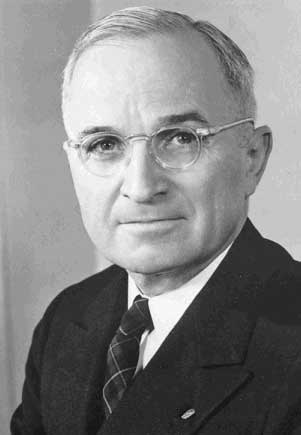
PRESIDENT TRUMAN SIGNS THE ATOMIC ENERGY ACT OF 1946

Writing in today's edition of Wilmington's The News Journal {www.delawareonline.com}, U.S. Senator Tom Carper of Delaware explains why nuclear power must play a key role in solving our national energy problems.

Carper writes:

In 1879, Thomas Edison created the first light bulb, starting an electric revolution. The following year, Edison opened the world's first electric power plant in Manhattan, fueled by coal to power 800 light bulbs in homes, businesses, and street lamps. As he watched the transformation, Edison could not have imagined the New York City of the 21st century.

Today, the electricity that illuminates homes, heats and cools businesses, and drives the economy comes from a variety of sources. Fossil fuels including coal and natural gas provide nearly three-fourths of U.S. electricity, but at a cost of dirty air, acid rain and dangerous greenhouse gases. Little did Edison know the potentially catastrophic effects of electricity from dirty coal.

Fortunately, there are other energy alternatives. They include wind power, natural gas and hydroelectricity. Significant advances are coming in solar energy, too, some of them emanating from research under way in Delaware. Some day we hope to burn coal cleanly, but that remains years away.

Today, nuclear power is the largest source of carbon-free electricity, providing roughly 20 percent of our nation's power. Electricity from nuclear energy helps avoid burning fossil fuels and reduces air pollution and global warming.

In the not-too-distant future, offshore wind turbines will begin to make a significant contribution to the state's energy supply, as could solar, biomass, and stronger conservation measures. But nuclear remains an important element of the current electricity supply.

Nuclear energy could do even more in the years to come. Today cars and trucks rely on gasoline, diesel and biofuels, which contribute to global warming and other environmental problems.

However, plug-in hybrids, such as the 80-mpg Chevrolet Volt that General Motors hopes to launch by late 2010, could free us from gas pumps, and address the economic, environmental and national security challenges that our gasoline addiction poses. Vehicles powered by lithium ion batteries under development would plug into electrical outlets at night, drawing on clean power like nuclear-derived electricity. This could transform our future.

Nuclear energy is not without its challenges. Safety must always be the top priority.

The 104 reactors in the United States must operate with the highest vigilance. Short-term storage of nuclear waste is being managed well, but long-term options, including reprocessing, are needed and should be a priority of the next presidential administration and Congress.

As chairman of the Senate Clean Air and Nuclear Safety Subcommittee, I take this oversight responsibility seriously. All it would take to short-circuit America's renaissance of nuclear power is an avoidable accident or serious incident at a nuclear power plant. My admonition to the nuclear industry has become, "If it isn't perfect, make it better."

I have convened two hearings on safety before the Senate subcommittee. The first was on nuclear plant security, and the second one examined the Nuclear Regulatory Commission's licensing and relicensing processes for existing and new nuclear power plants.

In addition, my staff and I have inspected a number of plants in the mid-Atlantic region this year. My subcommittee may visit nuclear power plants and reprocessing facilities later this fall in France, where some 80 percent of its electricity is generated by nuclear power.

I am working with a bipartisan group of colleagues to ensure that the NRC has the leadership, resources and support it needs to carry out its mission.

The commission is currently reviewing nine applications to build what would be the first new reactors in the United States in more than 30 years, and several more applications are expected this year.

Half of the existing 104 nuclear power plants -- many of them 40 years old -- have completed NRC's rigorous, two-year relicensing process. Another 12 nuclear plants are undergoing that process now. Three of the reactors expected to seek relicensing for another 20 years are Salem Units One and Two and Hope Creek, located across the Delaware River in New Jersey. They employ several hundred Delawareans.

Work is also under way in both the public and private sectors to retain and expand a work force to construct and operate a first-class nuclear industry. A nuclear renaissance would create an estimated 38,000 good-paying jobs. They could be filled by soldiers coming back home or by Americans laid off by the automobile and manufacturing industries, as well as by graduates from colleges, high schools and training programs run by building and construction trades unions.

As Thomas Edison said, opportunity is sometimes missed because it comes dressed in overalls and looks like work.

Providing electricity while protecting the environment and growing the economy is hard work, but it is also presents amazing opportunities. Nuclear power is poised to play a key role in meeting our energy challenges and realizing our potential as the 21st century unfolds.

U.S. Sen. Tom Carper of Delaware, a Democrat, serves on the Senate Committee on Environment and Public Works and is chairman of the Subcommittee on Clean Air and Nuclear Safety.

http://www.delawareonline.com/apps/pbcs.dll/article?AID=/20080727/OPINION09/807270309/1004/OPINION

Saturday, July 12, 2008

Jim Wallis urges Democrats to welcome pro-life voters


The Reverend Jim Wallis (founder of Sojourners: Christians for Peace and Justice) recently advised Senator Obama to support a plank in the Democratic Party Platform that would aim to reduce abortions by focusing on supporting low-income women and making adoption easier -- exactly what Democrats for Life has been advocating for with their 95-10 Initiative. http://www.democratsforlife.org/index.php?option=com_content&task=view&id=48

Wallis is a leading advocate for a finding common ground on the long divisive abortion issue.
http://www.newsweek.com/id/143482 Most Americans fall somewhere between the two vocal extremes on this issue. Many pro-choice individuals are not single issue voters and would like to reduce the number of abortions through voluntary means. At the same time, a number of pro-life supporters have grown tired of being manipulated by a political party that pays lip service to their views but has shown little interest in reducing the abortion rate and poorly reflects their values on most other matters. There is a growing realization among pro-lifers that a total ban on abortion is simply not likely to happen even if Roe v. Wade is overturned at some point.

The appointment of the Reverend Tony Campolo to the Democratic Platform Committee has signaled a willingness by party leaders to include pro-lifers at the table. As a pro-life Democrat, Campolo has been advocating a more neutral position on abortion in the Democratic Platform. Campolo argues that the abortion issue has been a major stumbling block to Democrats in outreach to religious voters. It is important for the Democratic leadership to make it clear that they respect the values of pro-life voters and welcome their participation within the party.

What was in the 2004 Democratic Party Platform with respect to abortion?

The 2004 Platform did not include the conscience language that was advocated by pro-life leaders in the House in 1996 after Governor Bob Casey of Pennsylvania was prevented from speaking at the 1992 Democratic Convention.

The conscience language acknowledged that there are pro-life people in our Party and we respect their views.

The 2000 Democratic Platform also contained the conscience language. The language that provided support for those "with differing views on issues of personal conscience like abortion and capital punishment" was not included in the 2004 Democratic Platform.

The 2004 language stated:

Because we believe in the privacy and equality of women, we stand proudly for a woman's right to choose, consistent with Roe V. Wade, and regardless of her ability to pay. We stand firmly against Republican efforts to undermine that right. At the same time, we strongly support family planning and adoption incentives. Abortion should be safe, legal, and rare.


1996 Democratic Platform plank on abortion:

The Democratic Party stands behind the right of every woman to choose, consistent with Roe v. Wade, and regardless of ability to pay. We believe it is a fundamental constitutional liberty that individual Americans - not government - can best take responsibility for making the most difficult and intensely personal decisions regarding reproduction. This year's Supreme Court rulings show to us all that eliminating a woman's right to choose is only one justice away. That's why the stakes in this election are as high as ever. Our goal is to make abortion less necessary and more rare, not more difficult and more dangerous. We support contraceptive research, family planning, comprehensive family life education, and policies that support healthy childbearing. The abortion rate is dropping. Now we must continue to support efforts to reduce unintended pregnancies, and we call on all Americans to take personal responsibility to meet this important goal. The Democratic Party is a party of inclusion. We respect the individual conscience of each American on this difficult issue, and we welcome all our members to participate at every level of our party. This is why we are proud to put into our platform the very words which Republicans refused to let Bob Dole put into their 1996 platform and which they refused to even consider putting in their platform in 2000: "While the party remains steadfast in its commitment to advancing its historic principles and ideals, we also recognize that members of our party have deeply held and sometimes differing views on issues of personal conscience like abortion and capital punishment. We view this diversity of views as a source of strength, not as a sign of weakness, and we welcome into our ranks all Americans who may hold differing positions on these and other issues. Recognizing that tolerance is a virtue, we are committed to resolving our differences in a spirit of civility, hope and mutual respect."

Democrats for Life is calling for supporters to take action and participate in and/or organize platform meetings.

Steps for a Platform Meeting

1.) Register your event online. This will allow you to invite people to your Platform Meeting.

2.) Invite family and friends to your meeting. The goal is have 15 to 20 people at each Platform Meeting.

3.) Prepare your materials. Please let Democrats For Life www.democratsforlife.org
know if you are planning a meeting. Democrats for Life will help with materials and provide suggested Platform language.

4.) Hold your meeting. Suggestions on how to host a meeting on the Obama for President Web Site. http://mybarackobama.com/page/content/listening

5.) Submit your suggestions.

Thursday, July 10, 2008

New country-bluegrass album "Moneyland" tells story of working class economic crisis


The following is a press release from McCoury Music promoting a new album focused on the economic concerns of working class and rural America. The album features the Del McCoury Band, Merle Haggard, Chris Knight, Marty Stuart, Bruce Hornsby, Patty Loveless, Emmylou Harris and more. And don't forget to check out Del McCoury's My Space page to hear his latest song "Moneyland."
http://profile.myspace.com/index.cfm?fuseaction=user.viewprofile&friendid=154165063


NASHVILLE - Modern day bluegrass patriarch Del McCoury adds a new dimension to his role as a musical leader on July 8, 2008 when his family owned McCoury Music label, distributed by powerhouse RED Distribution (a division of SonyBMG) releases Moneyland, a timely multi-artist collection that offers a hard-hitting look at today's economic injustice through a thoughtful selection of six new (or newly recorded) songs, mixed with eight neglected gems and classic favorites. Framed by excerpts from two of Franklin Roosevelt's Depression-era "fireside chats," Moneyland revitalizes country and bluegrass music's connections to the lives of hardworking people in ways that honor the past, look to the future and challenge listeners to act in the present.

Moneyland's musical bookends are found in Bernard "Slim" Smith's Depression era classic, "Breadline Blues," as the original 1931 recording at the start of the album is matched by a new "Breadline Blues 2008," featuring McCoury, the legendary Mac Wiseman, Grammy winner Tim O'Brien and the harmonies of Gillian Welch & David Rawlings. Between the two, the collection explores the hardships of rural and small town working people and their families.

Familiar names and songs abound-the Del McCoury Band brings two original songs to the table, Country Music Hall of Famer Merle Haggard supplies the 1973 classic "If We Make It Through December" and the more recent "What Happened?," which appeared on his McCoury Music bluegrass debut of last year, and the set includes Emmylou Harris's and Rodney Crowell's glistening take on his "Mama's Hungry Eyes"-but there's also room for Dan Tyminski's 2001 recording of "Carry Me Across The Mountain," based on a true Depression era story, Haggard and Marty Stuart's searing "Farmer's Blues," Chris Knight's "A Train Not Running," a more recent tale of economic devastation, and more.

Yet whether new or old, bluegrass, country or something else, each song contributes to the profound impact of Moneyland. That impact is more than musical, and it doesn't take long to learn that for McCoury, the new album is more than just a thematic collection-it's a project that reflects deep and abiding concerns shaped both by observation and experience. "I grew up on a farm myself, back during the late '40s, and we raised everything. We raised hogs and chickens, had dairy cows, we shipped milk. Times were good for the farmer in those days, but now the farmers are just hanging on by their fingernails."

"It's sad to me that country kids can't stay in their hometowns any more. There's no opportunity, there are no jobs, there's just nothing. And at the other end of life, there are a lot of people losing the pensions they worked for-that happened to my wife, Jean-and there are more people relying on Social Security than ever. You know, we have a little fun on this album with that Beatles song, 'When I'm 64,' but really, it's no joke. It used to seem like 60 was really old, but nowadays, it feels more like middle age, and to have a lot of years ahead of you without being sure that what you spent a lifetime working for, like a pension or Social Security, is going to be there-well, that just doesn't seem right."

Yet as pointed as the critique is, and as sharp as the thoughts and stories embedded in Moneyland's songs are, Del and his associates-his manager, Stan Strickland shares executive producer credits with Del, while Strickland produced the project with Del's sons, Rob and Ronnie-never lose sight of two key points: first, that the album's musical artistry be as compelling and irresistible as its sentiments are strong, and second, that it be not only critical, but inspirational, too. While Moneyland's stories may tell of trials and even desperation, they're never without hope-along with plenty of incisive wit and flashes of humor.

"Moneyland has a message that people need to hear and think about," McCoury says reflectively. "And, especially in an election year, take action on. This isn't about party politics, it's about doing what's best for our country and everyone in it, not just a lucky few."

http://www.mccourymusic.net/index.cfm