by Craig Harrington
Published 01/23/09
http://www.economyincrisis.org
This country has been in a recession for over a year and even the most optimistic outlook puts recovery at least another year away. We have watched as our largest and most profitable companies have been reduced to ruins or brought to the brink of annihilation. We saw our commuter economy bludgeoned by the rising tide of oil costs. We saw the biggest government bailout in world history enacted against our will and with our tax dollars, and have yet to see any return for the investment. This country is certainly in a difficult spot, but the question remains.
How did we get here?
I. Free Trade
The United States’ position in the international economic community has changed dramatically in the 60 years since “free trade” replaced “economic nationalism” as the standard operating procedure of most governments. The United States has descended from the alpha and omega of the world economy.
Unfortunately, our policy approach to “free trade” hasn’t shifted at all to realign with our current situation. If anything, our policies are now even more geared toward a 1950s era America than they are for today's climate. International “free trade” is a one-way street in which all factors of production are shifted to the cheapest available market. That market used to be in the United States, but now it is located in Mexico, Southeast Asia, Europe or elsewhere. Labor in the U.S. is simply too expensive for most producers, so they take their businesses elsewhere and avoid the health, safety, wage and environmental standards already in place in the U.S.
This system has turned our economy - once based on exports and creating wealth - into a pauper surviving on imports while incurring more and more debt.
II. Foreign Takeovers
Our unbalanced trade system has a net result of importing goods and exporting dollars. From 2001-2008 the United States economy lost approximately $4.8 trillion via its import deficit. Much of this money simply leaves the economy never to return, but a sizable portion returns to the United States in the form of foreign direct investment (FDI). Businesses like FDI because it brings capital into their coffers, and the government likes it because they see all FDI as wealth producing “investment” – our government is obsessed with promoting “investing,” which is little more than gambling.
However, when a company receives FDI it must, in return, give over some controlling interest of the company. For example, a Japanese firm will come to the United States and use the money it acquired by selling goods to our consumers for the purpose of buying one of our companies. Thousands of U.S. companies have either been purchased outright or taken under control by foreign investors, essentially making them foreign companies. This speeds up our trade deficit, deflates our economy, and puts any future advancement from research and development in the hands of foreign interests.
The Committee on Foreign Investment in the United States is supposed to safeguard against unfair mergers and acquisitions, yet it takes little or no action in almost 99 percent of the case submissions it receives.
Several key factors have been instrumental in our fall from grace. Our “free trade” policies have allowed other countries to use unfair tactics to put our industries out of business. As disastrous policies allowed our companies and corporations to be taken over, we took no action to block the hostility or protect our sources of wealth. Our “free trade” ideology and our complete lack of protection from foreign takeovers are just a few of the many reasons that the economic situation in the United States is in such dire straights. We need to put people into elected office who are willing to right the ship and correct this imbalance. We cannot survive on more of the same. We must contact our elected officials, and implore them to either change the error of their ways or face defeat in re-election.
http://www.economyincrisis.org/articles/show/2366
Sunday, January 25, 2009
America's Fall From Grace


Froma Harrop: National health plan may survive this time

Syndicated columnist Froma Harrop is optimistic about the prospects of national health care finally becoming a reality in the United States. Our nation's health system is broken. Tens of millions of working Americans are going without health insurance. Fixing our health care system must be a top priority in Washington.
Froma Harrop: Beyond rhetoric on health care
The Providence Journal www.projo.com
01:00 AM EST on Thursday, January 22, 2009
LET THE NAME-CALLING begin. A national health plan is again proposed, and its foes are trying to deal it death by unflattering labels. The old favorites include “socialized medicine” and “government takeover of health care.”
Some 61 percent of Americans think it’s more important than ever to fix the health-care system — an encouraging number for Tom Daschle, who was put in charge of making universal coverage happen. But the former South Dakota senator knows full well how organized attacks can puncture big majorities.
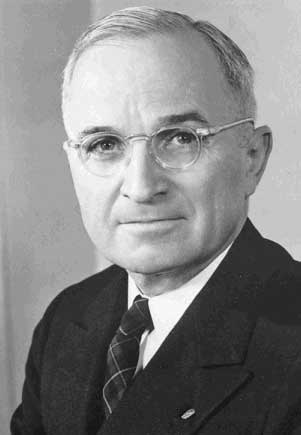
Harry Truman proposed national health insurance in 1945 and 75 percent of Americans applauded. Then the U.S. Chamber of Commerce issued a pamphlet, entitled “You and Socialized Medicine.” Doctors joined the assault, and by 1949, support for the plan had cratered to 21 percent.
Richard Nixon tried to launch national health insurance. Bill and Hillary Clinton famously tried. Daschle relates this sad history and shares his own proposal in a book, Critical: What We Can Do About the Health-Care crisis.
This is not 1993, when Clinton’s vision crashed. There were 38 million uninsured then. Today there are 47 million, and that doesn’t count another 25 million with crummy coverage. Many millions more fear layoffs that could cost them their coverage.
However, it is still remarkably simple to frame health-care reform in a way that turns people off.
For example: Some 71 percent of Americans want to require employers to either offer health insurance or pay money into a government pool, according to a poll by the Kaiser Family Foundation and the Harvard School of Public Health. But when asked whether they’d still support that mandate if they heard that some companies might lay off people as a result, the number sinks to 29 percent.
Another question in the survey: “Would you be willing to pay more — either in higher health-insurance premiums or higher taxes — in order to increase the number of Americans who have health insurance?” Respondents were about evenly split, with 49 percent saying “no” and 47 percent saying “yes.”
Enemies of national health insurance will no doubt exploit the weak spots in support. And the group most open to their claims is those who have coverage at work and like their deal.
Backers of a national plan will argue that broad reform would include containing costs while preserving quality. Americans spend $8,000 a year on health care for each man, woman and child — even counting the 47 million who have no insurance at all. Other rich countries spend half as much and they cover everyone.
The happily insured must understand that the premiums employers pay ultimately come out of their paychecks. While a national health plan would cost more money in the beginning, it is expected to start saving money in later years.
To win over the happily insured, Daschle would simply build on the current system. The uninsured would pick from a buffet of health plans. The choices would include several private options and one public plan. Expect demagoguery over the latter. The insurance companies don’t want that competition.
It was a matter of time before would-be wreckers of a national health plan resume dark talk about a plot to install “top-down command and control of American medicine” and “HillaryCare.” But a lot of things have changed in the 15 years since Clinton failed to make universal coverage an American reality.
Insecurity over health coverage is surging. Spiraling medical costs have made American companies less competitive. And Americans are feeling beaten up by the crashing economy.
This time, a national health plan may survive the derogatory labels.
Froma Harrop is a member of The Journal’s editorial board and a syndicated columnist.
http://www.projo.com/opinion/columnists/content/CL_harrop22_01-22-09_2OD0BIU_v9.4280b3f.html
President Obama's Rural Agenda
Iowa Public Television's Market to Market reports on President Obama's agenda for Rural America:
Listening to the inaugural address of America’s 44th President this week, it seemed likely Obama’s presidency is destined to be compared to that of Franklin Delano Roosevelt.
Not since FDR’s 1933 inaugural address in the midst the Great Depression has a president used the occasion to advocate a legislative agenda the way Obama did on Tuesday.
Roosevelt realized that the largest task at hand in 1933 was to put people to work. And Obama renewed his call for congressional action creating new jobs building and repairing public infrastructure.
Both FDR and Obama were faced with a skeptical electorate that had grown increasingly disillusioned amidst troubling economic times. While Obama has repeatedly stated that the economy is his top priority, it is less clear what that means to America’s farmers and ranchers.
Andrew Batt examined Obama’s rural agenda over the past two years and filed this report.
As the nation watched Barack Obama assume the Presidency this week, the weight of two wars and an economic recession hung heavily on America’s 44th Commander-in-Chief.
President Barack Obama: “America. For everywhere we look, there is work to be done. The state of the economy calls for action, bold and swift, and we will act - not only to create new jobs, but to lay a new foundation for growth. We will build the roads and bridges, the electric grids and digital lines that feed our commerce and bind us together.”
“We will harness the sun and the winds and the soil to fuel our cars and run our factories. And we will transform our schools and colleges and universities to meet the demands of a new age. All this we can do. And all this we will do.”
President Obama’s nod towards alternative energy is nothing new. A grueling two-year campaign for the Presidency highlighted numerous issues including the future of wind power and biofuels.
From the cold caucuses in Iowa…
Obama: “We need to foster the development of the next generation of biofuels.”
To the daily grind of the general election…
Obama: “Wind, tide, solar, we can do it all and we must do it all…”
Obama has promised to double alternative energy production in his first term – a lofty goal buoyed by massive federal spending. The $825 billion stimulus bill proposed by Obama and modified by House Democrats includes a litany of investments. Under the new plan, some federal tax credits, for sectors like wind energy, would become Energy Department grants paid in advance to spur faster alternative energy investment.
The omnibus bill also includes $6 billion designated for rural broadband infrastructure. But it’s still unclear whether or not the bill’s larger sums, aimed at state and local infrastructure, will be used for Rural projects like bridges and country highways.
Outside of the stimulus proposal, the Obama Administration’s views on agriculture include a variety of initiatives and some in agreement with Republicans.
Tom Buis, President National Farmers Union: “Let’s give Senator Barack Obama a warm Iowa Farmers Union welcome.”
Speaking to members of the Iowa Farmers Union in November 2007, then-Senator Obama agreed with a bipartisan proposal from Iowa Republican Charles Grassley to cap farm subsidy payments at $250,000. Despite a bipartisan coalition, the subsidy cap did not make it in the 2008 farm bill.
President Barack Obama: "Here's what I'll do as president. I'll immediately implement Country of Origin Labeling because Americans should know where their food comes from."
Federal officials were set to enforce Country of Origin Labeling, or COOL in the coming months but an Obama executive order this week froze all pending regulations until further review from the new Administration.
Current COOL policy would allow a meat processor using product from foreign and domestic sources to simply place “multiple countries” labels on the packaging. Some cattle groups hope Obama and new Ag Secretary Tom Vilsack will “tighten” rules concerning a “multiple countries” label and enforce more descriptive labeling.
Obama: "I have always stood for tougher environmental regulations and local control over whether CAFOs can be built in your neighborhood. That's why we need to limit EQUIP funding to giant CAFOs so they pay for their own pollution and that's what I will do as President of the United States."
Obama’s stance on controlled animal feeding operations, or CAFOs, has endeared the new President in many environmental circles but those same stances have created an uneasy reception from livestock producers.
Barack Obama: "Tell ConAgra it's not the Department of Agribusiness. It's the Department of Agriculture."
Despite Obama’s public condemnation of agribusinesses, critics have blasted new Ag Secretary Tom Vilsack as “too close” to large agriculture companies. The former Iowa Governor has a history of supporting biotechnology and ethanol production during his tenure in the Hawkeye State. In his conformation hearing last week, Vilsack said he would be a Secretary for all American farmers.
Sec. Tom Vilsack, USDA: "I do appreciate the diversity of agriculture and that it's the job of the USDA to be responsive and representative of all of that diversity and to be supportive of that diversity...These are hard working people, these are folks that have a value system that is not just important to them I would argue that it's important to us, to this country.”
While Obama will likely confront multiple domestic and international challenges in his first 100 days, the 44th U.S. President made a 2007 promise to quickly tackle rural policy.
Obama: "After I'm elected I will ask Democrats and Republicans to come together for a summit on Rural America and it won't be held in Washington it will be right here in Iowa. And we will take action on a Rural Agenda in my first hundred days in office."
For Market to Market, I’m Andrew Batt.
http://www.iptv.org/mtom/feature.cfm?Fid=506
Terry Mattingly: Americans want shades of gray in abortion debate

Terry Mattingly points out in the column below that the abortion question isn't as simple as just being pro-life or pro-choice. Most Americans fall somewhere in the middle in the clash of absolutes.
Americans want shades of gray in abortion debate
By Terry Mattingly
Contra Costa Times www.contracostatimes.com
January 21, 2009
When it comes to abortion, most Americans know what they want — and what they want will not please either Planned Parenthood or the Vatican.
What they want is compromise. What they want are shades of gray.
In a Harris Interactive survey, 9 percent of participants agreed that abortion should be legal for any reason at any point during a pregnancy. On the other side, 11 percent wanted a total ban.
In between were plenty of Americans who back legalized abortion but, to one degree or another, want to see restrictions. The sponsors of the national survey were amazed.
"We remain opposed to abortion, which means we oppose any procedure that seeks to destroy the life of an unborn child. That isn't going to change," said Deidre McQuade, speaking for the Secretariat of Pro-Life Activities at the U.S. Conference of Catholic Bishops. "But what we are seeing is growing evidence that most Americans do want to see abortion restricted and limited."
That's why the bishops are hailing these results, even though most of the numbers point toward compromises that fall short of the teachings of the Roman Catholic Church.
Looking at the extremes, the survey asked whether abortion should be "illegal in all circumstances" or "legal for any reason at any time during pregnancy." But in between, participants could say that abortion should remain legal to "save the life of the mother" or legal in cases involving rape or incest. They could also say that abortion should be legal "for any reason" during the first three months or the first six months of pregnancy.
In addition to the 11 percent who wanted a total ban, 38 percent backed restricting abortion to cases of rape, incest or a threat to the mother's life. Another 33 percent endorsed limiting abortion to the first three or six months of pregnancy.
Asked if they opposed or supported specific policies restricting abortion, 88 percent of those who stated opinions backed informed consent laws requiring abortion providers to tell women of the risks to their physical and psychological health and about alternatives to abortion.
Also, 76 percent of those expressing opinions favored laws that "protect doctors and nurses from being forced to perform or refer for abortions against their will" and 73 percent supported laws that "require giving parents the chance to be involved in their minor daughter's abortion decision."
These numbers resemble those in a 2006 survey on politics, faith and social issues produced by the Pew Forum on Religion & Public Life and the Pew Research Center for the People & the Press. It found that majorities of Republicans (62 percent), Democrats (70 percent) and political independents (66 percent) favored some form of compromise on abortion, as did more than 60 percent of both white evangelicals and white, non-Hispanic Catholics.
Digging deeper, that Pew survey even found that 37 percent of liberal Democrats and 71 percent of moderate or conservative Democrats supported some compromise, backing abortion restrictions that would not be allowed under current interpretations of Roe v. Wade and other U.S. Supreme Court decisions.
Terry Mattingly is director of the Washington Journalism Center at the Council for Christian Colleges and Universities and leads the GetReligion.org project to study religion and the news.
http://www.contracostatimes.com/nationandworld/ci_11518496
Saturday, January 24, 2009
Business & Labor Coalition praises Obama Administration Policy on China's Currency Manipulation

The China Currency Coalition ("CCC") has commended the Obama Administration and Treasury Secretary nominee Timothy Geithner for recognizing that China is manipulating its currency.
"This is a battle we have been fighting for over four years," said CCC Co-Chairman Richard L. Trumka, Secretary-Treasurer of the AFL-CIO. "China's manipulation of its currency since 1994 continues to take an enormous toll on working families and manufacturing in the United States. It has contributed to our severe economic problems. We are pleased and appreciative that the Obama Administration intends to act aggressively on this important issue."
"This is a very important step toward resolution of this problem," said Doug Bartlett, Co-Chair of the Coalition, owner of Bartlett Manufacturing Company, Inc. in Cary, Illinois, and a Board member of the U.S. Business and Industry Council. "By the same token, it is important to note that under existing law, recognition that a country manipulates its currency only requires that the U.S. Administration engage in talks with China about the matter. Such talks have been going on between the Treasury Department and Chinese officials for years, with virtually no effect," he said.
"The view of the China Currency Coalition is that Congressional legislation allowing U.S. companies and workers to petition for trade remedies remains urgently needed. The CCC is working with Members of Congress to make this happen," Bartlett said.
In the CCC's view, the mercantilist currency practices of a number of countries, not China alone, are the antithesis of free and fair trade. For that reason, it welcomes the strong language used by Treasury Secretary-designate Timothy Geithner that "countries like China cannot continue to get a free pass for undermining fair trade principles."
The CCC also welcomes Mr. Geithner's statement that "the new economic team will forge an integrated strategy on how best to achieve currency realignment in the current economic environment," Mr. Trumka added. "The members of our Coalition stand ready to work closely with the Obama Administration to achieve that goal. It is long overdue and badly needed, especially at a time of global economic crises. We cannot imagine how global economic growth can resume on a sound and stable footing without addressing the source of fundamental imbalance."
About the China Currency Coalition
The China Currency Coalition is an alliance of industry, agriculture, services, and worker organizations whose mission is to support U.S. manufacturing and production by seeking an end to Chinese currency undervaluation. Additional information on the Coalition can be found on its website: www.chinacurrencycoalition.org.
Friday, January 23, 2009
Kirsten Gillibrand described as a strong advocate for working families

New York Governor David Paterson has named U.S. Representative Kirsten Gillibrand to the United States Senate seat vacated by Hillary Clinton. Gillibrand isn't viewed as your typical New York Democratic politician according to a recent Newsday profile:
When Kirsten Gillibrand ran against GOP Rep. John Sweeney in 2006, he tried to paint her as an urban liberal, a potentially lethal label in their rural upstate district.
But during her victorious House campaign and two years in office, Gillibrand (D-Hudson) has positioned herself as a centrist, with an "A" grade from the National Rifle Association as evidence of her willingness to break from Democratic orthodoxy. She also voted against the Wall Street bailout and was the only New York Democrat to vote to extend funding for the Iraq war in 2007.
"She had to shake the perception that she was a city liberal," said David Wasserman, of the nonpartisan Cook Political Report. "Her voting record has indicated that she is different from a Charlie Rangel or a Carolyn Maloney or even a Nita Lowey."
http://www.newsday.com/news/local/ny-pogill2312388945jan23,0,4304559.story
In Congress, Gillibrand has been a proponent of immigration control co-sponsoring the SAVE Act introduced by Congressman Heath Shuler D-NC. The SAVE Act would create eight thousand additional Customs and Border Patrol positions and require all employers to verify legal status through the Social Security Administration.
ttp://shuler.house.gov/content/newsroom/2007/pdfs/110607_SAVEAct_PressSheet.pdf
Gillibrand is a strong supporter of labor and advocate for worker's rights. Stuart Applebaum, President of the Retail, Wholesale and Department Store Union noted that Representative Gillibrand has a near perfect voting record on pro-worker legislation and is a co-sponsor of the Employee Free Choice Act. Applebaum stated: "As Senator, Kirsten Gillibrand will be a strong and vocal advocate for issues that are important to working families and the RWDSU looks forward to continuing our work with her."
http://rwdsu.info/
Monday, January 19, 2009
Jim Holbert running for Congress in Kentucky's D-5

Jim Holbert has announced his candidacy for Congress in Kentucky's District 5. Holbert is an economic populist-social conservative Democrat who will emphasize issues such as expanding access to health care, ending unfair trade policies, improving education, controlling illegal immigration and defending the right to keep and bear arms.
Holbert stated:
"The people of southeast Kentucky know we need better ideas in Congress if we expect to have a better future. After 28 years of Hal Rogers in Congress, the 5th District is still confronted by a failing education system and a lack of job opportunities, and many of our people don't have adequate access to health care. In Congress I will support ending the wars in Iraq and Afghanistan in order to free up funds for the things we need to do here at home. I will work for an energy plan for the future of our region and our Country, one that benefits America instead of OPEC. And I will work to end the disastrous free trade, immigration, and economic policies that have caused our economic crisis and the loss of millions of American jobs. Hal Rogers voted for the Bailout and he was a rubber stamp for the Bush administration's policies. Hal Rogers represents the ideas that have failed. I stand for common sense solutions for our Country, our people, and our future, and that's why I'm seeking the 2010 Democratic nomination for the U.S. House of Representatives to represent the people of Kentucky's 5th District in Congress."
A resident of Laurel County, Holbert is a former U.S. Army and U.S. Coast Guard pilot who works as an Emergency Medical Service helicopter pilot throughout southeast Kentucky and currently serves as a member of the Kentucky Airport Zoning Commission.
Holbert encouraged everyone to visit his campaign website, www.holbertforcongress.com, to see where he stands on issues and to let him know their concerns about the region's future.