Thursday, February 05, 2009

A Canadian Defends Buy American Stimulus Provisions


From The National Post www.nationalpost.com

In defence of 'Buy America'
by Eric Weir
February 05, 2009,

The National Post, most other media, the Canadian government and its
Official Opposition all appear to agree that the "Buy America"
provisions contained in the proposed U.S. stimulus package comprise
unfair protectionism. They should think again: In fact, the Buy
America provisions are economically justified, and could even be
beneficial for Canada.

For Canada, the best-case scenario is not a removal of Buy America
provisions from the stimulus legislation, but a specific Canadian
exemption from them. When the United States applied tariffs to steel
imports in 2002, it exempted Canada and Mexico. Such arrangements
allow Canada to continue selling into the U.S. market with less
competition from other countries.

In a world where all labour and capital is fully employed, free trade
is arguably beneficial because it encourages countries to specialize
based on comparative advantage. But in a world of unemployed workers
and excess capacity, countries have an undeniable interest in keeping
production at home, rather than importing products from abroad. The
orthodox argument for free trade, which assumes full employment, is
unconvincing amid rising job losses.

Opponents of Buy America rules characterize them as a revival of the
infamous Smoot-Hawley Act, which allegedly worsened unemployment in
the 1930s. But the act's gravest shortcoming was that it did not
provide, or accompany, a significant fiscal stimulus. In effect, the
United States tried to use tariffs alone to grab a larger slice of a
shrinking global economic pie.

Today's Buy America requirements, on the other hand, are part of the
American Recovery and Reinvestment Act, a large stimulus plan.
It is important to note that the Buy America requirements apply only
to public investment and would not affect private ventures or
personal consumption. And given the goal of this public investment,
they are justified: If a major purpose of increased spending on
public infrastructure is to stimulate a country's economy, it surely
makes sense to ensure that a large portion of such spending remains
within the country.

One might even ask why there wasn't a "Buy Canadian" policy in last
week's federal budget. On the contrary, the budget eliminated
Canada's few remaining tariffs on imported machinery and equipment,
and offered a 100% accelerated capital cost allowance for computers.
Both measures seemed designed to encourage businesses in Canada to
buy more inputs from abroad.

The world economy needs as much stimulus as it can get. If other
countries can catch a free ride on Canadian and American stimulus by
selling more goods to North America, they have little incentive to
incur public debt to finance their own stimulus packages. By limiting
foreign access to U.S. stimulus, Buy America policies encourage all
countries to contribute the deficit spending needed to propel a
global economic recovery.

This approach is particularly important for steel. With the recent
collapse of shipping costs, more infrastructure projects could easily
prompt increased steel imports rather than increased steel
production. In recent years, Canada has imported anywhere from three
to nine dollars of steel from overseas for every dollar of steel
exported overseas. Much of the stimulus supposedly provided by
additional infrastructure spending could leak out of the Canadian
economy through this glaring trade deficit.

By contrast, the larger volume of steel trade between Canada and the
United States is balanced. Which means that Americans cannot improve
their balance of international payments by trading less steel with
Canadians. If Buy Canadian policies were adopted, we could offer the
United States an exemption from them in return for an exemption from
Buy America policies.

The balanced, integrated nature of the Canada-U.S. steel trade
provides a compelling rationale for exempting Canada from Buy America
rules. Canadian politicians and editorialists should start making
this case, rather than lecturing Americans about the theoretical
virtues of global free trade and the evils of Smoot-Hawley.

http://network.nationalpost.com/np/blogs/fullcomment/archive/2009/02/0
5/erin-weir-in-defence-of-buy-america.aspx

Wednesday, February 04, 2009

Why We Need Buy American

From Economy In Crisis

Published 02/04/09
Dustin Ensinger
www.economyincrisis.org

Amid intense criticism from trade partners, interest groups, multinational corporations and congressional Republicans, President Obama used two separate television interviews on Tuesday to signal his disapproval of language of the “buy American” clause in the nearly $900 billion stimulus package.

The house version of the bill would require public works projects associated with the bill to purchase domestically manufactured iron and steel. The senate is considering an even more stringent version of the bill, requiring that all manufactured goods used be made in America.

Those proposals have come under intense criticism from foreign governments, leaders of trade organizations, American businesses and congressional Republicans. The common refrain is that the clause could possibly be a violation of international trade agreements of which the U.S. is a party to as well as having the potential to spark a trade war in which America’s trade partners would respond with retaliatory protectionist measures.

Based on the president’s remarks on Tuesday it appears that he has sided with the fear-mongers.

"I think that would be a mistake right now," he told ABC News. "That is a potential source of trade wars that we can't afford at a time when trade is sinking all across the globe."

President Obama fails to realize that the U.S. is already engaged in a trade war, that it is losing at an alarming rate. Many of America’s trade partners that are currently crying foul over the “buy American” clause have long histories of violating international trade rules to protect their own industries at the expense of American businesses. For instance, China is well-known for undervaluing its currency, making its products cheaper than they should be, and making it difficult for American companies to compete. In addition, China along with Russia, is frequently accused of “dumping” steel products into foreign markets and illegally driving the price down. India has passed tariffs protecting its own steel industry. France has subsidized its fruit and car industry and is in the process of propping up domestic media outlets by offering free newspaper subscriptions to citizens turning 18. Britain has recently nationalized its banks and forced them to lend to British citizens and businesses before considering foreign entities for loans. The Asian economic powerhouses of Japan and Korea are notorious for their trade barriers that keep American automobiles out of their markets.

Those are just a few examples of the protectionist measures utilized by America’s trade partners that turn the idea of “free trade” completely on its head. A “buy American” clause would simply begin to level a completely uneven playing field in international trade.

Any attempt by President Obama to strip the stimulus package of the “buy American” clause could result in a prolonged battle with congressional Democrats who heavily favor including the provision in the bill, including prominent party leaders like Senate Majority leader Harry Reid. The comments by Obama have the potential to alienate congressional allies just at the time when he is trying to court republicans to vote for the bill in order to give it a more bipartisan feel.

Congressional Democrats need to remain steadfast in their support of the provision that would create an estimated 77,000 jobs across America. Please contact your congressional representatives and the White House and demand that they not only include the “buy American” provision in the stimulus package, but that they strengthen it to more closely resemble the senate version that requires all procurements to be domestically manufactured products. As Rep. Tim Ryan (D-OH) says, we must ensure that this astronomical amount of taxpayer money is being spent in America to the benefit of Americans.

"We're going to spend this money in Youngstown, Warren, Akron" he says. "Not Beijing, Mumbai or Dubai."

Source Wall Street Journal:

President Barack Obama risked a backlash within his own party by criticizing "Buy American" provisions in the huge stimulus bill that would ensure that most of the big infrastructure money goes to U.S. suppliers.
The measures, highly popular among congressional Democrats and trade unions, have come under heavy criticism from U.S. trade partners, some of whom threatened this week to file legal actions against the U.S. if the measures become law.
Asked his views on the furor, Mr. Obama said in separate television interviews Tuesday that he wanted to avoid any steps would "signal protectionism" or risk fueling trade tensions.

Saturday, January 31, 2009

College Democrats support expanded nuclear power


From the University of Wisconsin's Daily Cardinal:

Nuclear worthy addition to renewable energies
by Lavilla Capener
The Daily Cardinal
January 30, 2009

Renewable fuels may be the future, but nuclear energy may help bridge the gap until new energy technologies become a reality


Lavilla Capener for College Democrats

We are in the midst of an energy crisis, and though the urgency has lessened for an energy solution since last summer because of lower gas prices and an economic recession, the problem is no less real. Although the economy will be President Obama’s chief concern in the coming months, our energy policy affects the economy and foreign policy decisions as much as the environment and our pocketbooks. We in Wisconsin can take steps to improve our energy policy, and, working with national leadership on the issue, we can change the way America evaluates and uses energy.

A fossil fuel-orientated energy policy is fading much like our reliance on an industrial economy. As service sector and information technology jobs take over for the classic factory jobs, our energy policy needs to utilize smarter, cutting-edge technologies to compete in a world market. Gas-guzzling SUVs will not cut it environmentally, and as the struggling “big three” automakers continue to beg Congress for money while Japanese automakers rake in the dough, the economics of traditional energy are not going to work anymore either.

We must realize, however not any single fuel source will pull us out of this mess—not wind, not solar, not hydropower—as useful as they may be. We need a comprehensive policy that incorporates several different sources of energy, including nuclear power.

Whoa, what? The College Democrats are endorsing nuclear power? Not necessarily. Although I think it is an option we need to explore, and many fellow Democrats (including several Wisconsin state lawmakers) agree, there are many people, including Democrats, Republicans and Independents, who have deep reservations about nuclear power—and with good reason. The nuclear power industry still has several kinks to work out, especially with the issues of a high start-up cost and permanent storage for nuclear waste. However, roadblocks are not a good enough reason to give up trying to make nuclear energy work, especially when nuclear electricity generation emits practically zero carbon emissions, a huge upside.

Nuclear power has been successful in Europe, and we have working nuclear reactors in the United States, though new plants have not been built in decades. Wind, solar, hydropower, hydrogen and ethanol all show promise for solving the energy crisis. Alternative energies cannot generate electricity on a constant basis, though they can supplement a main energy source.

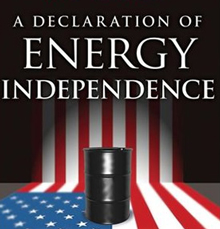
We need something to provide a base load of energy that can take over when the wind is not blowing or the sun is not shining. If scientists can develop a method to harness and store solar or wind energy, we could implement it. In the meantime, we need to work with the reality of our situation. We can either accept the effect fossil fuel has on our environment and foreign policy decisions, or we can develop a dynamic energy policy with the goal of becoming energy independent.

The United States has produced great inventions and technologies when the government and the people invested time, money and energy into solving a pressing problem. If we can use several fuel sources effectively—including nuclear power—we can stimulate the economy, help the environment and create “green” jobs, all while becoming more energy independent.

Lavilla Capener is the communications director of the College Democrats of Madison.

http://www.dailycardinal.com/article/21886

For additional background on nuclear power, check out this article link from Scientific American.
http://www.sciam.com/article.cfm?id=next-generation-nuclear

Peter Cohan: Is there a new reality on Wall Street pay ?


Management consultant Peter Cohan has a keen insight on the present economic crisis in a column at BloggingStocks. Cohan says "finance has become the tail that wags the economic dog" and now is the time to "cut that tail down to size."

Is there a new reality on Wall Street pay?
January 31, 2009 by Peter Cohan
BloggingStocks www.bloggingstocks.com

One of the questions that I spent this week discussing is this: What was Wall Street thinking? Whether it's using taxpayer money to pay itself $18.4 billion in bonuses or to buy a $50 million corporate jet after posting $35 billion in losses, people are wondering whether Wall Street gets it. The answer is yes. Wall Street gets that nobody stopped it from paying bonuses when it took our money, so it took what it could. Unless we limit how Wall Street spends taxpayer money, it will keep paying itself big bonuses.

Wall Street is a place where the people at the top are trained to grab as much as they can out of the hands of the other graspers. At least $200 billion worth of TARP money went to Wall Street with no strings attached. If you put that much money into the hands of a culture that believes firmly in taking what it can get -- it usually pays half of its revenues to employees -- you end up with Wall Street taking as much as it can from the taxpayers.

As long as the highest pay goes to Wall Streeters, our society is going to send its best and brightest into finance. Complaining about high Wall Street pay will not change the outcome. But Wall Street is going to need some of the next $350 billion in TARP money, so we face a choice. We can give it to them with no strings attached -- in which case they will pay themselves big bonuses again. Or we can give it to them with a requirement that they lend it out and pay bonuses only in bank common stock that can be sold after we taxpayers take our profits from selling our preferred shares.

If we don't change the conditions under which Wall Street gets taxpayer money, then we are going to get the same outrageous behavior we've seen in the last week.

Meanwhile, I hope that we can change our economy's incentives so that we send the best and brightest people to more useful industries. Personally, I'd like to see more talent going into high tech, teaching, and government. But one thing seems clear to me. Since the early 1980s, finance has become the tail that wags the economic dog. And that tail has brought the global financial system to its knees.

It's time to cut that tail down to size. That's because finance should be a force that supports the investment decisions of business executives who build the products that fuel the economy, rather than its economic engine. And changing Wall Street's culture and pay practices would help restore finance to that rightful place.

Peter Cohan is president of Peter S. Cohan & Associates. He also teaches management at Babson College and is the author of You Can't Order Change: Lessons from Jim McNerney's Turnaround at Boeing.

http://www.bloggingstocks.com/2009/01/31/is-there-a-new-reality-on-wall-street-pay/

Wednesday, January 28, 2009

Failing Infrastructure Cannot Support a Healthy Economy


Civil Engineers' New Report Card Assesses Condition of Nation's Infrastructure

WASHINGTON, Jan. 28 /PRNewswire-USNewswire/ -- Decades of underfunding and inattention have jeopardized the ability of our nation's infrastructure to support our economy and facilitate our way of life. The American Society of Civil Engineers (ASCE) today released its 2009 Report Card for America's Infrastructure - assigning a cumulative grade of D to the nation's infrastructure and noting a five-year investment need of $2.2 trillion from all levels of government and the private sector. Since ASCE's last assessment in 2005 there has been little change in the condition of the nation's roads, bridges, drinking water systems and other public works, and the cost of improvement has increased by more than half a trillion dollars.

"Crumbling infrastructure has a direct impact on our personal and economic health, and the nation's infrastructure crisis is endangering our future prosperity," said ASCE president D. Wayne Klotz, P.E., F.ASCE. "Our leaders are looking for solutions to the nation's current economic crisis. Not only could investment in these critical foundations have a positive impact, but if done responsibly, it would also provide tangible benefits to the American people, such as reduced traffic congestion, improved air quality, clean and abundant water supplies and protection against natural hazards."

As the nation's infrastructure receives focused attention from the White House, Congress and the public, ASCE's 2009 Report Card for America's Infrastructure provides an assessment of the condition and need for investment of 15 infrastructure categories, including, for the first time, levees. While there has been some improvement since 2005, overall conditions in most categories have remained the same, or slipped even lower. Security, a category that was added to the Report Card in 2005, and which received an incomplete grade, has been removed from the list of assessed categories and added into the methodology used to assess each individual category. Grades included:

Aviation = D (down from a D+)
Bridges = C (no change)
Dams = D (no change)
Drinking Water = D- (no change)
Energy = D+ (up from a D)
Hazardous Waste = D (no change)
Inland Waterways = D (no change, previous listed a Navigable Waterways)
Levees = D- (new category)
Public Parks and Recreation = C- (no change)
Rail = C- (no change)
Roads = D- (down from D)
Schools = D (no change)
Solid Waste = C+ (no change)
Transit = D (down from D+)
Wastewater = D- (no change)


The Report Card also offers five key solutions for raising the nation's infrastructure GPA. These include:


Increasing federal leadership in infrastructure,
Promoting sustainability and resilience,
Developing federal, state and regional infrastructure plans,
Addressing life-cycle costs and ongoing maintenance and
Increasing and improving infrastructure investment from all stakeholders.

Each category was evaluated on the basis of capacity, condition, funding, future need, operation and maintenance, public safety and resilience. A detailed report, which accompanies the grades released today, will be released on March 25, 2009. For more information, including solutions for solving America's infrastructure problems and ASCE's Principles for Economic Stimulus Investment, visit www.asce.org/reportcard.

Founded in 1852, ASCE represented more than 146,000 civil engineers worldwide, and is America's oldest national engineering society. For more information, visit www.asce.org.

Website: http://www.asce.org/