Monday, June 14, 2010

Ohio Democrat Ted Strickland Wins NRA Endorsement


Ohio's Democratic Governor Ted Strickland has won the NRA endorsement for his long-time defense of the right to keep and bear arms. In contrast, Strickland's Republican opponent John Kasich has a mixed record on gun rights.

CNN reports:

Ohio Gov. Ted Strickland, a Democrat, picked up the support of the National Rifle Association Monday, offering voters a reminder of his culturally conservative views as he battles Republican John Kasich in a difficult re-election bid.

It's the NRA's first general election endorsement of the 2010 cycle.

"Our members will interpret your 'A+' rating and endorsement as an indication that you are a pro-Second Amendment, pro-hunting candidate who supports sportsmen and gun-owners on every issue," said Chris Cox, the chairman of the NRA's Political Victory Fund, in a letter to Strickland provided to CNN by a source familiar with the decision.

In backing Strickland, the NRA cited his vote while in Congress against the 1994 assault weapons ban.

Kasich, also in Congress at the time, voted for the legislation and earned an "F" rating from the NRA that year, though his ratings from the group have since climbed out of the cellar.

Strickland has a narrow lead over Kasich according to recent polling.


The endorsement is not a major surprise given Strickland's lifetime "A" rating from the NRA. Earlier this year, the group described Kasich's record on firearms as "mixed."

The gun rights group did not take sides in the 2006 governor's race between Strickland and his GOP opponent Ken Blackwell - but they did back Strickland in his Democratic primary.

The endorsement is the second bit of good news in recent days for Strickland as he campaigns against the headwind of a volatile political climate and his state's unsettling jobless rate.

On Friday, Strickland's campaign announced having $7.7 million on hand for the campaign – a $2 million advantage over Kasich. Both campaigns collected roughly $1.3 million during the most recent fundraising period.

http://politicalticker.blogs.cnn.com/2010/06/14/strickland-picks-up-nra-endorsement/?iref=allsearch&fbid=PBX6njVMHRm

Friday, June 04, 2010

Fritz Hollings calls on President Obama to act on trade, tax policies


Former Senator Fritz Hollings (D-SC) writing in The Huffington Post:

As a long-time admirer of Warren Buffett, I held up leaving for work earlier this week to hear him on Morning Joe. He concluded his optimism on the economy by exclaiming: "America works!" I'm sure he meant the people of America work, which makes the country work. But Buffett pinpoints our trouble -- America's money works in China which causes America's people unable to find work in America. Corporate America off-shores work or its production and jobs like gangbusters to China. And today's report of an anemic production of 41,000 jobs in the private sector last month proves the point.

The recession began in December 2007. Now, after trillions of dollars of stimulation in the past two and a half years, the private sector is only creating 41,000 jobs a month. Something else is wrong. And what's wrong with the economy is that Corporate America off-shores its jobs as fast as it can. Three years ago, Princeton economist Alan Blinder, estimated that over ten years we would be losing on an average of three to four million jobs a year to off-shoring. But Blinder is the only economist who mentions the problem of losing our economy. Paul Krugman and the rest of the economists keep calling for stimulation. And stimulation is spent. President George W. Bush and the Federal Reserve stimulated the economy $7.5 trillion in eight years. Household debt increased $7 trillion during the same eight years so that by the time President Obama stimulated the economy had been stimulated $14.5 trillion and we were losing 779,000 jobs a month. President Obama stimulated the economy last year $1 trillion, $885 billion, and, with four months left in this fiscal year, we have already borrowed and stimulated the economy $1 trillion, $148 billion (6/4/10).

We keep bailing the economy boat with stimulation and fail to plug the off-shore hole in the bottom. Plugging the off-shore hole is kept "top secret." Wall Street, Goldman Sachs and the financial houses, the big banks, and now Corporate America, oppose plugging this off-shore hole because that would stop the guaranteed and lucrative profits in China. If the President and Congress changed our tax laws and enforced our trade laws to make it profitable to produce in the United States, the incentive to off-shore would be destroyed.

For example, the President and Congress could eliminate the corporate tax and replace it with a 2% VAT by Labor Day and receive more revenues. Corporate America producing in China has a 17% VAT rebated at export and pays no tax on its imports to the United States, whereas, Corporate America producing in the United States pays an average of 27% corporate tax plus a 17% VAT when its export reaches Hong Kong, for a total of 44%. The 2% VAT would eliminate the 44% incentive to off-shore to China. Producing in China, Corporate America receives only 49% of the profit, but that 49% is guaranteed with no labor problems, health or legacy costs, no safety or environmental costs. The CEO back on Sixth Avenue in New York can have a quality control manager in China, and checking on production daily with the internet, the CEO has time for a round of golf. The President and Congress are kept quiet about the off-shoring with campaign contributions.

President Obama has no experience whatever in trade or globalization. Globalization is nothing more than a trade war with production looking for a country cheaper to produce. Since everything can be produced everywhere, the economist would have us believe that all the United States can do is hunker down and equalize our labor, pay, safety and environmental regulations, to meet the global competition. This is the race to the bottom, and, unfortunately, the labor leadership goes along by continually calling for more free trade agreements to protect labor and the environment. We ought to learn by now that the free trade agreements only protect Corporate America's investment. Labor hunkers down with pay cuts and downsizing as if nothing can be done. All we need to do is change our tax laws and enforce our trade laws to protect domestic production and the environment.

I have worked with corporate America to enforce our trade laws that protect domestic production, jobs, safety, and the environment. Our efforts in the Congress passed by both Houses were vetoed by both Republican and Democratic presidents at the behest of the Trilateral Commission and the Council on Foreign Relations, both run by the big banks making a majority of their money outside of the United States. But after NAFTA with Mexico and China being admitted to the World Trade Organization, corporate America gave up its efforts in the Courts and Congress to enforce our trade laws and joined China in the trade war. Ironically, corporate America is making communism work.

After World War II, Japan started a trade war for market share by closing its market, subsidizing its manufacture, selling its export at cost, and making up the profit in the closed market. This put General Motors in bankruptcy and Toyota #1. China enlarged Japan's assault by opening its market for foreign technology and expertise, cutting the cost of its export with minimum labor, safety and environmental concerns. China developed the trade war into a war not just for trade but the entire economy -- investment, research, technology, development, production, jobs -- the economy. Today all nations fight fiercely in globalization. Japan, Korea, Taiwan, Germany, France, etc., all have invaded the United States economy using their VAT tax advantage. For example, Germany, with its 19% VAT, recently announced the production of windmills in Charleston, S. C. With parts produced in Germany and exported at a 3% cost to Charleston, German production in the United States enjoys a 16% advantage over domestic production. Highballing the cost of producing parts in Germany, little income tax is paid for production of its windmills in the United States. Germany has established a beachhead to take over the energy jobs that the President and Congress keep saying we ought to develop.

We have lost and are losing more jobs to off-shoring than the recession. By the time President Bush stimulated, South Carolina had lost its textile industry, North Carolina its furniture industry, Michigan its automobile industry, Intel had left Silicone Valley for China, and Bill Gates had moved Microsoft research to China. But the President only moves to save jobs from the recession. And President Obama is our only hope. Under the Constitution, tax and trade measures must originate in the House of Representatives. No House member will introduce a tax or trade measure unless it's sanctioned by the White House. Moreover, Republican and Democratic House members are more concerned with campaign contributions rather than the economy. The President can plug the off-shoring hole and save the economy by the following:


1. Like President Nixon in 1971, President Obama should institute a 10% surcharge on imports to stop the deficits in the balance of trade. This would put the world on notice that the United States had come in from the cold in the trade war and would now compete in globalization.
2. Call for the Congress to eliminate the corporate tax and replace it with a 2% VAT.
3. Section 201 of our trade laws calls on the President to move with tariffs or import quotas when America production is endangered. Instead of enforcing Section 201, we waited for General Motors to go bankrupt, needing a bailout. Move with tariffs or import quotas on any endangered production.
4. We've got the troops, but our defense is endangered because of our reliance on foreign production for materiel and equipment to fight. The War Production Act of 1950 should be enforced to provide for the materiel and equipment necessary to our national defense. This would create millions of jobs.

If the President moves to create jobs by changing our tax laws or enforcing our trade laws, coming down on his head in opposition will be Wall Street, Corporate America and its entities, the Business Roundtable and the United States Chamber of Commerce, crying: "Free trade," "protectionism," "don't start a trade war." Wall Street and Corporate America want to keep profits in China flowing; keep the stock market up.

But President Obama is our only hope.


http://www.huffingtonpost.com/sen-ernest-frederick-hollings/our-only-hope_b_601170.html

Thursday, June 03, 2010

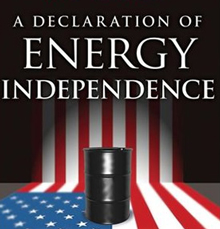
Daily Yonder: The Rural Advantage in Energy Independence


From The Daily Yonder

Agriculture and Energy Secretaries Tom Vilsack and Steven Chu write about the benefits of energy independence for rural America:

Last month, President Obama outlined a broad energy security plan designed to end America’s dangerous dependence on foreign oil. As the President noted, this is about strengthening national security, but it’s also about strengthening America’s economic security.

Rural communities – which have been hardest hit by job losses for decades – will perhaps have the most to gain from the transition to a clean energy economy. For example, the economic stimulus bill signed by the President last year has already doubled the pace of investment in wind turbines, creating thousands of construction jobs in rural America as wind farms come online across the country.

There is also an enormous opportunity for rural America as we dramatically increase the use of biofuels, ranging from corn ethanol to promising new technologies like cellulosic ethanol and other even more advanced forms of biofuel.

Our goal is to more than triple America’s biofuel production in the next twelve years, cutting oil imports by $41 billion. Instead of sending that $41 billion overseas, we can invest it right here in America. Instead of depending on oil fields in other countries, we’ll depend on farm fields in America’s heartland.

This is an ambitious target – 36 billion gallons by 2022 – and it will mean a growing market for agricultural producers. We will build on the tremendous growth over the past few years in the production of corn based ethanol and soy based biodiesel, fuels that already play a valuable role in reducing oil imports.
Kate Gabrielle

Moving forward, these corn and soy based fuels will continue to provide a source of wealth creation for rural communities. In addition, we are developing new forms of biofuel that will create an even brighter future and a bigger role for rural America.

Read full article at:
http://www.dailyyonder.com/when-secretaries-speak-rurals-role-energy/2010/05/28/2769

Monday, May 31, 2010

NY Daily News: Schumer's bid to save American jobs by taxing outsourced calls


A leading Senate Democrat is proposing legislation to discourage outsourcing of U.S. jobs. I applaud Senator Schumer for his efforts to protect U.S. jobs and help save the middle class.

The New York Daily News reports:

Senator Chuck Schumer wants to tax companies 25 cents for every customer service call that's outsourced overseas.

Schumer (D-N.Y.) proposed a bill yesterday that would slap the tax on companies that transfer calls from American area codes to foreign call centers.

"How many times do we hear of a company shutting down a facility in New York or elsewhere in the country and sending the jobs abroad? Almost daily," Schumer said.

The measure also would require telling U.S. customers that their call is being transferred - and to which country.

"1.6 billion calls are being transferred to call centers, often without the customer's knowledge," Schumer said.

Companies would be required to report their total customer service calls and the number relayed overseas.

India, Indonesia, Ireland, Canada, the Philippines and South Africa are countries popular with American companies looking to outsource call centers to cut costs.

Read more: http://www.nydailynews.com/news/2010/05/31/2010-05-31_reach_out_and_tax_outsource_calls_schumer.html#ixzz0pWVVn8Ly

Sunday, May 02, 2010

U.S. PIRG report calls for fixing America's crumbling roads and bridges


The following is an executive summary of a report released by U.S. PIRG on the urgent need to rebuild America's infrastructure:

Over the last 50 years, America has built roads and bridges at a pace and scale that dwarfs most of the rest of the world. We’ve built a national highway network like no other, with more than 45,000 miles of interstate highway and 575,000 highway bridges.

Now, much of that system is showing its age – and as maintenance needs continue to grow, we are falling farther behind.

Across the nation, drivers face more than 90,000 miles of crumbling highways and more than 70,000 structurally deficient bridges. Neglected maintenance of roads and bridges acts as a constant drain on our economy and a scourge on our quality of life. Rough and rutted roads cause accidents, damage vehicles, trigger traffic jams that lead to countless hours of delay, and waste money Americans need for other expenses. On some occasions – such as the 2007 collapse of the I-35 bridge connecting Minneapolis – it can lead to profound tragedy.

Why are America’s roads and bridges in such terrible shape? And who or what is to blame?

The deterioration of our roads and bridges is no accident. Rather, it is the direct result of countless policy decisions that put other considerations ahead of the pressing need to preserve our investment in the highway system.

Political forces often undermine a strong commitment to maintenance: Members of Congress, state legislators and local politicians thrive on ribbon-cuttings. Powerful special interests push for new and bigger highways. Meanwhile, federal and state policies – which should provide strong guidance in the wise use of taxpayer dollars – often fail to achieve the proper balance between building new infrastructure and taking care of what we already have built.

To fix our roads and bridges, America first must fix our transportation policies. To counteract the tendencies to neglect repair and maintenance, we must adopt strong “fix-it first” rules that give priority to maintenance of our existing roads and bridges, set national goals for the condition of our transportation system, and hold state governments accountable for achieving results.

Road Work Ahead describes how America’s roads and bridges are in disrepair, bringing together a wide variety of statistics and sources with state-by-state analysis. It shows how special interest pressure tilts the playing field toward the construction of new and ever-wider highways at the expense of repair and maintenance.

U.S. transportation policy fails to properly emphasize highway and bridge maintenance, with federal transportation policies allocating vast amounts of money to the states with little direction and no accountability, and with Congressional earmarks further tilting spending away from maintenance.

State transportation funding policies are often similarly short-sighted, focusing on the creation of politically popular new highways rather than maintaining existing roads and bridges.

Spending more money on transportation won’t fix America’s roads and bridges without a top-to-bottom shift in funding priorities and policies. The report’s recommendations include ways to:

• Make highway and bridge maintenance a national priority.
• Reorganize federal highway programs to focus exclusively on either maintenance or new construction.

• Require states receiving federal aid to plan for future maintenance before building new roads.

• Measure performance the right way.

• Reward states for good performance on national objectives.

• Create fix-it-first policies in the states as well


In 2008, 63% of major roadways in urban areas – where 80% of Americans live and work – were determined to be in less than good shape.

http://www.uspirg.org/home/reports/report-archives/transportation/transportation2/road-work-ahead-holding-government-accountable-for-fixing-americas-crumbling-roads-and-bridges

Wednesday, April 21, 2010

Senator Jim Webb Wins Andrew Jackson Presidential Award


Webb Honored with “Andrew Jackson Presidential Award” for Commitment to Economic Fairness, Sound Principles of Governance

April 21, 2010

Washington, DC—Senator Jim Webb (D-VA) has been awarded the “Andrew Jackson Presidential Award for Citizenship and Leadership.” Presented by the Ladies Hermitage Association, the award honors leaders who have “promoted the history and life of Andrew Jackson” and “who have demonstrated in their civic lives a dedication to the furtherance of our American democracy and to sound governance principles.”

Senator Webb ran for the U.S. Senate in 2006 on a platform of “Jacksonian Democracy”—that we should measure the health of our society not at its apex, but at its base—committing to restore a basic level of economic fairness to the American people. For more than three years, his leadership in the Congress has upheld and embodied that commitment.

“I am struck by the multiple similarities when I think of President Jackson and Senator Webb,” said John Seigenthaler, award-winning reporter, editor, publisher and CEO for The Tennessean and founding editorial director of USA TODAY, when presenting the award. “They both were lawyers as well as warriors… Both of them served in Washington during times of intense partisanship. Neither of them will ever be remembered for giving sufferance to fools. Both were, and Jim Webb still is, committed to making sure that our government is true to those who come home from war in need of assistance.”

Senator Webb clearly articulated these priorities in a Wall Street Journal op-ed (“American workers have a chance to be heard,” November 15, 2006) and in his response to President George Bush’s 2007 State of the Union Address.

His first act in Congress was the introduction on his first day in office of a new GI Bill to provide service members and veterans of the post-9/11 era with comprehensive educational benefits similar to those provided to veterans of WWII. Since the bill became law in 2008, over 480,000 veterans have applied for their benefits to attend college or other post secondary programs. In order to further expand employment opportunities, Webb introduced the Adult Education and Economic Growth Act last year to improve adult education, job training, and other workforce programs. After American taxpayers bailed out the Wall Street firms who created the financial crisis, Senator Webb introduced the Taxpayer Fairness Act to place a one-time 50% tax on excessive bonuses paid by Wall Street banks and other firms that benefited from billions of taxpayer dollars in 2009.

In his acceptance speech, Senator Webb described how Jackson has inspired his approach to leadership today:

“When I think about Andrew Jackson, I am struck by the unique impact that he had on this country. His presidency was the first that did not come out of the landed English aristocracy in the South or the English American elite in New England. He was the first Scots-Irish president, the first “bottom up” president, and he had enormous challenges inside the existing political structure. Thomas Jefferson called him ‘dangerous’ and ‘unfit for office,’ and John Quincy Adams called him a ‘barbarian,’ and refused to attend his inauguration.

“This was an individual who sincerely and fiercely believed in protecting the working people—the people who carried the load of society. He faced down the forces that threatened the very fabric of our society. Scholars agree that the most important presidential veto in American history occurred when legislation creating the Second National Bank came before President Jackson. This legislation would have allowed a permanent aristocracy in America. Two-thirds of Congress agreed that this legislation should go through. Andrew Jackson knew that if he vetoed this legislation, they were going to try to veto him. But he did.

“In his 1832 veto message, Jackson said:
‘Equality of talents, of education, or of wealth cannot be produced by human institutions. In the full enjoyment of the gifts of Heaven and the fruits of superior industry, economy, and virtue, every person is equally entitled to protection by law; but when the laws undertake to add to these natural and just advantages artificial distinctions, to make the rich richer and the potent more powerful, the humble members of society-the farmers, mechanics, and laborers--who have neither the time nor the means of securing favors to themselves--have a right to complain of the injustice of their Government. There are no necessary evils in government. Its evils exist only in its abuses.’

“This to me, is the most important articulation of the responsibilities of government leaders that I’ve ever read. The truth of that statement resounds today in numerous pieces of legislation we face in the United States Congress. The courage that it took to confront the forces of entrenched interests in order to challenge the conscience of all Americans also exists today. That is my duty. I continue in that tradition. That is the reason I so respect this great leader and also the reason I am so grateful to receive this award.”

Howard Kittell, President and CEO of the Hermitage, concluded, “The parallels between Andrew Jackson and Senator Jim Webb – their sound military judgment, no-nonsense, public-good approach to government, and commitment to democratic ideals—make Senator Webb the ideal choice for the 2010 Andrew Jackson Presidential Award.”

The Hermitage, the home of President Andrew Jackson, is one of the largest and most visited presidential homes in the United States.

Saturday, April 17, 2010

"Right to Rent" bill helps families facing foreclosure


WASHINGTON - "Right to Rent" is one of the most efficient and simple ways to help millions of families facing foreclosure remain in their homes, said national housing experts across the political spectrum in Congressional testimony earlier this week. The following day, a new "Right to Rent" bill was introduced in the House of Representatives. The Right to Rent concept was originated by Dean Baker, co-director of the Center for Economic and Policy Research. It would increase the bargaining power and security of homeowners by temporarily changing the rules on foreclosure and allowing homeowners to remain in their homes as renters for a substantial period or time. During this time, homeowners would pay the market rent for the home as determined by an independent assessment.

"Right to Rent immediately gives the homeowner security in their home. They will be allowed to stay there for a substantial period of time, allowing their children to stay in their schools and families to prepare for and plan their future moves," said Baker in his testimony on Wednesday. "Right to Rent also would make foreclosure much less attractive to investors. This gives investors more incentive to modify loans on their own, without the involvement of the government."

The following day, "The Right to Rent Act of 2010" was introduced by Rep. Raúl M. Grijalva (D-AZ) and Rep. Marcy Kaptur (D-OH), which would allow homeowners whose homes have been foreclosed to stay in their homes at a fair market rent for up to five years. "The latest statistics on foreclosures and mortgage delinquency rates are an indication of the profound, historic crisis we face and the need for creative solutions like Right to Rent," said Rep. Grijalva.

In addition to progressive economists such as Baker and newspapers such as the New York Times, Right to Rent is endorsed by conservative economists such as Arnold Kling and Andrew Samwick. Kling, adjunct scholar at the Cato Institute, added his voice in support "Right to Rent" during the question period of Wednesday's Congressional hearing.