Sunday, July 18, 2010

Will Evangelical Christians join the Fight for Economic Fairness ?


More than two thousand passages in the Bible deal with God's concern about poverty and injustice. Evangelical Christians would seem to be natural allies in the fight for economic fairness on behalf of the poor and working families, however, their activism is often focused on a few social issues. Some progressive evangelical Christians have long argued that economic security for the working class is critical to family stability. A few prophetic voices warned of the similarities between social Darwinism and laissez faire economic policies, however, most evangelicals aligned with political conservatism over the last 25 years or so. Will this change as free market policies cost the working and middle class their jobs and homes ? A recent study noted in the excellent blog Working-Class Perspectives http://workingclassstudies.wordpress.com suggests a possible shift among some evangelicals toward a political realignment and support for an economic justice agenda.

Mike Boyle writes:

According to the popular stereotype, evangelical Christians want little to do with working-class politics. Instead, we tend to imagine evangelicals as people who are either uninterested in politics or focused entirely on fighting the culture wars, rather than as people who care about issues like unemployment, inequality, and poverty. If the stereotype were accurate, that would be bad news for people hoping for policy changes that would benefit working-class Americans. Such changes only come about when the public puts pressure on governmental leaders, and evangelicals make up about one-third of the American public.

There are, however, good reasons to believe that this stereotype oversimplifies what is in fact a complicated topic. I’d like to review a few of those reasons here, including a survey of evangelical clergy that I conducted last year in Stark County, Ohio. Stark County, which is located near Cleveland, Akron, and Youngstown in Northeastern Ohio, is home to about 380,000 people who are spread across a diverse collection of cities, suburbs, and rural hamlets. For the better part of the 20th century, the three principal cities of Stark County—Canton, Massillon, and Alliance—were important manufacturing centers, particularly in steel and related heavy industries. Over the course of the past several decades, however, Stark County has conformed to the postindustrial storyline of manufacturing job loss and deepening economic insecurity for the working class. By 2008, 27.9 percent of families in Canton were living below the poverty line, a rate that is nearly three times the national average and also the highest among Ohio’s big cities. In March of 2009, the Stark County job market drew national and even international attention when a whopping 835 people applied to fill a vacant custodial position at the Edison Junior High School in Perry Township.

Because Stark County voting patterns have resembled national ones for a long time, Stark has also earned a reputation as “a bellwether county in a bellwether state,” making it a magnet to campaigning politicians, as well as a better-than-average spot to check the pulse of American opinion with a survey. Two hundred thirty-one clergy from the 553 congregations in Stark County filled out, at least in part, the questionnaire sent to them last year. Along with conventional questions about theology, membership, and so on, the survey gave respondents an open-ended opportunity to identify what they considered to be “the most serious issue facing residents of Stark County today.” The responses to that question don’t quite fit the stereotype.

Evangelical ministers are far more concerned with economic issues than prevailing stereotypes suggest. Ninety of the Protestant churches that answered this final question self-identified as ‘born-again’ congregations—a very good indicator of evangelical belief. Eighty-two of these churches were predominantly white, while eight were predominantly African-American. Forty-two of the 90 ‘born-again’ churches listed an economic problem of some sort as the most serious issue facing Stark County residents. Thirty out of these 42 identified the need for jobs as Stark County’s number one issue. The remaining 12 churches identified poverty, food security, and child care, among other things.

Only 22 of the 90 born-again churches, however, identified a religious problem such as “absence of faith” or “spiritual complacency” as the most serious issue facing the county. Six more identified traditional “culture wars” issues such as family breakdown and declining morality. Together, these 28 answers accounted for only 31 percent of the total, which is far less than what stereotypes about evangelicals would predict. In contrast, nearly 50 percent of the born-again churches—42 out of 90—placed an economic issue at the top of their list of concerns. Others identified crime-related issues, such as drugs and violence, or miscellaneous public issues such as racial prejudice and highway repair. A few responses were too ambiguous to categorize.

Examining these returns even more closely suggests important differences within the broad evangelical community, especially between fundamentalist and non-fundamentalist clergy. Though both embrace the core evangelical doctrines, fundamentalists tend to be more separatist, literalist, and less tolerant of doctrinal differences, even on secondary issues such as dress codes and alcohol consumption. Of the 64 clergy that self-identified as ‘born-again’ but not ‘fundamentalist,’ 53 percent identified an economic issue as Stark County’s number one concern. Meanwhile, only 31 percent of clergy that identified as both ‘born-again’ and ‘fundamentalist’ did so. It is common for opinion surveys to uncover a divide of this sort between fundamentalist and non-fundamentalist evangelical believers. This divide is rooted in the complex history of American Protestantism, rather than in the core religious doctrines that all evangelical traditions share.

The Stark County data are illuminating for what they tell us about evangelical clergy, but they may not reflect the views of the ordinary believer in the pew. For several decades, however, scholars have been tracking the opinions of ordinary evangelicals through surveys and polls. Although these studies have added a lot to our knowledge of evangelical opinion, they have not demonstrated a clear link between evangelical belief and economic attitudes. In fact, these studies are often inconsistent with one another. Many of them—perhaps even a small majority—do indicate that evangelicals tend to be slightly more conservative on economic issues than non-evangelicals. Others, however, find no significant difference between evangelical and non-evangelical attitudes toward the economy. Some very good studies even show that evangelicals tend to be more liberal on economic issues than non-evangelical Americans. And to complicate the picture even more, some studies show that evangelicals in other countries are more liberal than their fellow believers in America.

In any event, data from Stark County and elsewhere indicate that many evangelicals are alive to the importance of economic issues in contemporary America. This fact is not enough to demonstrate that evangelicals will support specific policy proposals. What these results do suggest, however, is that support may exist among evangelicals for economic ideas that depart from the conservative to moderately conservative American mainstream. Making the most of these openings and building support for economic strategies that benefit working-class communities will, however, take political work. Both evangelical and non-evangelical conservatives undertook this kind of work for more than a generation, and it turned out to be pivotal in delivering electoral victories to Republicans from Ronald Reagan to George W. Bush and in driving the Democratic Party to the right.

Today, however, more and more evangelicals are working to convince their fellow believers that struggling on behalf of decent living standards for all people is part of what it means to be a faithful Christian. They are reinvigorating currents of evangelical protest that were once prominent in American life, as in the early labor movement and during the agrarian populist upsurge. These evangelicals—many of them young people—have been inspired by prominent believers such as John Perkins, Jim Wallis, Ron Sider, and Tony Campolo, as well as the Scriptures themselves. Already it is becoming evident that young evangelicals are more liberal on economic issues and less preoccupied with the culture wars than their parents and grandparents. Because evangelicals account for such a large segment of the public, we should be encouraged by these developments. They have the potential to affect the course of future economic policy in ways that benefit all working-class Americans, regardless of their religious background.

Mike Boyle is a Ph.D. student in Cultural Anthropology at the City University of New York whose research interests include political economy, class, and religion.

http://workingclassstudies.wordpress.com/2010/07/12/evangelicals-and-working-class-politics/

Friday, July 16, 2010

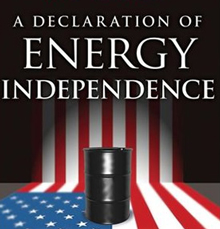
Pickens Outlines Energy Independence Plan in New Whiteboard Presentation


T. Boone Pickens has launched the first in a new series of whiteboard video presentations, outlining the role natural gas can play in helping to achieve President Barack Obama’s campaign pledge to cut all imports of oil from the Middle East in 10 years. The video can be seen at www.pickensplan.com/whiteboard2010.

“There are eight years left on the President’s campaign pledge to eliminate Middle East oil in 10 years, and we want to help him and our nation get there,” said Pickens. “The Pickens Plan is the only real plan that can make dramatic progress on that goal using our abundance of natural gas as a transportation fuel. We encourage Congress and all Americans to get behind this plan now - there is no more time to waste. We have an opportunity and we need to take advantage of it.”

In the whiteboard presentation, Pickens details how switching 8 million 18-wheelers to run on natural gas could cut the United States’ dependence on OPEC oil in half. This plan is included in several pieces of legislation, including The NAT GAS Act (H.R. 1835 and S. 1408), the American Power Act (S. 1733), introduced by Senators John Kerry (D-Mass.) and Joe Lieberman (I-Conn.), and the Next Generation Energy Security Act (S. 3535), introduced by Senators Saxby Chambliss (R-GA) and Richard Burr (R-NC).

“You’ll cut down $100 billion on 8 million vehicles,” Pickens said. “$100 billion creates one heck of a lot of jobs in the United States. We’re going to fix the security issue right here with the 5 million OPEC barrels and in eight years, the problem will be solved. Every president since Richard Nixon has said ‘elect me and we’ll be energy independent.’ Not one of them delivered on it. This president is going to focus on it, and together, all Americans will solve the problem for the country.”

Halfway through the year, the United States has not made any significant changes to the amount of foreign oil imports. The latest figures from the U.S. Department of Energy’s Energy Information Administration (EIA) show that the U.S. imported 62 percent of its oil, or 362 million barrels in June 2010, sending approximately $27.3 billion, or $631,255 per minute, to foreign countries, Pickens said in his latest monthly update on foreign oil imports.

“America is as close to an energy plan as it’s been in 40 years,” Pickens said. “We can’t let any more time go by as we continue to spend $27.3 billion per month on foreign oil. We have to act now or risk watching oil rise to $300-$400 a barrel in the next ten years, with import numbers jumping to 75 percent. So instead of spending $365 billion a year on foreign oil, we would be wasting $1 trillion a year. That just won’t work. Congress needs to move fast to enact legislation promoting the greater use of natural gas as a transportation fuel. The future of our economy and national security depend on it.”

The whiteboard presentation is the first in a series of five videos that will be released in the coming weeks. Pickens’ first whiteboard presentation was released during the launch of the Pickens Plan in July 2008. It has become a hit with the online community, having drawn more than 1.5 million views.

About the Pickens Plan

Unveiled on July 8, 2008 by T. Boone Pickens, the Pickens Plan is a detailed solution for ending the United States’ growing dependence on foreign oil. That year, when oil prices reached $140/barrel, America was spending about $700 billion for foreign oil, equaling the greatest transfer of wealth in history. That figure has decreased some while oil prices have retreated, but the U.S. is still dependent on foreign nations for nearly 70 percent of its oil, representing a continuing national security and national economic threat. The plan calls for expanding the use of domestic renewable resources, such as wind and solar, in power generation and using our abundant supplies of natural gas as a transportation fuel alternative to OPEC oil.

More than 1.6 million people have joined the Pickens Army through the website www.pickensplan.com, which has had over 20 million hits. For more information on the Pickens Plan please visit our website www.pickensplan.com.

Boston Globe: In Key Contests, Democrats Championing Gun Rights


The Boston Globe reports:

Democratic candidates in key states are embracing gun owners’ rights, winning favor from the National Rifle Association, a lobby that has long been the target of disdain from the party faithful.

In New Hampshire, Representative Paul Hodes, a Democratic Senate candidate, has an “A minus’’ NRA rating, potentially insulating him from progun rights attacks in a state that’s big on hunting and personal liberties.

Senate majority leader Harry Reid, in a bruising campaign for reelection in Nevada, has conservative activists buzzing because the NRA is considering endorsing his reelection.

Indiana’s Democratic Senate candidate Brad Ellsworth, who has an “A’’ rating from the NRA, may get the group’s endorsement this fall over GOP candidate Dan Coats, whom the NRA criticized in mailings to Hoosiers as being weak on gun rights.

And in Kentucky, Democratic Senate candidate Jack Conway has not only heralded gun rights but also signed friend-of-the court briefs supporting gun owners before two landmark Supreme Court rulings backing their rights in District of Columbia and Chicago cases.

http://www.boston.com/news/local/massachusetts/articles/2010/07/14/in_key_contests_democrats_championing_gun_rights/

Sahil Kapur explains in The Washington Independent why gun owner fears about the Obama Administration have proven to be unfounded. Gun control legislation has been dead on arrival in the Democratic-controlled Congress and President Obama signed legislation last year to allow firearms in national parks.

Kapur writes:

One year into his presidency, the Brady Center to Prevent Gun Violence gave Obama an “F” across the board on gun control issues. The Chicago Tribune joked the following month that “[o]n the list of issues for which Obama is willing to put himself on the line, gun control ranks somewhere below free trade with Uzbekistan.”

As a result, gun rights advocates remain about as unimpeded in their cause today as during the Bush administration.

http://washingtonindependent.com/91209/fears-aside-gun-rights-thrive-under-obama

Casey: Passage of Wall Street Reform a Major Step for Consumers


U.S. Senator Bob Casey (D-PA) is applauding the final passage of bipartisan legislation to bring more transparency and accountability to Wall Street. The legislation now goes to the president’s desk for signature.

“This is a major victory to bring more transparency and accountability to Wall Street for the types of risky behavior that helped cause the recession and massive job loss. This bill takes significant steps to have the rules favor consumers and not Wall Street.

“Consumer protections will be greatly expanded, a watchdog will be created to put consumers first and loopholes in oversight will be closed. The Wall Street reform bill also brings more scrutiny and safeguards to the largely unregulated $600 trillion derivatives market.

“I am disappointed that political obstruction has delayed final passage of these needed reforms for months. The American people expect fast action to address the problems facing our country, not political posturing, delays and obstruction.”
Senator Casey included provisions in the final bill to increase funding for foreclosure mitigation, protect pension funds and provide more oversight for property appraisals.

Senator Casey introduced an amendment during the Senate debate on the bill to provide additional funding to help keep workers who lost their jobs in their homes and to help stabilize the housing market. The final bill included $2 billion in foreclosure mitigation funds to the Department of Housing and Urban Development -- $1 billion for an Emergency Homeowners Relief Fund and $1 billion to the Neighborhood Stabilization Program. Rep. Chaka Fattah (D-PA) led the effort in the House to provide this funding.

Senator Casey worked with Senator Tom Harkin (D-IA) and Senator Blanche Lincoln (D-AR) to make sure that the Wall Street reform legislation adequately protects pension funds, counties and municipalities. Municipalities and pension funds in Pennsylvania have incurred massive losses in the swap markets. That is why Senator Casey worked to clarify the language in the bill to ensure such entities are protected.

Senator Casey also worked with Rep. Paul Kanjorski (D-PA) to include increased oversight of property appraisals. Inflated property values from inaccurate appraisals were one of the factors that contributed to the housing bubble.
Specifically, the appraisal language would:

• Create enforceable Federal appraisal independence standards with tough penalties.

• Provide the Appraisal Subcommittee of the interagency Federal Financial Institutions Examination Council with a consumer protection mandate and enhance its ability to monitor the performance of State appraisal oversight agencies.

• Strengthen appraiser licensing and education standards, and establish a Federal grant program to the States.

• A GAO study on the effectiveness and impact of appraisal methods, the Home Valuation Code of Conduct and the Appraisal Subcommittee.

Monday, July 12, 2010

Health Care Reform is Pro-Life


A right-wing disinformation campaign has convinced millions of Americans that health care reform will result in taxpayer financed abortions. Nothing can be further from the truth. Health care reform does not fund abortion and it is likely to reduce the number of abortions.

Thomas Berg, a professor at St. Thomas University School of Law, prepared the following analysis on behalf of Democrats for Life.

Professor Berg writes:

The effect of the Patient Protection and Affordable Care Act (PPACA) on abortion has been the subject of much controversy, and pro-life members of Congress who voted for PPACA have received strong criticism as well as strong praise. This memorandum has three purposes. First, it provides a brief reminder that PPACA contains many provisions reflecting pro-life values and having pro-life effects. Second, it assesses the two major criticisms of PPACA concerning abortion raised by the U.S. Conference of Catholic Bishops (USCCB). Although the USCCB has been the most detailed and thoughtful critic of the statute on abortion-related matters, this memorandum concludes that there are convincing answers to the USCCB’s criticisms and thus it was eminently reasonable for pro-life legislators to support PPACA.

Finally, the memorandum concludes that it also makes perfect sense for a pro-life legislator to support further efforts to clarify restrictions on abortion funding and protections of religious conscience in the context of a stand-alone bill. Unlike the context of the PPACA vote, enactment of stand-alone clarifications will not destroy health-reform legislation and its many positive pro-life features and effects. But support for such further clarification should in no way be seized on as an admission that PPACA’s provisions against abortion funding were inadequate.


A. The Pro-Life Elements of PPACA

First, it is worth briefly remembering the numerous elements of PPACA that reflect pro-life values or will have pro-life effects. These positive pro-life benefits would have been lost had the health-care reform effort failed.

PPACA enacts multiple forms of support for pregnant women and for childbirth, measures supported by the USCCB and other pro-life groups.[1] For example, sections 10212 and 10213 provide funds to colleges for a variety of pregnancy and parenting resources for students—an important initiative, because one-fifth of abortions are performed on college students and because significant numbers of women give as reasons for having abortion that having a child would interfere with their education or would be unaffordable because they are students.[2] The same sections also provide other funding for support for pregnant and parenting teens. In addition, PPACA § 10909 expands the adoption tax credit and adoption assistance programs in order to make adoption a more attractive and available alternative to abortion.[3]

Indeed, the expansion of health-care access itself provides strong pro-life incentives, among its other benefits to the vulnerable in our society. Studies indicate that inability to afford a child is a factor in three-quarters of abortions[4] and that women below or close to the poverty level have abortions at a dramatically higher rate than other women.[5] Because health care is a major cost of child-bearing and child-rearing, access to affordable care reduces incentives for abortion. As Basil Cardinal Hume, the leading Catholic prelate of England for many years, remarked concerning the positive effects of guaranteed health care in that country: “‘If that frightened, unemployed 19-year-old knows that she and her child will have access to medical care whenever it’s needed, she’s more likely to carry the baby to term. Isn’t it obvious?’”[6]

PPACA also contains a number of provisions to ensure that government support for afford health care does not support abortion. As health-law expert Timothy Jost has noted, several of these provisions are identical to provision in the House version of the bill, which was supported by the USCCB. Memorandum of Timothy Stoltzfus Jost, Washington and Lee University School of Law, at 3, http://law.wlu.edu/faculty/facultydocuments/jost/Jost_Response_to_Bishops_3.14.10.pdf (hereinafter “Jost Memo”). PPACA also makes it explicit that states may discourage abortion by outlawing abortion coverage in any policy issued through the state’s exchange. PPACA § 1303(a). Within two months of passage, two states had already passed such bans, and up to six others may follow suit this year. See Ricardo Alonso-Zaldivar, Abortion foes capitalize on health law they fought, Assoc. Press, May 17, 2010, available on Westlaw at 5/17/10 APDATASTREAM 01:31:09 (“Abortion rights supporters are concerned that the list [of states limiting private insurance coverage of abortion] is growing as a result of the new federal law.”).

B. The USCCB’s Major Criticisms of PPACA

The pro-life benefits that PPACA brings are important. But if other parts of the statute gave significant support to abortion, those benefits would not be proportionate to justify its enactment. The USCCB has argued that the statute will support abortion. The USCCB’s criticisms deserve serious attention because they are thoughtfully made, and because it has worked over the years for broadened health-care access. But there are strong answers to both of the USCCB’s major concerns—answers that justified pro-life Democrats voting for PPACA after they secured a clarification from the President that the law would not be used to fund abortions with federal tax dollars.

1. Funding of Community Health Centers

The first concern raised by the USCCB is that the statute directly authorizes, even mandates, funding for abortion through the increased funding for community health centers (CHCs) in section 10503. As the USCCB recognizes, “CHCs have existed for a long time, and so far they have not provided abortions except in the narrow range of cases where Hyde has authorized them (rape, incest, and threat to maternal life).” USCCB Memo of March 25, 2010, at 3, http://www.usccb.org/healthcare/03-25-10Memo-re-Executive-Order-Final.pdf (hereinafter “USCCB March 25 Memo”). The USCCB also acknowledges that federal regulations prohibit abortion funding in “programs or projects for health services which are supported in whole or in part by Federal financial assistance . . . appropriated to the Department of Health and Human Services [(HHS)] and administered by the Public Health Service” (42 C.F.R. § 50.301)—and that CHCs have long been subject to these regulations because they are supported by HHS funds.[7] But the USCCB objects that CHCs have only been denied funds “because all of their federal funding, at least so far, appears to have been made through annual appropriations bills that included the Hyde Amendment,” while PPACA § 10503 “makes a separate appropriation” without including Hyde Amendment language to restrict it. USCCB March 25 Memo at 3 (emphasis in original). For this reason, the USCCB claims, these regulations cannot validly be applied to funding appropriated under PPACA. Id. at 4.

The USCCB’s analysis, however, has a crucial flaw: appropriations to CHC from PPACA cannot be segregated from the range of appropriated funds that have always been explicitly subject to the Hyde Amendment. As Professor Jost notes, the new CHC funds “are explicitly enhanced funding that will flow into a pool of funding for these programs that is otherwise subject to the Hyde amendment. Any community health center that attempted to use its funding to provide abortions would be in violation not just of the federal regulations, . . . but also of the Hyde amendment, as they would have no way to segregate the Hyde-appropriated funds from the funds appropriated by this Act.” Jost Memo at 6. The USCCB acknowledges that “PPACA appropriations may not be used for abortions in CHCs if they are commingled in a trust fund that is already Hyde-restricted” (USCCB March 25 Memo at 3 n.5), but it claims that PPACA places new CHC funding into a separate account and therefore the Hyde Amendment does not apply. See id. (“PPACA creates a new fund [the CHC Fund] into which its new appropriations shall be placed”) (emphasis in original).

The USCCB overlooks, however, that payments to CHCs do not come directly from the new CHC Fund. Rather, the statute directs that the Secretary of HHS “shall transfer amounts in the CHC Fund to accounts within the Department of Health and Human Services to increase funding, over the fiscal year 2008 level, for community health centers and the National Health Service Corps.” PPACA § 10503(d). By speaking of “accounts within” HHS and of “increasing” funding, the statute’s terms indicate that the mechanism is to make payments to CHCs from existing HHS accounts, which are subject to the Hyde Amendment, and in which Hyde-restricted money from the ordinary appropriations process would also be commingled. The statutory text alone, therefore, strongly suggests that added CHC funds cannot be segregated in a way that would ever permit their use to fund abortions.

But if any ambiguity remained in the statute, it was eliminated by executive actions interpreting it. First, the President’s Executive Order of March 24, 2010, states that the prohibitions on abortion funding from the Hyde Amendment and the longstanding HHS regulations “shall apply to the authorization and appropriation of funds for Community Health Centers under [PPACA]” and “direct[s]” HHS to ensure compliance with the prohibition. Executive Order, § 3, http://www.whitehouse.gov/the-press-office/executive-order-patient-protection-and-affordable-care-acts-consistency-with-longst. And HHS confirms, in a recent memorandum explaining the Executive Order, why “abortion funding policies for community health centers will not change.”[8] The HHS memorandum makes clear that under the statute, the CHC Fund will provide added federal funds for services not under some new mechanism, but “under the existing CHC grants program administered by the Health Resources and Services Administration (HRSA), an agency within the Public Health Service (PHS)” (id.) and in turn within HHS. The “existing CHC grants program” has long been subject not only to the regulations prohibiting abortion funding, but to the Hyde Amendment itself. Thus to apply the funding-prohibition regulations here is consistent with and supported by the Hyde Amendment: contrary to the USCCB’s arguments, the application of the regulations to PPACA-based appropriations is supported by statutory authority. Since the regulations “on their face would apply to these new funds” (HHS Memo), and that application is valid, CHCs cannot use PPACA’s added funds for abortions.[9]

The clarifications in both the Executive Order and the HHS memorandum are very likely to be upheld. It is commonplace for presidents to issue executive orders directing agencies how to implement laws: “‘The ordinary duties of officers prescribed by statute come under the general administrative control of the President by virtue of the general grant to him of the executive power, and he may properly supervise and guide their construction of the statutes under which they act in order to secure that unitary and uniform execution of the law which Article II of the Constitution evidently contemplated in vesting general executive power in the President alone.’” Myers v. United States, 272 U.S. 52, 135 (1926) (quoted in Building and Const. Trades Dept., AFL-CIO v. Allbaugh, 295 F.3d 28, 32 (D.C. Cir. 2002)). An executive order, of course, cannot plainly contravene the statute on which it relies for authority. But this order is consistent with the most sensible reading of PPACA, since the text of § 10503(d) appears to direct payments to CHCs through existing HHS accounts and programs whose funds are subject to the Hyde Amendment. Moreover, if there is ambiguity in the statute, courts would have a powerful reason to defer to the executive branch’s construction, because the key issue here is the mechanism within HHS by which funding is implemented: that is, whether funds are distributed through accounts and programs that are Hyde-restricted. On questions that involve the mechanism within an agency for implementing a statute, courts have strong reason to defer to the construction of the President and the agency, since they are most familiar with, and are charged with, such implementation.

For this reason, the executive-branch commitment, secured by pro-life Democrats, to administer PPACA so as to bar CHCs from using funding for abortions is significant. The commitment does not contradict the statute; it coincides with the best reading of the text. But it clarifies the text, on a matter particularly within executive-branch competence.

2. Abortion and Health-Insurance Plans

The USCCB has also objected to provisions concerning abortion and qualified health-insurance plans participating in the exchange. The objections arise from the fact that the House version of the bill would have excluded abortion-covering plans from participation in the exchange, requiring individuals seeking abortion coverage to purchase a supplemental plan, while the enacted statute permits abortion-covering plans to participate but requires that premiums covering abortion be made in a separate payment to ensure that no federal funds subsidize abortion. See PPACA § 1303(b)(2)(B) (as amended in § 10104).

The USCCB’s first objection is that although PPACA “attempts to segregate funds within health plans in order” to ensure that no federal tax credits or other subsidies support funds “used for abortions,” nevertheless the subsidies “are still used to pay overall premiums for health plans covering abortions.” USCCB March 25 Memo at 4. At various times, opponents of the statute’s approach have dismissed it as an “accounting gimmick.” But the statute pursues the financial separation consistently, requiring not only separate payments but also segregated funds and the application of accounting standards to ensure that federally funded payments to a plan cannot be used to cross-subsidize abortion coverage in the plan. See PPACA § 1303(b)(2)(C). The Executive Order, in § 2, describes these restrictions as “strict” and directs HHS to promulgate rules to ensure “[s]trict [c]ompliance” with them.

As long as the strict payment and accounting requirements are fully enforced, they will accomplish the key goal of prohibiting the use of federal funds for abortion. Although the Hyde Amendment has taken the further step of barring plans covering abortion from receiving any Medicaid funding whatsoever, that approach is not followed in every situation concerning abortion. As Professor Jost’s memo notes (at 5), “[f]ederal Medicare and Medicaid funds currently help to pay for hospitals that pay for abortion, but they [the funds] do not pay for abortions.” The principle that government should refuse to fund not just a certain activity, but an entire entity if it engages in that activity in any of its operations, would mean barring religious organizations from government funding for the educational or social services they provide simply because they also teach religion (which the government cannot directly subsidize). It is reasonable for the government not to carry a funding refusal that far, and instead to focus on strictly ensuring that federal funds do not directly subsidize, or cross-subsidize, abortion.

The small, separate premium paid by individuals to account for abortion coverage in private plans requires somewhat more discussion. The USCCB warns that this provision would “impose a serious burden on the consciences of millions of Americans” because “[a]ny family having to buy such a subsidized plan—for example, because its coverage or provider network are necessary to meet the family’s health needs—will be forced by the Act to provide a separate payment, on a regular basis, solely to pay for other enrollees’ abortions. . . . Thus, even if this mechanism succeeds in preventing taxpayers from being forced to pay for abortions through their federal taxes, it does so at the cost of forcing them to pay for abortions directly from their own pockets.” USCCB March 25 Memo at 4 (emphasis in original).

There is a counterargument, however, that quite reasonably could persuade pro-life members of Congress voting for PPACA. Many individuals are already paying premiums for abortion-covering plans in the private market—often without even knowing it[10]—and the requirements imposed by PPACA will make such plans less attractive, encouraging plenty of abortion-excluding plans. The USCCB recognizes “the current injustice” that “when insurance companies and private employers choose the kind of health coverage they will offer, many of them choose to force people to purchase elective abortion coverage whether they want to or not.” USCCB Secretariat of Pro-Life Activities, Issues of Life and Conscience in Health Care Reform: Analysis of the “Patient Protection and Affordable Care Act” of 2010, at 1-2 (May 24, 2010), http://www.usccb.org/healthcare/PPACA-Analysis-5-24-10.pdf (hereinafter “USCCB May 24 Memo”). PPACA’s requirements will likely change this situation. Once PPACA requires that the small premium share attributable to abortion become a separate payment, requiring a second check, many consumers will not wish to pay it and will demand abortion-excluding plans. This includes both consumers who object to abortion and those who simply do not wish to pay for something they will not need. Insurers will have strong incentives to offer abortion-excluding plans, both to meet consumer demand and to avoid the administrative costs of processing the separate abortion-allocated check.

When the segregation provision was added to the Senate bill, a prominent health-policy expert concluded that it “could be expected to chill issuers’ willingness to sell” plans covering abortions, because “[t]hey would have to comply with complex audit standards and more importantly, they would have to collect an additional fee from each member of their plan, a step that could be expected to encounter broad resistance.”[11] See also Jost Memo at 4-5 (“[Plans] that do [offer abortion coverage] will invariably offer an identical plan without coverage for the majority of their market, which does not want to choose abortion coverage. . . . Many plans currently offer abortion coverage, often without their enrollees knowing it, . . . because the insurers believe it will save them the costs of childbirths. But once abortion becomes a separate service that must be fully paid for by a separate premium, coverage for it will likely become rare.”). For precisely this reason, pro-abortion-funding groups excoriated PPACA’s restrictions as an “egregious . . . bureaucratic stigmatization” of abortion. See NARAL Pro-Choice America, Statement on Health Reform (Mar. 21, 2010), http://www.prochoiceamerica.org/news/press-releases/2010/pr03212010-finalhousehcr.html.

In short, this change in payment structures not only will likely make many abortion-excluding plans available, but also could significantly reduce the “current injustice” (USCCB May 24 Memo at 1) of individuals paying for abortions in health plans without wishing to do so.

C. Future Stand-Alone Bills Concerning Abortion Funding and Conscience Protection

New legislation has now been proposed aiming to make the abortion-funding prohibitions in PPACA even clearer and to strengthen protection for conscientious objections to abortion and other procedures. See, e.g., H.R. 5111. Such a stand-alone bill presents a very different situation than the one that pro-life members of Congress faced with PPACA. There are reasons, of course, to make conscience protections and abortion-funding restrictions as clear as they possibly can be. But when pro-life Democrats voted for PPACA in March, they did not face such a simple option. If they withheld their vote, demanding such provisions, it would have meant only two things. PPACA would have passed anyway without the additional safeguard against federal abortion funding provided by the Executive Order,[12] and the legislators simultaneously would have been voting against the many pro-life opportunities that PPACA offers: the explicit empowerment of states to restrict abortion-covering plans, the support for pregnant women and adoptions, and so forth, to say nothing of the other contributions the law will make to the common good. In that context, pro-life Democrats were justified in focusing on whether the protections against abortion funding were strong and adequate, not whether they were perfect.

What is worrisome is the prospect that pro-life Democrats will be discouraged from voting for a stand-alone bill not because they doubt its substantive provisions, but because they know that their political opponents will seize on such a vote to allege that it shows the abortion-funding restrictions of PPACA were inadequate all along. For opponents to use such a “gotcha” tactic would be terribly wrong. It is perfectly sensible and logical (a) to conclude that the abortion restrictions in PPACA were strong and fully adequate, warranting a vote for a law that would serve pro-life values in other ways, and also (b) to vote later for a stand-alone bill that makes the restrictions and conscience protections even clearer and does no harm to those other values. Critics who would use this pair of votes as a tactic against a sincere pro-life liberal would show that they cared more about partisan advantage than about strong pro-life policies.

Read the entire essay with footnotes at:

http://www.democratsforlife.org/index.php?option=com_content&view=article&id=717:abortion-and-key-provisions-of-the-patient-protection-and-affordable-care-act-ppaca-by-thomas-c-berg-&catid=24

Sunday, July 11, 2010

Economy in Crisis: The VAT is Nothing to Fear


VALUE ADDED TAX CAN GENERATE SUFFICIENT REVENUE TO END INCOME TAXES FOR MOST AMERICANS

A value added tax will reduce the deficit, help fund health care and save Social Security. With a VAT, the income tax can be ended for workers earning less than 150K per year. Enacting a VAT will revitalize domestic industries and increase the savings rate. America can have a bright future once again with the right kind of tax and trade policies.

Dustin Ensinger writes at Economy in Crisis.Org:

Despite the fact that the report has yet to be issued and no one is certain of what it will include, Sen. Orrin Hatch (R-UT) last month launched a preemptive attack on President Obama’s tax reform panel’s recommendations, claiming that even broaching the subject of a value-added tax is “dangerous.”

The Economic Recovery Advisory Board’s subcommittee on tax reform was set to present a list of options to streamline America’s overly complicated tax system to the president last December but the report was delayed. Now the report is expected to be released in the coming weeks and there is speculation that a European-style VAT may be one of many options, which does not sit well with Hatch.

“I believe that the mere discussion of a VAT overlay on top of our current tax system is dangerous and could move some Washington policymakers further toward an inclination to increase spending by providing more revenue,” he said in a letter to the White House.

The Wall Street Journal editorial page has been sounding the alarm as well, despite having no evidence to support its claim.

“White House officials even talk privately about the galvanizing political benefit of a bond market crisis,” the paper wrote, “which would force panicked Members of Congress to accept a big new value-added tax. The President's two looming tax reports … are intended to propose a VAT and other tax options.”

The panic is emanating from the fact the tax reform advisory board is being led by former Federal Reserve Chairman Paul Volcker, who has publicly expressed support for a VAT. The White House has said it is not considering the VAT as an option.

"My tax philosophy would be if we can't deal with our expenditure loan with the present tax system, we've got to think about changing the tax system," Volcker said. "When you think about changing the tax system, given the problem that we started out talking about, you've got to talk about some tax that hits consumption."

A value-added tax would do just that. Taxes are levied at each stage of production, and included in the final price of a product or service. Therefore, it would hit consumers at the checkout counter, in effect putting a tax on consumption.

By taxing consumption, the VAT would encourage much-needed saving among the American people. The tax would raise enough revenues to drastically cut into the annual budget deficit and thus lessen the national debt over the long-run, all while exempting millions of Americans from federal income taxes.

According to the Tax Policy Center, a five percent VAT that covered 80 percent of goods could generate roughly $260 billion in 2012. The Virginia Tax Review estimates that a VAT of 25 percent could pay for health care reform, exempt millions of American families from income taxes and still raise the revenues necessary to cut into the federal budget deficit.

Perhaps the most immediate impact a VAT would have on the American economy would be its immediate leveling of the international economic playing field.

Currently over 150 nations utilize a VAT. The U.S. is the only developed nation in the world without some form of a consumption tax. For those nations with a VAT, it works like an export subsidy and an import tariff at the same time. Without its own VAT, the U.S. is placed in a comparatively uncompetitive situation.

In 2007, American businesses faced a total economic disadvantage of $355 billion due to other nations' VATs - $230 billion in other government’s rebates to their exporting businesses and $125 billion in border adjustment taxes imposed on U.S. importers. That massive disadvantage encourages outsourcing as American companies move offshore in order to circumvent the VAT and reap the same benefits as the companies producing in those nations.

A VAT would provide domestic manufacturers with needed protection from mercantilist practices by foreign competitors, create needed manufacturing jobs, help balance the trade deficit and go a long way toward achieving the president’s goal of doubling American exports in the next five years. In fact, according to renowned economist Mark Zandi, a VAT may be the only way to reach that mark.

“If you wanted to achieve this, you would probably have to overhaul the U.S. tax system and have a value added tax as well as engineering a depreciation in the U.S. dollar,” he said, according to the Financial Times. “This would be a tall order.”

http://www.economyincrisis.org/content/vat-nothing-fear

Wednesday, July 07, 2010

Michael Lind: The American People Want More Government Spending


Michael Lind, a research fellow at the New America Foundation, points out the gap between public opinion and elite attitudes about deficits and public spending in his latest essay.

Lind writes:

The new conventional wisdom in Washington is that more spending to promote job creation is out of the question, because the public has changed its priorities and its obsessed with the danger of federal deficits.

Really? What public? The Paraguayan public? The Moroccan public?

The actual views of the American people are at odds with the corporate media’s portrayal of a nation of deficit hawks. According to a June 11-13 USA Today/Gallup Poll, 60 percent of Americans favor "additional government spending to create jobs and stimulate the economy." Only 38 percent of the respondents opposed the proposal, while 2 percent had no opinion.

Federal deficits are an obsession with American elites, including many establishment Democrats. But deficit reduction is not the leading priority of the American people. In another USA Today/Gallup Poll, taken March 26-28, the list of issues considered “extremely important” by voters was headed by the economy (57 percent), followed by healthcare (49 percent) and unemployment (46 percent). The federal budget deficit came in fourth, at 45 percent. Note to the Obama administration and Congress: Fewer than half of Americans think that the federal budget deficit is an “extremely important” issue.

Back in March, the only group in which a majority listed the federal budget deficit as extremely important comprised independents (52 percent). The deficit was less important for Democrats (37 percent) and Republicans (47 percent). Inasmuch as supply-side economics is a variant of Keynesianism, it is not surprising that conservative Republicans and liberal Democrats alike should be less concerned about deficits than independents, who seem to share the views on this subject of Ross Perot's followers of the 1990s.

On the basis of that poll and similar ones, many have concluded that in order to reduce the defection of independents to the Republicans in the fall, the Democrats must at least make a show of being deficit hawks. But other polls suggest a different strategy. In the June USA Today/Gallup Poll, majorities of Democrats (83 percent) and independents (52 percent) supported more stimulus spending. Only the Republicans opposed it, by 61 to 38 percent. How can it be argued that Democrats need to appeal to independent swing voters in the fall by denouncing deficits, when a majority of those independents side with Democrats against Republicans on the need for more spending to spur job creation?

Is it possible to be in favor of more federal spending now to save the economy and promote jobs, while being in favor of deficit reduction in the long term? It is not only possible, but necessary. The more rapidly the economy grows, and the greater the number of Americans who are employed, the higher tax revenues will be and the sooner federal deficits can be reduced without measures that would cripple the economy, like raising taxes and cutting spending in the middle of a near depression.

Read the full article at
http://www.newamerica.net/publications/articles/2010/the_american_people_want_more_government_spending_33998