Sunday, February 01, 2009


Saturday, January 31, 2009
College Democrats support expanded nuclear power

From the University of Wisconsin's Daily Cardinal:
Nuclear worthy addition to renewable energies
by Lavilla Capener
The Daily Cardinal
January 30, 2009
Renewable fuels may be the future, but nuclear energy may help bridge the gap until new energy technologies become a reality
Lavilla Capener for College Democrats
We are in the midst of an energy crisis, and though the urgency has lessened for an energy solution since last summer because of lower gas prices and an economic recession, the problem is no less real. Although the economy will be President Obama’s chief concern in the coming months, our energy policy affects the economy and foreign policy decisions as much as the environment and our pocketbooks. We in Wisconsin can take steps to improve our energy policy, and, working with national leadership on the issue, we can change the way America evaluates and uses energy.
A fossil fuel-orientated energy policy is fading much like our reliance on an industrial economy. As service sector and information technology jobs take over for the classic factory jobs, our energy policy needs to utilize smarter, cutting-edge technologies to compete in a world market. Gas-guzzling SUVs will not cut it environmentally, and as the struggling “big three” automakers continue to beg Congress for money while Japanese automakers rake in the dough, the economics of traditional energy are not going to work anymore either.
We must realize, however not any single fuel source will pull us out of this mess—not wind, not solar, not hydropower—as useful as they may be. We need a comprehensive policy that incorporates several different sources of energy, including nuclear power.
Whoa, what? The College Democrats are endorsing nuclear power? Not necessarily. Although I think it is an option we need to explore, and many fellow Democrats (including several Wisconsin state lawmakers) agree, there are many people, including Democrats, Republicans and Independents, who have deep reservations about nuclear power—and with good reason. The nuclear power industry still has several kinks to work out, especially with the issues of a high start-up cost and permanent storage for nuclear waste. However, roadblocks are not a good enough reason to give up trying to make nuclear energy work, especially when nuclear electricity generation emits practically zero carbon emissions, a huge upside.
Nuclear power has been successful in Europe, and we have working nuclear reactors in the United States, though new plants have not been built in decades. Wind, solar, hydropower, hydrogen and ethanol all show promise for solving the energy crisis. Alternative energies cannot generate electricity on a constant basis, though they can supplement a main energy source.
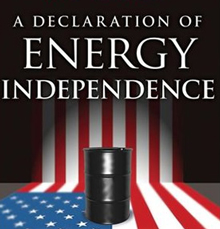
We need something to provide a base load of energy that can take over when the wind is not blowing or the sun is not shining. If scientists can develop a method to harness and store solar or wind energy, we could implement it. In the meantime, we need to work with the reality of our situation. We can either accept the effect fossil fuel has on our environment and foreign policy decisions, or we can develop a dynamic energy policy with the goal of becoming energy independent.
The United States has produced great inventions and technologies when the government and the people invested time, money and energy into solving a pressing problem. If we can use several fuel sources effectively—including nuclear power—we can stimulate the economy, help the environment and create “green” jobs, all while becoming more energy independent.
Lavilla Capener is the communications director of the College Democrats of Madison.
http://www.dailycardinal.com/article/21886
For additional background on nuclear power, check out this article link from Scientific American.
http://www.sciam.com/article.cfm?id=next-generation-nuclear
Peter Cohan: Is there a new reality on Wall Street pay ?

Management consultant Peter Cohan has a keen insight on the present economic crisis in a column at BloggingStocks. Cohan says "finance has become the tail that wags the economic dog" and now is the time to "cut that tail down to size."
Is there a new reality on Wall Street pay?
January 31, 2009 by Peter Cohan
BloggingStocks www.bloggingstocks.com
One of the questions that I spent this week discussing is this: What was Wall Street thinking? Whether it's using taxpayer money to pay itself $18.4 billion in bonuses or to buy a $50 million corporate jet after posting $35 billion in losses, people are wondering whether Wall Street gets it. The answer is yes. Wall Street gets that nobody stopped it from paying bonuses when it took our money, so it took what it could. Unless we limit how Wall Street spends taxpayer money, it will keep paying itself big bonuses.
Wall Street is a place where the people at the top are trained to grab as much as they can out of the hands of the other graspers. At least $200 billion worth of TARP money went to Wall Street with no strings attached. If you put that much money into the hands of a culture that believes firmly in taking what it can get -- it usually pays half of its revenues to employees -- you end up with Wall Street taking as much as it can from the taxpayers.
As long as the highest pay goes to Wall Streeters, our society is going to send its best and brightest into finance. Complaining about high Wall Street pay will not change the outcome. But Wall Street is going to need some of the next $350 billion in TARP money, so we face a choice. We can give it to them with no strings attached -- in which case they will pay themselves big bonuses again. Or we can give it to them with a requirement that they lend it out and pay bonuses only in bank common stock that can be sold after we taxpayers take our profits from selling our preferred shares.
If we don't change the conditions under which Wall Street gets taxpayer money, then we are going to get the same outrageous behavior we've seen in the last week.
Meanwhile, I hope that we can change our economy's incentives so that we send the best and brightest people to more useful industries. Personally, I'd like to see more talent going into high tech, teaching, and government. But one thing seems clear to me. Since the early 1980s, finance has become the tail that wags the economic dog. And that tail has brought the global financial system to its knees.
It's time to cut that tail down to size. That's because finance should be a force that supports the investment decisions of business executives who build the products that fuel the economy, rather than its economic engine. And changing Wall Street's culture and pay practices would help restore finance to that rightful place.
Peter Cohan is president of Peter S. Cohan & Associates. He also teaches management at Babson College and is the author of You Can't Order Change: Lessons from Jim McNerney's Turnaround at Boeing.
http://www.bloggingstocks.com/2009/01/31/is-there-a-new-reality-on-wall-street-pay/
Wednesday, January 28, 2009
Failing Infrastructure Cannot Support a Healthy Economy

Civil Engineers' New Report Card Assesses Condition of Nation's Infrastructure
WASHINGTON, Jan. 28 /PRNewswire-USNewswire/ -- Decades of underfunding and inattention have jeopardized the ability of our nation's infrastructure to support our economy and facilitate our way of life. The American Society of Civil Engineers (ASCE) today released its 2009 Report Card for America's Infrastructure - assigning a cumulative grade of D to the nation's infrastructure and noting a five-year investment need of $2.2 trillion from all levels of government and the private sector. Since ASCE's last assessment in 2005 there has been little change in the condition of the nation's roads, bridges, drinking water systems and other public works, and the cost of improvement has increased by more than half a trillion dollars.
"Crumbling infrastructure has a direct impact on our personal and economic health, and the nation's infrastructure crisis is endangering our future prosperity," said ASCE president D. Wayne Klotz, P.E., F.ASCE. "Our leaders are looking for solutions to the nation's current economic crisis. Not only could investment in these critical foundations have a positive impact, but if done responsibly, it would also provide tangible benefits to the American people, such as reduced traffic congestion, improved air quality, clean and abundant water supplies and protection against natural hazards."
As the nation's infrastructure receives focused attention from the White House, Congress and the public, ASCE's 2009 Report Card for America's Infrastructure provides an assessment of the condition and need for investment of 15 infrastructure categories, including, for the first time, levees. While there has been some improvement since 2005, overall conditions in most categories have remained the same, or slipped even lower. Security, a category that was added to the Report Card in 2005, and which received an incomplete grade, has been removed from the list of assessed categories and added into the methodology used to assess each individual category. Grades included:
Aviation = D (down from a D+)
Bridges = C (no change)
Dams = D (no change)
Drinking Water = D- (no change)
Energy = D+ (up from a D)
Hazardous Waste = D (no change)
Inland Waterways = D (no change, previous listed a Navigable Waterways)
Levees = D- (new category)
Public Parks and Recreation = C- (no change)
Rail = C- (no change)
Roads = D- (down from D)
Schools = D (no change)
Solid Waste = C+ (no change)
Transit = D (down from D+)
Wastewater = D- (no change)
The Report Card also offers five key solutions for raising the nation's infrastructure GPA. These include:
Increasing federal leadership in infrastructure,
Promoting sustainability and resilience,
Developing federal, state and regional infrastructure plans,
Addressing life-cycle costs and ongoing maintenance and
Increasing and improving infrastructure investment from all stakeholders.
Each category was evaluated on the basis of capacity, condition, funding, future need, operation and maintenance, public safety and resilience. A detailed report, which accompanies the grades released today, will be released on March 25, 2009. For more information, including solutions for solving America's infrastructure problems and ASCE's Principles for Economic Stimulus Investment, visit www.asce.org/reportcard.
Founded in 1852, ASCE represented more than 146,000 civil engineers worldwide, and is America's oldest national engineering society. For more information, visit www.asce.org.
Website: http://www.asce.org/
Sunday, January 25, 2009
America's Fall From Grace
by Craig Harrington
Published 01/23/09
http://www.economyincrisis.org
This country has been in a recession for over a year and even the most optimistic outlook puts recovery at least another year away. We have watched as our largest and most profitable companies have been reduced to ruins or brought to the brink of annihilation. We saw our commuter economy bludgeoned by the rising tide of oil costs. We saw the biggest government bailout in world history enacted against our will and with our tax dollars, and have yet to see any return for the investment. This country is certainly in a difficult spot, but the question remains.
How did we get here?
I. Free Trade
The United States’ position in the international economic community has changed dramatically in the 60 years since “free trade” replaced “economic nationalism” as the standard operating procedure of most governments. The United States has descended from the alpha and omega of the world economy.
Unfortunately, our policy approach to “free trade” hasn’t shifted at all to realign with our current situation. If anything, our policies are now even more geared toward a 1950s era America than they are for today's climate. International “free trade” is a one-way street in which all factors of production are shifted to the cheapest available market. That market used to be in the United States, but now it is located in Mexico, Southeast Asia, Europe or elsewhere. Labor in the U.S. is simply too expensive for most producers, so they take their businesses elsewhere and avoid the health, safety, wage and environmental standards already in place in the U.S.
This system has turned our economy - once based on exports and creating wealth - into a pauper surviving on imports while incurring more and more debt.
II. Foreign Takeovers
Our unbalanced trade system has a net result of importing goods and exporting dollars. From 2001-2008 the United States economy lost approximately $4.8 trillion via its import deficit. Much of this money simply leaves the economy never to return, but a sizable portion returns to the United States in the form of foreign direct investment (FDI). Businesses like FDI because it brings capital into their coffers, and the government likes it because they see all FDI as wealth producing “investment” – our government is obsessed with promoting “investing,” which is little more than gambling.
However, when a company receives FDI it must, in return, give over some controlling interest of the company. For example, a Japanese firm will come to the United States and use the money it acquired by selling goods to our consumers for the purpose of buying one of our companies. Thousands of U.S. companies have either been purchased outright or taken under control by foreign investors, essentially making them foreign companies. This speeds up our trade deficit, deflates our economy, and puts any future advancement from research and development in the hands of foreign interests.
The Committee on Foreign Investment in the United States is supposed to safeguard against unfair mergers and acquisitions, yet it takes little or no action in almost 99 percent of the case submissions it receives.
Several key factors have been instrumental in our fall from grace. Our “free trade” policies have allowed other countries to use unfair tactics to put our industries out of business. As disastrous policies allowed our companies and corporations to be taken over, we took no action to block the hostility or protect our sources of wealth. Our “free trade” ideology and our complete lack of protection from foreign takeovers are just a few of the many reasons that the economic situation in the United States is in such dire straights. We need to put people into elected office who are willing to right the ship and correct this imbalance. We cannot survive on more of the same. We must contact our elected officials, and implore them to either change the error of their ways or face defeat in re-election.
http://www.economyincrisis.org/articles/show/2366
Froma Harrop: National health plan may survive this time

Syndicated columnist Froma Harrop is optimistic about the prospects of national health care finally becoming a reality in the United States. Our nation's health system is broken. Tens of millions of working Americans are going without health insurance. Fixing our health care system must be a top priority in Washington.
Froma Harrop: Beyond rhetoric on health care
The Providence Journal www.projo.com
01:00 AM EST on Thursday, January 22, 2009
LET THE NAME-CALLING begin. A national health plan is again proposed, and its foes are trying to deal it death by unflattering labels. The old favorites include “socialized medicine” and “government takeover of health care.”
Some 61 percent of Americans think it’s more important than ever to fix the health-care system — an encouraging number for Tom Daschle, who was put in charge of making universal coverage happen. But the former South Dakota senator knows full well how organized attacks can puncture big majorities.
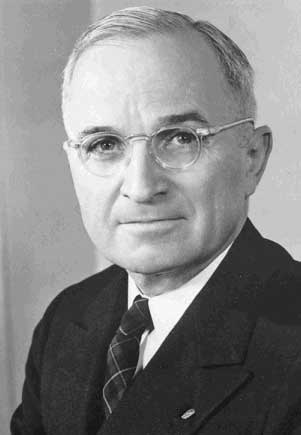
Harry Truman proposed national health insurance in 1945 and 75 percent of Americans applauded. Then the U.S. Chamber of Commerce issued a pamphlet, entitled “You and Socialized Medicine.” Doctors joined the assault, and by 1949, support for the plan had cratered to 21 percent.
Richard Nixon tried to launch national health insurance. Bill and Hillary Clinton famously tried. Daschle relates this sad history and shares his own proposal in a book, Critical: What We Can Do About the Health-Care crisis.
This is not 1993, when Clinton’s vision crashed. There were 38 million uninsured then. Today there are 47 million, and that doesn’t count another 25 million with crummy coverage. Many millions more fear layoffs that could cost them their coverage.
However, it is still remarkably simple to frame health-care reform in a way that turns people off.
For example: Some 71 percent of Americans want to require employers to either offer health insurance or pay money into a government pool, according to a poll by the Kaiser Family Foundation and the Harvard School of Public Health. But when asked whether they’d still support that mandate if they heard that some companies might lay off people as a result, the number sinks to 29 percent.
Another question in the survey: “Would you be willing to pay more — either in higher health-insurance premiums or higher taxes — in order to increase the number of Americans who have health insurance?” Respondents were about evenly split, with 49 percent saying “no” and 47 percent saying “yes.”
Enemies of national health insurance will no doubt exploit the weak spots in support. And the group most open to their claims is those who have coverage at work and like their deal.
Backers of a national plan will argue that broad reform would include containing costs while preserving quality. Americans spend $8,000 a year on health care for each man, woman and child — even counting the 47 million who have no insurance at all. Other rich countries spend half as much and they cover everyone.
The happily insured must understand that the premiums employers pay ultimately come out of their paychecks. While a national health plan would cost more money in the beginning, it is expected to start saving money in later years.
To win over the happily insured, Daschle would simply build on the current system. The uninsured would pick from a buffet of health plans. The choices would include several private options and one public plan. Expect demagoguery over the latter. The insurance companies don’t want that competition.
It was a matter of time before would-be wreckers of a national health plan resume dark talk about a plot to install “top-down command and control of American medicine” and “HillaryCare.” But a lot of things have changed in the 15 years since Clinton failed to make universal coverage an American reality.
Insecurity over health coverage is surging. Spiraling medical costs have made American companies less competitive. And Americans are feeling beaten up by the crashing economy.
This time, a national health plan may survive the derogatory labels.
Froma Harrop is a member of The Journal’s editorial board and a syndicated columnist.
http://www.projo.com/opinion/columnists/content/CL_harrop22_01-22-09_2OD0BIU_v9.4280b3f.html
Subscribe to:
Posts (Atom)