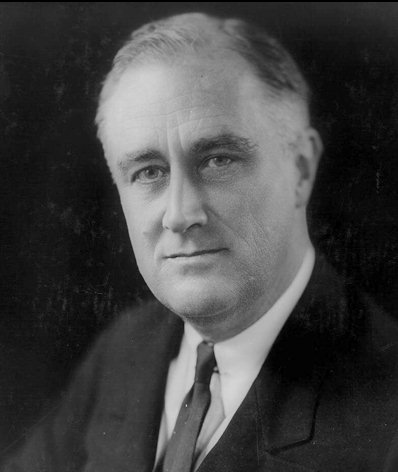
Chautauqua is an annual event in rural Nebraska which brings historical figures to life. This year's program focused on the 1930's with a stirring defense of the New Deal by Professor Patrick McGinnis as Franklin D. Roosevelt.
Adrian Sanchez reports in the Columbus (NE) Telegram:
COLUMBUS — Franklin Delano Roosevelt presented a historical narrative of the 1930s that echoed the challenges of modern America and provided his presidential perspective on the steps taken to endure through the crises.
The presentation was part of the Chautauqua 2010 festivities in Pawnee Park Thursday as Roosevelt spoke about his administration’s efforts to overcome a depressed economy, staggering unemployment, extreme weather conditions and international strife.
More than 150 people attended the event to hear Roosevelt, interpreted by University of Central Oklahoma emeritus professor of history Patrick McGinnis, speak on issues that resemble the problems that exist today using humor and research to bring to life one of the country’s most important presidents.
The Chautauqua continues in Pawnee Park north of the tennis courts tonight through Sunday.
Elected president in 1932, as the Great Depression entered its most desperate phase, Roosevelt, using broad executive power with the support of strong Democratic majorities in Congress put into motion his New Deal to aid in the nation’s recovery, but not without staunch opposition.
At the time, unemployment neared one-third of the work force, bankruptcies and bank failures wiped out the savings of millions and talks of revolution began among various groups of people.
Roosevelt’s proposals for social reforms such as Social Security, labor legislation and conservation measures were met with cries of fascism, communism and socialism labeling them as un-American ideology, Roosevelt said, to which he responded, “Have you lost any of the rights or liberties guaranteed in the Constitution?”
“Inaction and apathy are the most potent foes,” he said, in response to those who denounced his administration’s efforts.
Set in 1936, McGinnis as Roosevelt said while “the fact remains a great number remain unemployed” efforts such as the Civilian Conservation Corps helped more people work and earn wages than in the spring of 1933.
“Work must be found for able bodied but destitute workers,” Roosevelt said, because if a large portion of the populace continues to become dependent upon relief it will become “fundamentally destructive to the fabric of the nation.”
Roosevelt recognized his proposals were imperfect, stating, “with your help we can keep those imperfections to a minimum.”
He also was an advocate for conservation, stating “What God has given us we exploit without thought of future generations” and to continue in such a manner is “theft from those who come after us.”
Following the presentation, the character of Roosevelt responded to questions from the audience, many of which were reflective of current political topics.
In response to a question about letting the free market right the ship, Roosevelt responded, stating those businessmen did not bat an eye at accepting billions in government bailouts, yet objected to the out of work laborer receiving government assistance.
The New Deal “saved many, many self-serving businessmen from total collapse and destruction,” Roosevelt said. “When the government provides relief to them they see nothing wrong, but complain when the same relief is going to people out of work,” adding “the government’s money is the people’s money.”
One gentleman asked about government removing itself from people’s business.
“Before the Federal Securities Act nothing required disclosure when purchasing stocks,” he said, the seller just had to attest the stock was worth something, when often times it was worth very little.
As a result, the large quantities of money affected large quantities of people so the Federal Securities Act was adopted prevent such catastrophic events would occur again in the future, he said, providing just one example.
Another person questioned the long-term viability of Roosevelt’s Social Security program.
“We are the only nation that doesn’t have a minimum floor of retirement security,” Roosevelt said, adding, “the Social Security measure was carefully thought out by talented and well informed people. We are confident the funding of Social Security will be sound for years and year to come.”
But he added, “nothing we do is set in stone,” and if deemed necessary, the people can amend it and change it through their elected representatives. Will Rogers, as interpreted by Doug Watson, noted Prohibition was enacted and later repealed.
“I have continuing faith in the American people ... to correct problems that will face them,” Roosevelt said, later citing one of his most famous lines, “The only thing we have to fear is fear itself.”
http://columbustelegram.com/news/local/article_6d0c97c0-7ae1-11df-be2c-001cc4c03286.html