WASHINGTON D.C.- Members of the fiscally conservative, Democratic Blue Dog Coalition demanded greater accountability and responsibility regarding the war in Iraq at a press conference in the U.S. Capitol Friday.
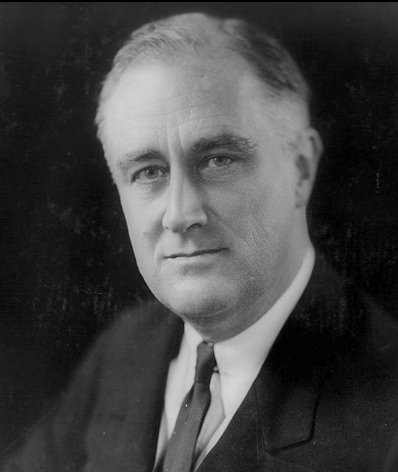
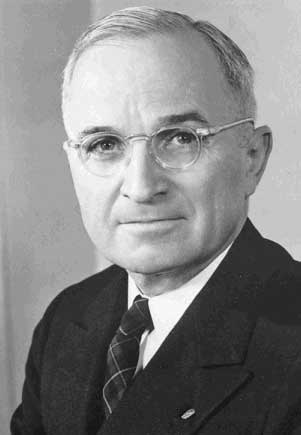
The Blue Dog Coalition announced its plan to introduce a resolution calling for increased fiscal accountability in funding the Iraq war. The resolution focuses on four crucial points for demanding fiscal responsibility in Iraq. The points are: a call for transparency on how Iraq war funds are spent; the creation of a Truman Commission to investigate the awarding of contracts; a need to fund the Iraq war through the normal appropriations process and not through “emergency” supplementals; and using American resources to improve Iraqi assumption of internal policing operations.
“The legislation we are introducing today addresses the glaring lack of oversight and accountability in Iraq and addresses how taxpayer dollars are spent on the war,” said Rep. Patrick Murphy. “It is long past time we kept track of the money we spend in Iraq and replace waste, fraud and abuse with oversight, responsibility and accountability. This resolution puts forward tangible, commonsense proposals that ensure more resources get to the troops in the field. These are measures everyone can agree on, regardless of political party.”
“Had requests for funds for the Iraq war been on-budget, Congress would have learned far earlier what was going wrong. Budgeting by supplemental prevents Congress from doing our job and misleads the public about the true trade-offs,” Rep. Jane Harman said.
"We have to bring accountability, transparency and honesty to the way these military operations are run by the civilian leadership at the Pentagon," said Rep. John Tanner. "The American people deserve to know how their tax dollars have been spent -- and in many cases, wasted -- toward a goal that is increasingly impossible to achieve if the Iraqi people are unable or unwilling to work together politically to stabilize their own country."
"We've found countless examples of how American tax dollars have been wasted and abused in Iraq, putting our service members’ lives more at risk," said Rep. Mike Thompson. "Congressional oversight is desperately needed. The Bush Administration must be held accountable for how military and reconstruction funds are used, and this resolution is an important first step toward making that happen."
“We are also calling for an accounting with the Iraqi government and its people,” Rep. Jim Marshall. “Iraqis must steadily progress toward full responsibility for internally policing their country. Without such progress, it is wasteful to continue our investment of lives, limbs and taxpayer dollars in Iraq.”
The conservative Blue Dog Coalition was formed in 1995 with the goal of representing the center of the House of Representatives and appealing to the mainstream values of the American public. The Blue Dogs are dedicated to a core set of beliefs that transcend partisan politics, including a deep commitment to the financial stability and national security of the United States. Currently there are 44 members of the Blue Dog Coalition.
Blue Dog members participating in the event included: Rep. Jane Harman (CA-36), Rep. Patrick Murphy (PA-08), Rep. John Tanner (TN-08); Rep. Mike Thompson (CA-01); Rep. Jim Marshall (GA-08); Rep. Mike Ross (AR-04), Co-Chair for Communications; Rep. Allen Boyd (FL-02), Co-Chair for Administration; Rep. Dennis Moore (KS-03), Co-Chair for Policy; and Rep. Stephanie Herseth (SD-AL), Whip.
* FORD PRO-FAMILY STANCE DRAWS CRITICISM
Former Congressman Harold Ford (D-TN) is expected to become the next chairman of the Democratic Leadership Council. Baptist Press reports that Ford's likely DLC chairmanship has drawn criticism from a powerful interest group within the Democratic Party.
"The likely choice of Ford, a former representative from Tennessee, has some homosexual activists upset. Ford twice supported a proposed federal constitutional marriage amendment, in 2004 and 2006. He also vocally opposed a 2006 decision by the New Jersey Supreme Court ordering the state legislature either to legalize "gay marriage" or Vermont-style civil unions.Ford lost in a close race for the Senate last year to Bob Corker."
"National Stonewall Democrats, a group that advances homosexual causes within the party, issued a statement Jan. 12 expressing "deep concern" over the choice of Ford, saying he "possesses a poor record on issues that impact LGBT [lesbian, gay, bisexual, transgender] families."
"Congressman Harold Ford has demonstrated a lack of leadership and judgment on family issues that causes our members great concern," Joanne Wyrick, executive director of National Stonewall Democrats, said in a statement. "His willingness to lightly amend the U.S. Constitution and to exploit gay families for political gain should alarm Democrats across the country. The Democratic Leadership Council is in need of leadership that supports and affirms all American families."The statement claimed Ford was at "odds with the past position of the Democratic Leadership Council."
"The DLC is not an official party organization but seeks to influence the direction of the party. Ford would replace outgoing Iowa Gov. Tom Vilsack, who is running for president." http://tinyurl.com/3czlvr
This blogger supported equal rights for gays and lesbians in employment and housing long before such a view was popular. I am not homophobic but recognize that gay-lesbian activists have become a major force within the party and tend to put their own narrow agenda first. Everyone has the right to participate, however, issues like gay marriage cannot be allowed to define our party. We need more Democrats like Harold Ford who recognize that our party must affirm traditional marriage.
Sunday, January 21, 2007


Sunday, January 14, 2007
Sam Nunn critical of Bush Iraq policy
Sam Nunn built a reputation as "Mr. Defense" during his 24 years of service in the U.S. Senate. The conservative Georgia Democrat chaired the Senate Armed Services Committee for a number of years. Needless to say, Nunn has established his credibility as a true patriot who puts our national security first.
The Naples Daily-News reports that Nunn has criticized George W. Bush for rejecting the Baker-Hamilton findings and plans for a troop surge in Iraq.
"The Baker-Hamilton report gave us a way out," Nunn said. "The president didn't have to agree with everything (in the study group recommendations) but he's rejected all the major recommendations of the report."
"We are in the middle of a civil war (in Iraq). This is no longer the United States vs. terrorists. It's Sunni vs. Shiite. The United States cannot referee a civil war."
"This troop surge is too few and too late. I hope it will be successful, but I don't expect it to go well."
"The biggest threat now is from terrorists who have no country. The United States must team up with other countries to make sure nuclear material never falls into the hands of terrorists," Nunn said. http://tinyurl.com/y7bbpt
Sam Nunn is right. Our involvement in Iraq has been a distraction rather part of the war against terrorism.
* JIM WEBB: FIGHTING POPULIST
Newly elected U.S. Senator Jim Webb D-VA is quickly developing a reputation as a fighting populist with a strong concern for economic justice.
The New York Times (January 12 edition) reported:
"Webb said Thursday that he wants to “re-emphasize his commitment” to issues of economic fairness. Among other things, he expressed concern about the growing gap in compensation between corporate executives and average workers."
“Every single speech that I made for the entire campaign, I laid out the fact that we must get back to economic fairness — that we measure the health of a society not by what is happening at the apex, but by what is happening at the base,” Webb said.
“We measure the health of a society not simply by what the stock market is doing,” Webb added, “but whether the people who are doing the work of society are truly receiving a fair share” of the benefits." http://tinyurl.com/yf4mgq
The Richmond Times Dispatch has also profiled Webb's populist advocacy.
"Webb said he is going to be part of a group that includes Sen. Byron L. Dorgan, D-N.D., that will work to develop economic-populism legislation and "intellectual approaches." Dorgan is a populist and advocate for family farmers; he recently wrote a book called "Take This Job and Ship It: How Corporate Greed and Brain-Dead Politics are Selling Out America." Webb said he has also had discussions with newly elected Sens. Jon Tester, D-Mont., Bernard Sanders, I-Vt., and Sherrod Brown, D-Ohio."
"While Webb didn't get into details, he hinted at interest in "fair-trade" efforts to protect U.S. workers in an era of globalization."
"We can't simply put demands on the American work force in a global economy and not ask for a level playing field with workers all around the globe," he said. http://tinyurl.com/wl5xq
I applaud Senator Webb for his willingness to speak out against corporate greed and for the interests of American workers.
Friday, January 05, 2007
Blue Dog Democrats working to restore fiscal discipline
* BLUE DOGS MAKE THEIR MARK ON THE LEGISLATIVE AGENDA
WASHINGTON, D.C.—Congressman Allen Boyd (D-FL) and his fellow Blue Dogs today praised the passage of Blue Dog-endorsed provisions included in the House rules package. Chief among these provisions, pay-as-you-go (PAYGO) budget rules mark the first, and most important, step to getting our country back on track fiscally and reigning in our national debt, now rapidly approaching $9 trillion.
The Blue Dog Coalition has long advocated a return to PAYGO spending, which expired in 2002. In the 1990s, with PAYGO rules on the books, our government’s budget deficits diminished and we recorded budget surpluses both in 1999 and 2000.
“Today is an exciting day for the Blue Dog Coalition,” said Congressman Boyd, Blue Dog Co-Chair for Administration. “PAYGO worked in the past, and it will work again. With the Blue Dogs leading the charge, the Democratic-controlled Congress has demonstrated their strong commitment to fiscal responsibility and subsequently, a strong commitment to the future of our children, our grandchildren, and our great nation.”
The House rules package also requires full transparency and justification of all earmarks. This provision, in addition to PAYGO, is included in the Blue Dog 12 Point Plan, which was developed in 2005 to end the nation's addiction to deficit spending.
“The passage of the Blue Dog-endorsed provisions shows that the Blue Dogs have enhanced the Democratic agenda and will be a strong voice for fiscal responsibility in the new Congress,” Boyd stated. “However, our work is far from over. Today’s victory is simply the first step to balancing our budget and curbing our out-of-control national debt.”
Congressman Allen Boyd is a fifth generation farmer and Army veteran from Monticello, Florida, beginning his sixth term representing Florida’s 2nd Congressional District. In addition to his work on the Blue Dog Coalition, Congressman Boyd serves on the House Appropriations Committee and co-chairs the Congressional Rural Caucus.
* MODERATE STYLE AND WORKING CLASS ROOTS GIVE EDGE TO EDWARDS
DURHAM, N.C. (AScribe Newswire) -- John Edwards' role as the leading moderate among Democrats who are expected to run for president gives him an advantage with voters, says a Duke University political scientist who specializes in African-American and Southern politics.
"As it stands now, he appears to be the candidate who is positioned more at the center of the party, and I think that's where most of the base is, where the majority of the country is," says Kerry L. Haynie, associate chair of the political science department. "He's well-positioned. Can he take advantage of the position? That's the question."
Haynie also says the former vice-presidential candidate's decision to announce "a grass-roots, ground-up campaign" in the Ninth Ward of New Orleans is an effective strategy.
"I think it's very effective, and I think it reflects who he really is. He's from humble beginnings, a working class background," Haynie says. Edwards, who became a multimillionaire trial lawyer, is the son of a textile mill worker.
"His wealth is self-made, and exemplifies the American dream of becoming successful through hard work. We don't mind wealth if it's made the old-fashioned way -- if you earn it."
* A SECOND LOOK AT NUCLEAR POWER
Proposals to build nuclear power plants have often met opposition from environmental and progressive organizations, however, a growing number of green-minded activists are reconsidering their past objections to nukes.
The Lakeland (FL) Ledger reported on 12/22/06:
"In an article he wrote for Technology Review last year, Stewart Brand, a founder of the Whole Earth Catalogue, argued: "Everything must be done to increase energy efficiency and decarbonize energy production," including development of renewable energy sources like solar, wind and bio mass."
"But add them all up," Brand continued, "and it's just a fraction of enough. … The only technology ready to fill the gap and stop the carbon dioxide loading is nuclear power." http://tinyurl.com/wtky2
In another sign of a shift in attitudes toward nukes, the Progressive Policy Institute endorsed increased use of nuclear plants in "A Progressive Energy Platform" released last October. http://tinyurl.com/y2lqyy
According to the report entitled, "A Progressive Energy Platform,” which was released in mid-October, “Nuclear power holds a great potential to be an integral part of the diversified energy portfolio for America. It produces no greenhouse gas emissions, so it can help clean up the air and combat climate change. And, new plant designs promise to produce power more safely and economically than first-generation facilities.”
Even the founder of Greenpeace Patrick Moore is now making the case for going nuclear http://tinyurl.com/qa6rn If our nation is to gain energy independence, we must expand use of nuclear power and biofuels.
Friday, December 08, 2006
Is John Edwards getting tough on trade ?
Despite losing millions of manufacturing jobs, the stagnation of incomes among middle class Americans and a massive trade deficit, we still have many elitists who believe that "free trade" is the best thing since sliced bread. The reality that our standard of living is in decline thanks to self-destructive trade policies does not change the "free traders" insistence that "the world is flat."
Writing in his Capital Commerce column at http://www.usnews.com/, James Pethokoukis shares his fear that likely 2008 Democratic Presidential contender John Edwards is about to "raise the protectionist banner." Pethokoukis notes that Edwards has established a committee to explore running for the 2008 Democratic nomination led by former Michigan Congressman David Bonior. It seems that Bonior has consistently supported measures to secure American jobs while opposing unfair trade politicies - something that arrogant globalists tend to look at with displeasure.
"Before retiring from the House in 2002 and unsuccessfully running for governor of the Wolverine State, Bonior was one of the most protectionist members of Congress, not too surprising for a Michigan Democrat, of course. While in Congress, Bonior voted for withdrawing from the World Trade Organization, voted against presidential fast-track trade authority as well as giving China most-favored-nation trading status. His inclusion on Team Edwards leaves little doubt that the former trial lawyer will be the Sherrod Brown or Patrick Buchanan of the Dem primaries, bashing free trade and China all around the country." See complete article at http://tinyurl.com/y4qh8x
After reading the US News column, I am much more inclined to give John Edwards a second look as a 2008 Presidential possibility. As I recall, Edwards took a generally pro-fair trade position while in the U.S. Senate and on the campaign trail in the 2004 primaries but tended to downplay the issue. If Edwards is going to champion the interests of America's working class and middle class families, he might just surprise the political pundits and find a broad national base of support.
* THE GREAT RISK SHIFT
Jacob Hacker, a Fellow at the New America Foundation, has written an excellent book "The Great Risk Shift." Hacker explains how the so-called "Ownership Society" has destroyed the economic stability of our working and middle class. Listed below are some disturbing facts about the consequences of trickle down economics, deregulation and the weakening of collective bargaining for American families.
http://www.greatriskshift.com/facts.html
Income Insecurity
—The size of swings of pre-tax family income from year to year has tripled since the early 1970s. This sort of income instability—how far people move up and down the income ladder from year to year — has grown faster than income inequality—the gap between people on different points on the income ladder.
—The chance that a person with average demographic characteristics will experience a 50 percent or larger drop in income over a two-year period has risen from 7 percent in the early 1970s to 17 percent in 2002.
—Personal bankruptcy has gone from a rare occurrence to a routine one. In 2005, more than 2 million Americans filed for bankruptcy—up from fewer than 300,000 in 1980.—Income instability has risen just as quickly among the well educated as among the less well educated. As a result, college-educated workers today experience instability as great as workers without a high-school degree experienced in the 1970s.
Family Insecurity
— Parents with kids are much more likely than other adults to say they don't have enough financial resources to support themselves if they lose their jobs. All told, more than 70 percent of Americans say they could last no longer than 4 months without their current income before experiencing “significant financial hardship.”
— Married couples with kids are twice as likely to file for bankruptcy as are married couples without kids.— Families with children are more likely than other family types to lose their homes. Since the early 1970s, the mortgage foreclosure rate has increased fivefold. Each year in the last few years, roughly one in sixty households with a mortgage have fallen into foreclosure.
Job Insecurity
— Workers are scared. In 1982, amid a severe recession that had pushed the unemployment rate up to nearly 10 percent, a poll by the private business research firm ISR found that 12 percent of workers were “frequently concerned about being laid off.” In 2005, with the unemployment rate down to 5 percent, the number of Americans worried that they would lose their jobs was 35 percent.
— Although the unemployment rate has remained low, the rate of involuntary job loss has actually been steeply rising. In the 2001 recession, the rate of involuntary job loss was essentially the same as the levels reached during the deep downturn of the early 1980s. And the costs of job loss for workers are actually above the levels of the early 1980s, particularly for more educated workers.
— A major reason for the divorce between the unemployment and job-loss figures is that many of those displaced from jobs are not counted as unemployed, because they have stopped their employment search out of discouragement. In 2005, the “shadow unemployed” consisted of as many as 5.1 million men and women, which would raise the official unemployment rate to 8.7 percent.
Long-term unemployment
—that is, unemployment lasting longer than six months—is three times as high at the peak of the business cycle as it was in the 1960s. During economic downturns, the picture is even more worrisome. Long-term unemployment has been unusually high in each of the last two recessions, and educated and professional workers are most likely to experience it.
Health Insecurity— 46.6 million Americans lack health insurance, up from around 24 million in 1980. All of the decline is due to a drop in the scope and generosity of employer-provided health coverage. In 1980, the majority of employers at medium-to-large companies paid 100 percent of the premium for family health coverage. Today, fewer than a quarter do.
— Over a two-year period, more than 80 million adults and kids—one out of three nonelderly Americans—spend some time without the protection against ruinous health care costs that health insurance offers, and more than 50 million are uninsured for more than six months.
— One out of six working-age adults are carrying medical debt, and medical costs and crises were a factor in as many as 700,000 personal bankruptcies in 2001.
— Medicaid is now officially available to every poor child in America; yet the share of children who are uninsured has barely dropped and is still well above its level in the late 1970s. Only about 60 percent of poor children had health insurance coverage in 2002, and most of those who were uninsured lived in working families.
— With the exception of the recent prescription drug bill, Medicare coverage has remained largely unchanged since the 1960s, and still does not include a cap on catastrophic costs. As a result, seniors are actually paying a larger share of their income on medical care today than they did at the time of Medicare’s passage.
Retirement Insecurity
— In 1980, more than 80 percent of large and medium-sized corporations offered traditional “defined-benefit” pensions that provide a predetermined monthly benefit for the remainder of a worker’s life. Today, less than a third do. Instead, companies that provide plans now offer “defined-contribution” plans, such as the 401(k), in which returns are neither predictable nor assured.
— Between 1989 and 1998—a decade in which 401(k) coverage exploded and the stock market boomed—the share of families nearing retirement that found themselves likely to live on less than half of their prior income in retirement increased by a third, to more than 40 percent.
— Roughly three-quarters of 401(k) account holders in 2002 had less than the widely cited average of $47,000 in their account. The median among account-holders—which is a better measure of what’s typical—was around $13,000. And all these figures include only those who have 401(k)s. Only 53 percent of workers have access to a defined-contribution pension plan, and only 42 percent contribute to one.
— More than $100 billion dollars a year in lost income tax revenues is used to subsidize 401(k)s and other pension plans. Two-thirds of this total goes to the richest 20 percent of Americans, only 12 percent to the bottom 60 percent of Americans on the income ladder.
Saturday, November 18, 2006
Voters Did Not Choose Illegal Alien Amnesty in Last Week's Elections
The following news release from the Federation for Immigration Reform makes a strong case that the 2006 election did not provide a mandate for illegal immigrant amnesty and guest worker programs. Voters across the country rejected Republicans on both sides of the border security issue and in many contested races Democrats took hard-line stands on illegal immigration.
WASHINGTON, Nov. 16 /PRNewswire/ -- Since the polls closed last
Tuesday, advocates for illegal immigrants and open borders have been busy
spinning the results as an endorsement of their calls for a massive amnesty
and guest worker program. These pundits have selectively focused on a few
races in which pro-immigration enforcement legislators were defeated, while
ignoring overwhelming evidence -- including direct referenda in which
voters approved tough immigration enforcement measures -- of bipartisan
support for enforcement.
In Arizona, where two vocal pro-enforcement Republicans were defeated as part of a nationwide repudiation of the party's overall management of the government, voters handily approved four ballot measures aimed at curbing illegal immigration. All four of the Arizona ballot initiatives were approved with more than 70 percent of the vote, including about half of Hispanic voters in the state.
"Entirely apart from their position on immigration enforcement, many Republicans lost their seats as voters registered their dissatisfaction with the overall direction of the nation. While a few pro-enforcement Republicans were defeated, it is also true that the vast majority of Republicans and Democrats who took firm stand on immigration enforcement were sent back to Washington by the voters," observed Dan Stein, president of FAIR.
Also ignored by the open borders pundits is the fact that many of the
Democrats who were swept into office last week ran on immigration
enforcement platforms. In each race in which a strongly pro-enforcement
Republican lost, they were defeated by a Democrat who vowed to be just as
tough on illegal immigration.
"Support for enforcement of immigration laws and opposition to amnesty
and guest worker programs came from Democrats as well as Republicans in the
recent elections," noted Stein. "Among Democrats, proposals for amnesty and more guest workers were widely seen as a component of the White House's overt preference for business interests over the interests of working Americans."Many of the so-called Reagan Democrats, who returned to the party in this election, have grown increasingly convinced that the current administration is betraying their most basic interests.
If the new Democratic majority wants to keep these swing voters in their camp, they would be well advised not to sell out the jobs and security of working Americans to the far left multiculturalists who see mass immigration as a tool to institute their own radical agenda, Stein warned.
"The American public sent a clear message that they want a real change in direction on a lot of issues. When it comes to immigration policy the changes they want to see are significant reductions in the number of people coming here and living here illegally," said Stein. "Neither party has a mandate from the people to enact amnesty and guest worker policies that
would further undermine the American middle class."
SOURCE Federation for American Immigration Reform
http://fairus.org
* WHY THE SOUTH IS CRITICAL TO DEMOCRATS
Chris Kromm posted a splenid analysis of why Democrats must not write off the South on the progressive blog Facing South http://southernstudies.org/
"The Democratic and progressive South-bashers are at it again.In the wake of the 2006 mid-terms, a host of Democrats and progressives are once again saying that it’s time to write off the South. Throw out Howard Dean's 50-state strategy, they say, especially in those backwards, southwards states. The November elections prove that the North is the Democrats' base, and the Midwest and West are the Democrats’ future.Nonsense. If anything, the 2006 elections underscore just how critical the South is to Democratic hopes across the country (Virginia Senate, anyone?). They also show that the South is a highly competitive region for Democrats, and that to cut and run would spell disaster for the party’s future."
"The current guru of the “forget the South” movement is Tom Schaller, the author of Whistling Past Dixie, a book which counsels Democrats to abandon the region in search of easier political pick-ups in the North and Midwest (in contrast to other Dixie doubters, who argue Democrats should look West). It was such beliefs that drove Schaller to make this bold prediction in the pages of In These Times last month (“Where the Seats Are,” October 23, 2006):“Whatever the magnitude of the coming changes, two things are certain: The Democrats are going to gain seats in the 2006 midterms, and *those gains will come from outside the South.”
"Oops. That “certain” prediction, which collided with the reality of key Democratic gains in the South on November 6, may have been off-base – but not as much as Schaller’s musings about the U.S. Senate from the same article: “None of the five targets [for Democrats in the Senate] are in the South … Current *Rep. Harold Ford* (D-Tenn.) is a formidable campaigner who hopes to take the Senate seat being vacated by Majority Leader Bill Frist, and the “macaca” blunder of Sen. George Allen (R-Va.) has breathed new life into party-switcher Jim Webb’s Virginia campaign. But these two seats are considered second-tier opportunities.”
"Right. Tell that to the Democrats, who – fortunately for them -- ignored Schaller’s advice and instead made both states competitive by injecting millions of dollars and dispatching top-shelf campaigners like Bill Clinton in the final hours. Tell it also to millions of Democrats nationally, who stayed glued to TVs and blogs for over a day as the Webb race decided the fate of the U.S. Senate.But back to the predicted “no” gains in the House from the South."
"At the end of Election Day 2006, Southern Democrats had seized no less than five seats previously held by Republicans in the U.S. House, in Florida, Kentucky, North Carolina and Texas.The next morning, another *three Southern House races – Georgia’s 8th and 12th districts, and North Carolina’s 8th – were still “too close to call.” Since then, Democrat Jim Marshall has been declared the winner in Georgia-08; Democrat John Barrow leads in still-undecided Georgia-12; and Democratic candidate Larry Kissell has successfully asked for a recount in the NC-08 race, where he trails by a tiny 449 vote margin.On top of that, there were two more Southern races – Virginia’s 2nd District and Florida’s 13th – that Republicans won by less than two percentage points.* In the Florida race, the Sarasota Herald-Tribune reports 61> that Democrat Christine Jennings’ race with Republican Vern Buchanan was “the second closest in the country” – Jennings lost by 368 votes – and likely would have gone the other way except for voting machine problems that led to 18,000 “undervotes” in Democratic strongholds."
" A recount is in the works. In other words: out of the 19 “key races” in the South followed by political analysts, Democrats won eight; will likely win one more (GA-12); should have won FL-13; could still pick up NC-08; and narrowly missed in VA-02.Despite this 47% victory rate – and that Democrats were competitive in 63% of these key Southern races -- I have yet to see the South-naysayers express doubts about their “certain” analysis."
"Of course, any pundit can be wrong -- it's an occupational hazard of the job -- but if there’s a defining feature of the “forget the South” crowd, it’s their certainty. Pre-elections, In These Times exclaimed that “Anything that argues counter to Tom Schaller’s compelling October examination of ‘Where the Seats Are’ can be safely dismissed as non-reality based.”
Post-November 6, Chris Bowers of the popular MyDD blog giddily declared that “This is the first time in 54 years that the party without a southern majority now has the House majority … Tom Schaller utterly vindicated.”Such sentiments can be found echoing throughout the blogosphere.But whose “reality” is “vindicated” by the 2006 election results? In addition to the key House victories for Democrats in the South, consider the following:
"Out of six U.S. Senate races in the South, Democrats and Republicans split four uncompetitive races (Florida and West Virginia for the Dems; Mississippi and Texas for the GOP).* In the two competitive U.S. Senate races, Democrats won Virginia, and they narrowly missed electing the first African American Senator in the South since Reconstruction – a remarkable achievement given that by mid-October, Republican Bob Corker had outspent Ford by over $3 million, and that was before Corker dumped another $1.35 million of his own money into the race days before the election. Democrats gained 26 seats in state legislatures across the South. "
"Although no chamber switched hands (the Tennessee senate came closest, Democrats missing by one race), Democrats strengthened their position in eight Southern states. The Republicans only did that in one state, Alabama, where Democrats still control the legislature.* Out of seven governor’s races in the South, Democrats were able to flip control to their party in Arkansas, something Republicans didn’t achieve in the region. Weak candidates doomed Democratic challengers to GOP incumbents in Alabama, Georgia and South Carolina, and a bizarre four-way field didn’t help Democrats in Texas. But the Democrats held on to the governor’s mansion in Tennessee, and gave the well-financed campaign of Charlie Crist a run for its money in Florida.But perhaps even more importantly, exit polls in the region reveal that the South* – far from being a conservative monolith – is deeply contested political territory.
"*The race divide* -62% of Southern whites voted Republican, while 87% of African-Americans, 57% of Latinos, and 52% of “others” voted Democrat. This is ominous for Republicans, given that the four states nationally with the fastest-growing Latino population are in the South, and Georgia and Mississippi are on the brink of joining Texas as so-called “majority minority” states. *Young Southerners.* In 2006, they preferred Democrats 51% to 48%.* *Class war.* 55% of Southerners making under $50,000 a year – 40% of those polled – voted Democrat. The 13% of those polled in a union household favored Democrats 56% to 44%.* *Conflicting faiths.* Southern Protestants -- 70% of those polled – voted Republican by a 58% to 41% margin, but all other faith groups favored Democrats. More than one out of four Southern white evangelicals (27%) – perceived as the hardened core of the Republican Party – voted for Democrats in 2006.* *Gender and marriage.* Surprisingly, Southern married women were the staunchest GOP supporters in 2006, with only 40% voting for Democrats (41% of married men did). By contrast, 60% of Southern unmarried men, and 63% of unmarried women, favored Democrats in 2006."
"Two pictures emerge from this and other data. One is that the Republican Party is increasingly the party not of "the South" in general, as some pundits claim, but _older, wealthy and white Southern voters_ – a base that puts the GOP on the wrong side of all the key demographic trends unfolding in the South.The second is that the South is a deeply divided region – red, blue and purple – and the question before Democrats isn’t whether to cut and run, but how to capitalize on constituencies and trends that clearly work in their favor.There are many other reasons for the Democratic Party not to write off the South."
"For any major party to pull up stakes in the fastest-growing region in the country is clearly a bid for political suicide.It would also put Democrats at odds with their self-image and _raison d'etre._ For Democrats to turn their backs on a region that half of all African-Americans and a growing number of Latinos and Asian-Americans call home, a place devastated by Hurricane Katrina, plant closings, poverty, and other indignities – in short, for “progressives” to give up on the very place where they could argue they are needed most – would rightfully be viewed as a historic retreat from the party’s commitment to justice for all.But most of all, November 6 proved that the “forget the South” strategy is a colossal mistake – if only because the elections revealed that, if they try, Democrats in the South can win."
I strongly agree with Kromm's observations. Tom Schaller is not only Karl Rove's favorite Democratic strategist - he's also been proven dead wrong.
Friday, November 10, 2006
Pro-life Democrats help win majority and gain clout
WASHINGTON, DC – Democrats For Life of America applauded the Democratic leadership today for recruiting pro-life Democrats to run for key Congressional races in this week’s history making elections.
“Right after John Kerry’s loss in 2004, the Democratic Party finally started talking about including pro-life Democrats in the big tent of the Democratic Party. They put their money where their mouths are and assisted pro-life Democrats. Their inclusion helped pro-life Democrats win and played a significant role in handing over control of the US Senate and House. In addition to adding Bob Casey to the Senate, Democrats will see 6 new pro-life Democrats in the House,” said DFLA’s Executive Director Kristen Day.
The new pro-life faces in the US House include: Heath Shuler of North Carolina, Joe Donnelly of Indiana, Brad Ellsworth of Indiana, Charlie Wilson of Ohio, Chris Carney and Jason Altmire both of Pennsylvania.“We’ve said for years that when we expand the big tent of the Democratic Party, Democrats win. Tuesday night is proof. Now Democrats need to continue to allow pro-life Democrats to help set the agenda in the 110th Congress,” said Kristen Day, Executive Director of Democrats For Life of America. “We look forward to working with Congresswomen Nancy Pelosi and the new leaders of the House to promote an agenda that will dramatically reduce the abortion rate in America. We applaud Congresswoman Pelosi understanding that Democrats need to govern from the center and that we must put our words into action by promoting common ground as a way to solve the problems we face.”
Democrats For Life of America’s top priorities for the 110th Congress are: passing the Pregnant Women Support Act, introduced by Congressman Lincoln Davis and received bipartisan support, fully funding the National Cord Blood Inventory Act which will save lives and passing the Child Custody Protection Act.
Several pro-life democrats will assume leadership positions in the new Democratic majority in the House. Rep. Jim Oberstar will chair the Transportation Committee, Rep. Collin Peterson will chair the Agriculture Committee and Rep Ike Skelton will head the Armed Services Committee. Several other pro-life democrats will chair House subcommittees.
Democrats For Life of America was founded in 1999 to mobilize Democrats at the local, state, and national levels. Their primary mission has been to elect pro-life Democrats, support pro-life elected officials, promote a pro-life plank in the Democratic Party platform and achieve legislation that fosters respect for human life. Democrats For Life of America currently has 41 state chapters with plans to expand the group into additional states by the end of the year. In addition to the grassroots support across America, the group has several Members of Congress who are actively promoting the group’s mission.
http://www.democratsforlife.org/
* BAYH CALLS FOR DEMOCRATS TO TAKE MODERATE APPROACH
U.S. Senator Evan Bayh, who also served 10 years as Governor of Indiana, has emerged a leading possibility for the 2008 Democratic Presidential nomination. Bayh recently received a major boost to his campaign with the withdrawal of former Virginia Governor Mark Warner. Many political observers expect that Bayh will pick up much of Warner's support base among moderate to conservative Democrats.
USA Today www.usatoday.com reported on Bayh's likely Presidential campaign and his strategy suggestions for the new Democratic majority in their November 9 edition:
"It's up to us to prove that we're something better than just a mirror image of the people they voted against," Bayh said. "And if we serve up a highly partisan, ideologically extreme, Democratic version of what they just voted against, we're not going to do very well."
"Bayh said Democrats must focus on middle-class concerns, including affordability of health care and college, as well as pension and job security. But they also have to prove Democrats can be trusted with national security and should implement all the recommendations of the 9/11 Commission."
"He singled out reducing the nation's dependence on imported oil as an area where Democrats could immediately prove their willingness to work with Republicans. Bayh is part of a bipartisan coalition of senators backing a bill to promote energy independence through the increased use of alternative fuels and technologies."
Bayh served as Governor of Indiana from 1988 (elected as George Bush I carried the state by a wide margin) to 1998 and left office with a record approval rating. He won election to the U.S. Senate in 1998 with 64% of the vote and was re-elected in 2004 receiving 62% support despite a landslide victory by George Bush II who led the state by 20 percentage points.
Evan Bayh is a former Chairman of the Democratic Leadership Council but is not really the typical DLC type. For one thing, he far more pro-labor than many DLC pols with a 93 percent rating (and a 91 percent lifetime score) from the AFL-CIO in 2005. Like many Democrats during the Clinton era, Bayh was conned by the free traders and is now taking a more worker friendly approach to trade issues. Bayh stood up to the big business interests and voted against the Central American Free Trade Agreement. See link to an informative article on Bayh and labor. http://tinyurl.com/pjqfl Bayh looks like a strong candidate who can uphold the traditions of Democrats while expanding the party's base.
www.allamericapac.com
Wednesday, November 08, 2006
Blue Dog Democrats take 9 U.S. House seats
Sent: Wednesday, November 08, 2006 12:53 PM
Subject: Blue Dogs Howl in Victory: Coalition Will Grow to 44 Members Stro ng in 110th Congress
For Immediate Release: Wednesday, November 08, 2006
Contact: Eric Wortman 202-226-4571
BLUE DOGS HOWL IN VICTORY
Coalition Will Grow to 44 Members Strong in 110th Congress
WASHINGTON, DC – Nine new members-elect are set to join the Blue Dog Coalition, including FL-16 Tim Mahoney, IN-02 Joe Donnelly, IN-08 Brad Ellsworth, IN-09 Baron Hill, NC-11 Heath Shuler, NY-20 Kirsten Gillibrand, NY-24 Michael Arcuri, OH-06 Charlie Wilson, and PA-08 Patrick Murphy.
By electing Blue Dogs to Congress, the country has sent a strong message to Washington in support of fiscal responsibility and the bipartisan ideals that the Blue Dogs were founded upon. The Blue Dog Coalition is dedicated to a core set of beliefs that transcend partisan politics with a particular focus on the financial stability and national security of the United States. Blue Dogs represent the center of the House of Representatives and appeal to the mainstream values of the American public.
In the 110th Congress, the members-elect will join the Blue Dogs in their fight for fiscal responsibility and greater government accountability. As moderates and fiscal hawks, the Blue Dogs have made a determined effort to reach across the aisle to engage in a real debate on fiscal responsibility – including the adoption of pay-as-you-go, a core Blue Dog value that government should not spend more than it has.
All 35 Blue Dogs who ran for re-election to the House will return to the Coalition in the 110th Congress. Those members include: Joe Baca (CA-43), John Barrow (GA-12), Melissa Bean (IL-08), Marion Berry (AR-01), Sanford Bishop (GA-02), Dan Boren (OK-02), Leonard Boswell (IA-03), Allen Boyd (FL-02), Dennis Cardoza (CA-18), Ben Chandler (KY-06), Jim Cooper (TN-05), Jim Costa (CA-20), Robert E. “Bud Cramer (AL-05), Lincoln Davis (TN-04), Jane Harman (CA-36), Stephanie Herseth (SD), Tim Holden (PA-17), Steve Israel (NY-02), Mike McIntyre (NC-07), Jim Marshall (GA-08), Jim Matheson (UT-02), Charlie Melancon (LA-03), Mike Michaud (ME-02), Dennis Moore (KS-03), Collin Peterson (MN-07), Earl Pomeroy (ND), Mike Ross (AR-04), John Salazar (CO-03), Loretta Sanchez (CA-47), Adam Schiff (CA-29), David Scott (GA-13), John Tanner (TN-08), Ellen Tauscher (CA-10), Gene Taylor (MS-04), and Mike Thompson (CA-01).
The returning members have built the Coalition into a serious player in the policy arena, promoting positions which bridge the gap between ideological extremes. Many of the group’s proposals have been praised as fair, responsible, and positive additions to a Congressional environment too often marked as partisan and antagonistic.
The Blue Dog Coalition was formed following the 1994 election debacle for Democrats. The founding members chose the name Blue Dog Coalition because they literally felt “choked blue by the extremes in both parties”. Over the past 12 years, the Blue Dog Coalition has grown from a small organizing group to a 44 strong member organization when the 110th Congress convenes.
* DEMOCRATS MAKE PROGRESS IN CLOSING THE "GOD GAP"
Steven Waldman has an interesting column on the faith-based website Beliefnet.com about how Democratic gains with religious voters in this year's election. Waldman points out that Democrats fielded several strongly pro-life Congressional candidates and increased support among those who attend church on a weekly basis. A majority of Roman Catholics voted Democratic this year in U.S. House elections and the party attracted greater support from evangelical Christians as well. See link to full article at http://tinyurl.com/ykxydd Waldman describes the increase in support for Democrats among the faithful especailly Catholics and evangelical Christians.
"The "God Gap" -- One of the most important factors in recent years has been the development of a religiosity gap in which the most church-going Americans voted Republican and the least devout voted Democratic. This gap closed a bit in this election.""People who attended church weekly voted 58 percent to 41 percent for Bush in 2004. This year, they voted 51 percent for Republicans to 48 percentfor Democrats."
"Catholics -- With all the attention on evangelicals, we shouldn't lose sight of another significant result: In this election, Democrats won back the Catholic vote. In 2004, President Bush beat John Kerry among Catholics 52 percent-47 percent. The exit polls for the House races show Catholics going 57 percent-42 percent for the Democrats. Democrats gained ground among white Catholics and Hispanics.""Pro-Life Democrats – Several seats were snatched away from Republicans by pro-life Democrats. Several incumbent Republicans in the House and the Senate were unseated by pro-life Democrats. Robert Casey, Jr., who is anti-abortion, defeated Sen. Rick Santorum in Pennsylvania. Brad Ellsworth, who defeated Indiana incumbent Congressman John Hostettler, also opposes abortion, as does former pro-football quarterback Heath Shuler, who defeated North Carolina Republican Congressman Charles Taylor."
"Evangelical Democrats – While it wasn't exactly an evangelical stampede, Democrats did make noticeable improvements among white evangelical Christians. In 2004, John Kerry got 21 percent of "white evangelical/born-again" Christians. This year, the Democrats got 29 percent.""In all likelihood, these were not conservative "religious right" voters but more moderate evangelical voters who had trended Republican in recent years but supported Democratic approaches to the environment and poverty."
http://www.beliefnet.com/
If the Democratic Party can recruit more candidates with a commitment to economic fairness and traditional values, our party will have a strong appeal to people of faith.
Subscribe to:
Posts (Atom)