Saturday, June 30, 2007

Carolina Dem: Stop the Un-"Kind" Farm Bill


Andrew Jackson Democrats http://www.andrewjacksondem.com/ is one of my favorite blogs. The comments by Carolina Dem are always intelligent and fair-minded. I could not resist reprinting a recent post from this great blog about the dangerous farm legislation that is being sponsored by Congressman Ron Kind D-WI. Kind is apparently willing to sacrifice his dairy farmer constituents and eliminate farm subsidies as we know them. This legislation is a slap in the face of rural America and a good example of how some members of Congress can become
representatives from Washington to their constituents rather than the other way around.

Carolina Dem writes:

Farmers and consumers across the country be on notice. Wisconsin Representative Ron Kind, a Democrat, has introduced legislation (H.R. 2720) to end price-based crop subsidies and reduce the $5.2 billion in fixed annual payments that go to grain and cotton farmers.

In place of subsidies, farmers would be allowed to set up IRA-type risk management savings accounts that they could tap in lean years, an idea borrowed from Canada but never popular with U.S. farm groups. The savings from the subsidy cuts - $20 billion over five years - would be put into conservation programs, food stamps and reducing the federal budget deficit.

Kind's legislation is being reviewed by the House Agriculture Committee. Kind argues the demand for biofuels has driven the prices of corn, soybeans and other commodities to the highest levels in a decade, making it harder to justify subsidy programs. He further states the legality of the farm programs under international trade rules have been challenged and may be found to violate agreements with other nations.

Who has the most to lose if this legislation is passed by Congress? The family farmer and the average working American!IRA-like savings accounts protect corporate farmers who can put unlimited funds in their risk management accounts. Under the legislation, money put into these accounts is subject to taxation when farmers withdraw funds; a tax that would disproprotionally affect smaller farmers.

Eliminating farm subsidies would also affect the pocket books of working Americans. We pay relatively low prices at the grocery market because government has committed itself since the New Deal to the American farmer. Placing the control of future market prices in the hands of mega-farm CEO's will bring the same affects on food prices as we see in the oil market.

Government's subsidy program also provides for the buying of surplus agriculture production which in return feeds the nutrional needs of many poor and indigent Americans. If price subsidies are eliminated, market prices will lead to less production and the end to nutritional programs that feed schoolchildren, disabled veterans, etc.

Reform of our farm subsidy program is long overdue, but radically changing the current system to the un-"Kind" proposal by the Wisconsin representative will bring disaster to America's family farmers, consumers, and rural communities. Let us not chance the long-standing, successful program of farm subsidies that has enabled all Americans to prosper for a untried, unfair revolutionary idea that promises to destroy the agriculture production industry in the United States.

http://andrewjacksondem.com/2007/06/26/stop-the-unkind-farm-bill.aspx


Education reform is today's civil rights struggle


The Brown decision changed America for the better but the education reform movement is today's civil rights struggle. If we want to help poor and minority children get a decent education, we must expand charter schools and voucher programs. See link to excellent column by Juan Williams from the New York Times. http://www.nytimes.com/2007/06/29/opinion/29williams.html

Williams writes:

LET us now praise the Brown decision. Let us now bury the Brown decision.

With yesterday’s Supreme Court ruling ending the use of voluntary schemes to create racial balance among students, it is time to acknowledge that Brown’s time has passed. It is worthy of a send-off with fanfare for setting off the civil rights movement and inspiring social progress for women, gays and the poor. But the decision in Brown v. Board of Education that focused on outlawing segregated schools as unconstitutional is now out of step with American political and social realities.

Desegregation does not speak to dropout rates that hover near 50 percent for black and Hispanic high school students. It does not equip society to address the so-called achievement gap between black and white students that mocks Brown’s promise of equal educational opportunity.

And the fact is, during the last 20 years, with Brown in full force, America’s public schools have been growing more segregated — even as the nation has become more racially diverse. In 2001, the National Center for Education Statistics reported that the average white student attends a school that is 80 percent white, while 70 percent of black students attend schools where nearly two-thirds of students are black and Hispanic.

By the early ’90s, support in the federal courts for the central work of Brown — racial integration of public schools — began to rapidly expire. In a series of cases in Atlanta, Oklahoma City and Kansas City, Mo., frustrated parents, black and white, appealed to federal judges to stop shifting children from school to school like pieces on a game board. The parents wanted better neighborhood schools and a better education for their children, no matter the racial make-up of the school. In their rulings ending court mandates for school integration, the judges, too, spoke of the futility of using schoolchildren to address social ills caused by adults holding fast to patterns of residential segregation by both class and race.

The focus of efforts to improve elementary and secondary schools shifted to magnet schools, to allowing parents the choice to move their children out of failing schools and, most recently, to vouchers and charter schools. The federal No Child Left Behind plan has many critics, but there’s no denying that it is an effective tool for forcing teachers’ unions and school administrators to take responsibility for educating poor and minority students.

http://www.nytimes.com/

The solution to inequality in educational opportunities is a fight that must be waged at the local level.

Newark NJ Mayor Corey Booker http://tinyurl.com/3yhb82 is a Democratic school choice proponent working to improve his city's failing school system. Writing in City Journal, Steven Malanga describes Booker's attempts to promote equal opportunity through education reform. http://www.city-journal.org/html/17_2_cory_booker.html

Malanga writes:

What may be Booker’s greatest challenge is waiting in the wings: reviving Newark’s atrocious school system. Right now, Booker doesn’t have control of the schools; the state took over the Newark system after a damning 1994 investigation found widespread mismanagement and corruption in the elected board of education. Since then, the state, under a court order, has poured billions of dollars into the city’s schools, so that Newark now spends nearly $17,000 per pupil a year—about 75 percent more than the national average.

Yet the money has done little good, since the state has pursued few educational innovations and hasn’t taken on entrenched educational interests (above all, the teachers’ union), which still control much of the system. Student performance has continued to plummet. “High school achievement rates have virtually flipped, from almost 70 percent of graduating Newark kids passing the state’s high school proficiency exam when the state took over, to only about 30 percent passing it now,” says Richard Cammarieri, a member of the Newark schools advisory board. E3 executive director Dan Gaby bluntly describes the system as “in crisis,” estimating that it spends an astonishing $1.3 million for every qualified student it manages to graduate from high school.

Booker’s first order of business if he gets control of the system, which remains an open question, will be to appoint a strong chancellor, along the lines of the Chicago schools chief or New York City schools chancellor. He wants to bring to Newark many of the promising education reforms he sees around the country: closing and replacing chronically failing schools (Newark has some 30 of them), letting parents choose which schools within the system to send their kids to, and inviting more operators of successful private schools into the city to run charter schools. “I have stopped going to lotteries for admission to charter schools because I was so saddened to see parents who have run out of options for their children,” Booker says.

Booker has thrown his weight behind a state bill, sponsored by Democratic legislators, that gives tax credits to companies that contribute to a scholarship fund for Newark students who want to attend private schools or jump to public schools in better-performing districts. Critics, especially the state’s powerful teachers’ union, have branded the scholarship money a surreptitious voucher program that will eventually harm public schools, and the state’s governor, Jon Corzine, has yet to endorse the legislation. But Booker responds: “Who can object to a pool of money that will give poor children the same opportunities as middle-class kids?”

Booker could have even tougher education battles to come, especially in ending seniority rules that allow veteran teachers to pick where they want to work, regardless of performance, and rewriting bureaucratic regulations that make it tough to fire bad educators. “If you can’t change those things, you will fail in any effort to fix this system,” says Gaby.

http://www.city-journal.org/

Educational reform is critical to assuring that our children have equal opportunities regardless of racial or economic background. I think that this statement from Miami's Urban League best sums up why school choice is a matter of basic fairness and common sense.

"The Urban League of Greater Miami opposes the view that all public education dollars must be used in public schools. We do so just as strongly as we have opposed the policy that all public housing dollars be spent on public housing projects, or that all public health dollars go only to public health clinics. These funds are meant to help individuals, not institutions. The citizens should be free to direct them to the best housing, the best doctor, or the best school they can find – whether public or private."

http://tinyurl.com/37jjpy

Thursday, June 28, 2007

Blue Dog Caucus wrong to reject Nancy Boyda


As a grassroots Blue Dog, I am annoyed and disgusted by the decision of the Congressional Blue Dogs to exclude conservative Democrat Nancy Boyda of Kansas from membership. http://tinyurl.com/2b64g3 Boyda is a fiscal conservative and a strong supporter of gun rights. She has been a outspoken voice in the fight for border security and against amnesty for illegal aliens. http://tinyurl.com/38axj2 The excuse given for failing to admit Boyda is that the Blue Dog Coalition has a membership cap of 47. Of course, the Blue Dog Caucus could have lifted the cap and allowed Boyda to join. Common sense would suggest that accepting Boyda into membership would help to provide further gender and geographic balance within the Blue Dog Caucus.

The fact that the Blue Dogs would decline to accept Nancy Boyda's application proves that most members of the caucus are little more than self-serving, power-hungry jackasses. Some of the Blue Dog Caucus members are true populists but many are simply shills for big business interests. In refusing to admit Boyda, Congressional Blue Dog Caucus members are showing that they are more interested in their own personal power than rebuilding the moderate-conservative wing of the Democratic Party.

Sunday, June 24, 2007

NY Times: A Liberal Explains His Rejection of Same Sex Marriage


Saturday's New York Times has an article written by Peter Steinfels about pro-family progressive David Blankenhorn and his reasons for opposing same sex marriage. Blankenhorn does not buy into the argument that gay marriage would strengthen marriage as an institution and believes that such trends are not in the best interest of America's children.

I agree with Blankenhorn. The primary purpose of the state regulation of marriage is to provide a stable environment for the rearing of children. As a general rule, children do tend to fare better in all areas of their life when raised by a mother and a father.

Blankenhorn is President of the Institute for American Values http://www.americanvalues.org/ which is a non-profit think tank dedicated to strengthening families and civil society in the U.S. and the world.

A Liberal Explains His Rejection of Same-Sex Marriage

By PETER STEINFELS
The New York Times
http://www.nytimes.com/2007/06/23/us/23beliefs.html?pagewanted=1&_r=1

June 23, 2007

Could legalizing same-sex marriage actually strengthen marriage as a social institution? "If I could believe this," writes David Blankenhorn, "I would support gay marriage without reservation."

Mr. Blankenhorn is a self-described liberal Democrat and "marriage nut," a veteran leader in the movement to strengthen marriage, and especially fatherhood, in the United States.

His book, "The Future of Marriage," published last month by Encounter Books, explains why he doesn't believe same-sex marriage will serve that cause. But given the charged nature of the subject, his book may also set a record for optimism about the human capacity for rational discussion.

Mr. Blankenhorn, who opposes same-sex marriage, believes that the national debate about the issue can be rescued from the polarized clash of gut reactions, religious injunctions, emotional appeals and accusations of bigotry. He even believes the debate could provide "an invaluable opportunity for Americans to have a serious national discussion about marriage's meaning and future."

The problem with that debate until now, as he sees it, is that "almost always, the main focus is 'gay,' not 'marriage.' "

Mr. Blankenhorn cites what he calls the "wafer-thin" definitions of marriage that increasingly turn up in court decisions and polemical articles about same-sex ties: "a unique expression of a private bond and profound love"; "a private arrangement between parties committed to love"; "the exclusive commitment of two individuals to each other."

Some of this commitment talk sounds sweet, and some of it, like "committed, interdependent partnerships between consenting adults," sounds more like a real estate transaction than a marriage. But for Mr. Blankenhorn, these definitions miss the point. He is amused, for instance, at their neo-Victorian avoidance of any mention of sex. Similarly, these definitions dodge any mention of children and parenthood. They emphasize marriage as private and too diverse ("unique") to be pinned down.

On the contrary, Mr. Blankenhorn writes, marriage is a "social institution," a set of shared understandings and public meanings that shape expectations and conduct. Marriage has evolved and, yes, may be "constantly evolving"; here Mr. Blankenhorn moves through biology, prehistory, history and anthropology, from ancient Mesopotamia to the Trobriand Islands. But marriage fundamentally involves sexual intercourse and the affiliation - emotionally, practically and legally - between any child created and both parents.

"If this book had a subtitle," Mr. Blankenhorn writes, "it would be 'An Argument About Institutions.' " He captures his ideas of marriage as an institution with a quotation from a wedding sermon that the German theologian Dietrich Bonhoeffer sent to a young couple from his Nazi prison cell. Bonhoeffer, soon to be executed for his role in a plot against Hitler, wrote, "It is not your love that sustains the marriage, but from now on, the marriage that sustains your love."

Mr. Blankenhorn readily admits that the "deinstitutionalization" of marriage that he fears - the redefinition of what he considers the nation's "most pro-child institution" as a private adult relationship stripped of public meaning - has been under way for a long time. Deeply rooted in American individualism and the quest for self-fulfillment, that redefinition "has been growing for decades, propagated overwhelmingly by heterosexuals." Same-sex marriage only further erodes marriage as a pro-child institution, he believes.

Mr. Blankenhorn wishes it weren't so. Unlike many other opponents of same-sex marriage, he explicitly recognizes the rights and needs of gay men and lesbians to be respected and accepted and to form "loving, stable partnerships."

The debate is not "a simple issue of good versus bad," he writes. "The real conflict is between one good and another: the equal dignity of all persons and the worth of homosexual love, versus the flourishing of children. On each side, the threat to something important is real. It wastes everyone's time to pretend that this question is an easy one, and that only bad people can fail to see the right answer."

Is this conflict really as inescapable as Mr. Blankenhorn believes? Jonathan Rauch, for one, doubts it, as the title of his book, "Gay Marriage: Why It is Good for Gays, Good for Straights and Good for America," suggests. In his book, published by Times Books in 2004, Mr. Rauch argues that legalizing same-sex marriage will actually "shore up marriage's unique but eroding status."

"How I wish he were right!" Mr. Blankenhorn replies. He contrasts Mr. Rauch's views with those of numerous social scientists and legal theorists who have long been critics of marriage and now suddenly support same-sex marriage precisely because they believe it will destabilize and "deconstruct" what they consider an oppressive institution.

At this point, one wonders whether academic ideology and legal theory aren't upstaging the lived experiences of gay and lesbian couples. But as long as the movement for same-sex marriage takes place largely in the courts rather than legislatures (New York could prove to be a significant exception), academic ideology and legal theory will inevitably weigh heavily.

Meanwhile, Mr. Blankenhorn hopes his book will stimulate "a better conversation" between opponents and proponents of same-sex marriage. In a phone interview Thursday, he said his own recognition of "many good reasons to support gay marriage" had been matched by some proponents' recognition of "legitimate reasons to be concerned" and that, therefore, "being opposed to gay marriage is not necessarily the expression of bigotry."

"Anything that causes an interesting new conversation where both sides recognize the validity of some of the other side's concerns," he said, "who knows, maybe an interesting new dynamic could emerge."

In fact, "The Future of Marriage" may have much to say to many others who, like Mr. Blankenhorn, oppose same-sex marriage. It could be profitably read, for example, by the many conservative allies, especially religious ones, that Mr. Blankenhorn has earned through his work on behalf of strengthening the family.

His book does not explicitly address these allies, some of whom have been as adamant in declaring support for same-sex marriage morally unthinkable as supporters have been adamant in treating opposition as reactionary. "I didn't want to start finger-pointing and set myself up as an arbiter of who is a bigot," Mr. Blankenhorn said. "I wanted to model a different way of arguing."

That way of arguing concludes with his own list of proposals, including government assistance, not for fighting same-sex marriage but simply for strengthening marriage as an institution.

"To the degree that it makes any sense to oppose gay marriage," he writes, "it makes sense only if one also opposes with equal clarity and intensity the other main trends pushing our society toward post-institutional marriage."

http://www.nytimes.com/

Wednesday, June 20, 2007

Red state workers need the Employee Free Choice Act


Writing in his blog Perrspectives, Jon Perr makes a strong case that red state workers are most in need of the controversial Employee Free Choice Act. Many of us who live in right-to-work states know that such laws bring low wages and unsafe working conditions. It is very important that we contact our U.S. Senators and urge them to support the Employee Free Choice Act. See link to full article with graphics www.perrspectives.com/blog/archives/000648.htm

In Washington this week, the Senate will take up the Employee Free Choice Act. Passed by the House 241-185 in March, EFCA would make it much easier for unions to organize. Predictably, red state Republican Senators backed by an alliance of business groups led by the U.S. Chamber of Commerce will likely prevent the measure from coming to a vote. Which is too bad. After all, from wages and benefits to job opportunities and collective bargaining rights, it is red state workers who need EFCA most.

First a little background. The decline of the American manufacturing sector combined with increased intimidation from employers have shriveled the unionized workforce to 9% (down from its 1950's high of 30%). The Employee Free Choice Act, as the Center for American Progress details, was designed to help American workers organize to improve stagnant wages and protect diminishing health and pension benefits in an ever more hostile bargaining environment:

"Under current law, an employer can insist on a secret-ballot election," even after a majority of employees express their desire to organize. The proposed law "would give employees at a workplace the right to unionize as soon as a majority signed cards saying they wanted to do so"...Employees "often feel intimidated by their employers during unionization drives and so are fearful of losing their jobs." Employers illegally fire employees for union activity in "more than one-quarter of all organizing efforts." Approximately half of employers illegally threaten to close or relocate the business if workers elect to form a union.

And as Perrspectives has previously detailed, working conditions and wages are worst in precisely those red states that elected George W. Bush.

For example, a December 2005 report by the Political Economy Research Institute at the University of Massachusetts showed that Americans' working conditions in general closely follow the 2004 electoral map. The report's work Environment Index(WEI) rated the quality of Americans' working lives by a weighting of three factors: job opportunities, job quality, and job fairness. The top five states were Delaware, New Hampshire, Minnesota, Vermont and Iowa, the bottom five were South Carolina, Utah, Arkansas Texas and Louisiana.

There are no surprises among the worst performing states in the Work Environment Index. Virtually all below the Mason-Dixon line, the WEI laggards feature dismal pay and an outwardly hostile environment towards union organizing, workers' rights and collective bargaining. Red America is the home of the so-called Right-to-Work(RTW) states. These "right to work" states prohibit workers from being required to join a trade union as a condition of employment. A leader in the Right-to-Work movement, Bush's home state of Texas was ranked 50th, with the percentage of workers with health and pension benefits running a full 10% below the top WEI performers:

But working conditions aren't the only area where denizens of the Republican heartland suffer relative to their blue state brethren. As Perrspectives detailed in January, minimum wage levels also vary significantly from state to state.

Unsurprisingly, many of the "bluest" states lead the way in exceeding both the previous ($5.15 an hour) and recently passed ($7.25) federal requirements, with Washington, Oregon, California, Vermont, Massachusetts, Rhode Island and Connecticut mandating wages as high as $7.93. Only one of the 21 states (New Hampshire) mired at $5.15 an hour did not vote for George W. Bush in 2004. But in the debate over the Employee Free Choice Act, the woes of red state workers will have no impact on their elected representatives.

President Bush, of course has vowed to veto the bill. The Senate Republican Conference touts an op-ed piece by Alabama Senator Richard Shelby, which blasts EFCA while lauding his state's dismal economic performance. Shelby comically proclaims "Alabama workers have partnered with business and together they have created a vibrant economy."

And to think his fellow Republican Mitch McConnell (R-KY) called the bill "Orwellian."

www.perrspectives.com/blog/

Saturday, June 16, 2007

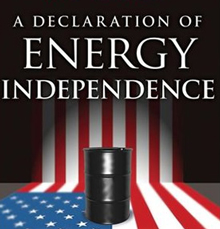
Energy costs are primary cause of higher food prices -not ethanol


Attaining energy independence is possibly the most critical issue facing the United States and yet many would prefer to bash some of the more promising methods for reducing the need for foreign oil.

Expanded use of nuclear power, ethanol and biofuels are all facing criticism from those who would like to maintain the status quo of dependence on oil or prefer unrealistic strategies such as reliance upon solar and wind power to meet our energy needs. Increased use of corn for ethanol is being blamed for higher food prices, but as Grain Net http://www.grainnet.com/ points out the primary cause of our larger grocery bills is rising energy costs.

Ethanol critics and many in the media charge that the rising price of corn due to growing ethanol demand is the major culprit for moderately rising consumer food prices.

Conspicuously absent from the discussion is the chief reason for increasing food costs: escalating energy costs.

According to a new analysis of food, energy and corn prices conducted by John Urbanchuk of LECG, LLC, "rising energy prices had a more significant impact on food prices than did corn."
In fact, rising energy prices have twice the impact on the Consumer Price Index (CPI) for food than does the price of corn, according to the report.

"Energy costs have a much greater impact on consumer food costs as they impact every single food product on the shelf," said Urbanchuk.

"Energy is required to produce, process, package and ship each food item.

"Conversely, corn prices impact just a small segment of the food market as not all products rely on corn for production.

"While it may be more sensational to lay the blame for rising food costs on corn prices, the facts don't support that conclusion.

"By a factor of two-to-one, energy prices are the chief factor determining what American families pay at the grocery store."

According to the study, "Increasing petroleum prices have about twice the impact on consumer food prices as equivalent increases in corn prices.

A 33 percent increase in crude oil prices - the equivalent of $1.00 per gallon over current levels of retail gasoline prices - would increase retail food prices measured by the CPI for food by 0.6 to 0.9 percent.

An equivalent increase in corn prices - about $1.00 per bushel over current levels - would increase consumer food prices only 0.3 percent."

The report goes on to find, "Corn and energy prices both affect consumer food prices.
"However, since increases in corn prices are limited to a relatively small portion of the overall CPI for food, an increase in corn prices resulting from higher ethanol demand or a supply disruption such as a major drought is expected to have about half the impact of the same percentage increase in petroleum and energy prices."

"Critics of ethanol, including those in the animal feeding and oil industries, are engaging in baseless scare tactics to convince Americans that ethanol production will irreversibly increase their grocery bills," said Renewable Fuels Association President Bob Dinneen.

"While it is true increased ethanol production is creating a real market-driven price for corn, this report clearly presents the undeniable facts:

. Energy prices, not ethanol, are responsible for much of the increase in the price of food.

.Our industry is rapidly developing next generation cellulosic ethanol technology that will allow us to meet the growing demand for renewable fuels from wood chips, switch grass and other materials in addition to corn.

. Ultimately, the market will adjust and all those in the food, fuel and fiber industry will be able to prosper."

Much of the debate has been centered on the notion that the U.S. will not be able to produce enough corn to satisfy all markets, creating shortages and intensifying competition that will continuously drive the price of corn higher.

This claim misses some key facts.

Advancements in seed, farming and ethanol technologies are allowing American farmers to continue feeding the world while helping to fuel our nation.

"There is no conflict between food and fuel-we can produce both," said Ken McCauley, president of the National Corn Growers Association.

"Demand for corn is at unprecedented levels, and we fully expect unprecedented levels of supply as well.

"This spring U.S. corn growers planted the largest crop this country has seen since the 1940s," McCauley continued. "Given normal weather conditions this summer, we'll produce the largest corn crop in history, and that will allow us to readily satisfy demand for livestock feed, human food processing,exports and fuel ethanol."

For more information, call 202-289-3835

Complete text of the report

* KEYSTONE CENTER STUDY BACKS NUCLEAR ENERGY

A new report released by The Keystone Center suggests the safety of nuclear power and that concerns about security and disposal of waste can be effectively addressed. The following is a quote for a summary provided by the Nuclear Energy Institute http://www.nei.org/

The fact-finding group was comprised of 29 individuals, including representatives from environmental groups, state regulators, electric utility industry and consumer advocates. The group was brought together by The Keystone Center, a non-profit organization that facilitates cross-sector dialogues on pressing environment, energy and public health issues.
The group broadly agreed on issues detailed in the report that included:

Safety: The participants reviewed many factors, including improvements in plant equipment and human performance, organizational and risk insights gained through experience, the implications of aging materials and components, and institutional changes in safety oversight. They found that “on balance, commercial nuclear power plants in the U.S. are safer today,” that “increased centralization among utilities and plant operators has improved the ‘safety culture’ at nuclear power plants,” and that new reactors are likely to be advanced light-water reactors, “incorporating features that improve both safety and security.”

Climate Change: A number of different approaches have been debated or proposed, including an economy-wide cap and trade program for greenhouse (GHG) emissions, a sector-specific cap and trade approach and a carbon tax. Each confers different economic advantages to nuclear power in comparison to other electricity sources. The specific provisions of U.S. climate policy will affect exactly how much of an advantage nuclear power receives. Most importantly, the more stringent the policy (the greater the reductions required or the higher the tax), the greater the relative advantage bestowed on low-GHG generation sources like nuclear energy.
Used Nuclear Fuel Management: The group also broadly agreed on issues surrounding the ultimate disposal of used nuclear fuel. They agreed that:

· Ultimate disposal of the byproducts from nuclear fuel should take place in a deep underground geologic repository;

· desirable geologic repository characteristics are well understood; and

· Suitable geological environments for disposal exist throughout the world, including locations in the United States.

Furthermore, the group voiced its belief that until the federal government’s geologic repository is licensed for operation, older used nuclear fuel “can be stored safely and securely” on nuclear plant sites in either spent fuel pools or steel and concrete containers for extended periods of time. They also agreed that centralized interim storage is a reasonable alternative for managing used fuel from decommissioned plant sites and “could become cost-effective for operating reactors in the future.”

Recognizing that used fuel must be transported from the plant sites to centralized interim storage facilities and/or a geologic repository, the fact-finding group looked at the safety and security of used fuel transportation and found: “There is wide agreement among the group participants that transport of spent fuel and other high-level radioactive waste is highly regulated, and that it has been safely shipped in the past.” The group also noted that although transport security requires continued vigilance, “security requirements during transport have been enhanced in response to 9/11.”


Wednesday, June 13, 2007

Gene Taylor opposes amnesty for illegal aliens


Congressman Gene Taylor (D-MS) has released a statement expressing his strong opposition to the Bush-Kennedy-McCain amnesty plan. Taylor is a patriot and populist who cares about protecting American jobs and our national sovereignty. I have tremendous respect for Gene Taylor because of his willingness to fight for his constituents and working families across the nation.

As U.S. Representative from the hurricane ravaged fourth district of Mississippi, Taylor has dared to take on the powerful insurance industry. Taylor is currently working as a member of the House Armed Services Committee to make sure that our troops are protected by the most effective body armor. Another priority of Taylor on the Armed Services Committee is strengthening America's Navy which is so critical to our national defense.

As a long-time proponent of border security and opponent of "free trade" deals that sell out American workers, Taylor has credibility that many members of Congress lack when talking about the matter of illegal immigration.

I am reproducing Congressman Taylor's comments below:

Statement of U.S. Representative Gene Taylor (D-MS) on S.1348

I am firmly against the provisions in S. 1348 granting amnesty to illegal immigrants and will vote against any amnesty legislation if it is considered by the House of Representatives. The Senate has pulled the immigration reform bill from the floor for now, but it may come up again in the near future. President Bush has stated his support for the Senate legislation, since it contains many provisions of his temporary worker program. I have consistently opposed the President’s plan, as it basically amounts to an amnesty.

The last time our country granted amnesty to illegal immigrants was in 1986 during the Reagan Administration. Back then, it was claimed amnesty would bring an end to illegal immigration. With the estimated 12 million illegal immigrants in the nation today, the 1986 amnesty was clearly a failure. It would be foolish and irresponsible for Congress and our President to repeat this mistake and grant yet another amnesty.

Amnesty would only encourage employers to cut wages, eliminate benefits, and weaken workers’ rights and protections. We cannot reward the immigrants or the employers who have broken our laws. Amnesty for illegal workers would only encourage more to come here illegally.

Over the years I have voted to strengthen our borders from illegal immigration. Last year I voted in favor of legislation that would: construct 700 miles of new fencing along our border with Mexico, require the Department of Homeland Security to gain “operational security” along the border, install surveillance cameras and other sensors. I also voted to fund an additional 1,500 Border Patrol Agents, increasing the total to approximately 14,800 agents.

I support stronger sanctions against employers who hire illegal workers, especially those who have done so repeatedly. The Social Security Inspector General found that the 300 largest employers in the restaurant, service, and agriculture industries submitted 2,760,765 incorrect Social Security numbers over a three-year period. Despite the prevalence of worker misuse of Social Security numbers in these industries, the government has not required these businesses to be more diligent in their hiring practices.

I am working with my colleagues in Congress to expedite the process for employer’s to verify the legal status of workers. If we can do a background check before allowing a citizen to purchase a firearm, then we should be able to quickly determine whether a person is legal to work in the United States. Once a quick verification system is in place I support dramatically increasing the penalties for employers who knowingly hire illegal workers.

While many service, restaurant, and agriculture employers are reducing their wages by hiring illegal workers, some manufacturing industries are reducing wages by relocating plants to foreign countries. Mississippi has lost dozens of textile, apparel, paper, and other manufacturing plants because our nation’s trade policies favor low-wage foreign workers and corporate stockholders at the expense of American workers. I strongly opposed NAFTA, the reduction of tariffs with Communist China, and other trade policies that have weakened our manufacturing base. A few years of cheaper products and corporate bonuses will not make up for the long-term damage to the American economy and American workers.

The U.S. trade policies have eliminated many jobs and hold down the wages of the jobs that remain. Now, the President and other advocates of immigration amnesty would endorse the practices of employers who hire illegal immigrants to displace American workers and further push down wages. Our government should not base its economic policy simply on helping businesses find cheap labor at home and abroad. Congress and the President should focus on rebuilding the American manufacturing base and rewarding the skills of American workers. That is the key to our nation’s prosperity and economic security.

http://www.house.gov/genetaylor