Tuesday, November 25, 2008

Chinese cyber attacks, authoritarian rule and trade practices pose threat


A warning from the U.S.-China Economic and Security Review Commission:

WASHINGTON, DC (November 20, 2008) – China relies on heavy-handed government control over its economy to maintain an export advantage over other countries. The result: China has amassed nearly $2 trillion in foreign exchange and has increasingly used its hoard to manipulate currency trading and diplomatic relations with other nations. These are among the conclusions in the sixth Annual Report to Congress of the U.S.-China Economic and Security Review Commission. “Rather than use this money for the benefit of its citizens—by funding pensions and erecting hospitals and schools, for example--China has been using the funds to seek political and economic influence over other nations,” said Larry Wortzel, chairman of the Commission, at the official release of the group’s 2008 report to Congress on Thursday.
The bipartisan Commission, established by Congress to analyze the economic and national security relationship of the two nations, made 45 recommendations to Congress for further action. The 393-page report was unanimously approved by the 12 Commissioners. The Commission held eight hearings; traveled to China, Taiwan, South Korea, and Japan; commissioned original research; and consulted with the U.S. intelligence community.

The report acknowledges some progress by China. Its adherence to non-proliferation agreements has continued to improve. China’s involvement in the Six Party Talks assisted the negotiations to dismantle North Korea’s nuclear weapons production capacity. Yet China has stepped up its capacity to penetrate U.S. computer networks to extract sensitive government and private information. Beijing’s “continuing arms sales and military support to rogue regimes, namely Sudan, Burma, and Iran, threaten the stability of fragile regions and hinder U.S. and international efforts to address international crises, such as the genocide in Darfur,” the report notes.

The report is critical of China’s use of prison labor to produce goods for export and of China’s refusal, despite promises, to allow inspections of prisons by advancing the specious claim that forced labor constitutes “reeducation” rather than punishment. The Commission also notes that China’s government “has created an information control regime intended to regulate nearly every venue that might transmit information to China’s citizens: the print and broadcast media, the Internet, popular entertainment, cultural activities, and education.”

The Commission warns Congress that fish imported into the U.S. from Chinese fish farms “pose a health risk because of the unsanitary conditions . . . including water polluted by untreated sewage; fish contaminated by bacteria, viruses, and parasites; and fish treated with antibiotics and other veterinary medicines that are banned in the United States as dangerous to human health.” The Commission recommends greater powers for the U.S. Food and Drug Administration.

The report and its key findings, analysis, and recommendations to Congress are available on the Commission’s Web Site, www.uscc.gov.

Saturday, November 22, 2008

The Wit and Wisdom of JFK


Thanks to my fellow blogger Irish Elk http://mcns.blogspot.com for sharing this video of clips from John F. Kennedy's TV press conferences. http://www.youtube.com/watch?v=BC_B3OBmb0Y#

Here are some interesting facts from the John F. Kennedy Presidential Library:

"John F. Kennedy was the first president to effectively use the new medium of television to speak directly to the American people. No other president had conducted live televised press conferences without delay or editing."

"By November 1963, President Kennedy had held 64 news conferences, an average of one every sixteen days. The first, less than a week after his inauguration, was viewed by an estimated 65 million people. A poll taken in 1961 indicated that 90% of those interviewed had watched at least one of JFK’s first three press conferences. The average audience for all the broadcast conferences was 18 million viewers."

http://www.jfklibrary.org

Chambliss proves his lack of concern for worker safety


The AFL-CIO Now Blog reports:

Tragedy struck a Georgia factory in February when combustible dust caught fire and exploded at the Imperial Sugar plant in Port Wentworth, killing 14 workers and injuring many more.

Now, Sen. Saxby Chambliss (R-Ga.), an opponent of working families who’s in a tough runoff to defend his Senate seat, is facing questions about whether he improperly aided Imperial in its efforts to avoid the consequences of its negligence.

The Occupational Health and Safety Administration (OSHA) hit the company with $5 million in fines for “willful and egregious safety violations” over the blast. And a Senate subcommittee held a hearing in July, finding that Imperial had no plan to deal with the dangerous combustible dust and ignored warnings about plant safety.

During that hearing, Chambliss—who has received $21 thousand in campaign contributions this election cycle from the sugar industry—berated a corporate whistle-blower who exposed the dangerous conditions at the plant.

Mark Tate, an attorney representing families of two workers killed in the blast as well as two injured workers, has subpoenaed Chambliss to testify about his involvement in trying to protect Imperial Sugar from consequences of the explosion. The Atlanta Journal-Constitution reports that Chambliss is accused of interfering with the case both inside and outside of Congress.

Tate says he wants to know if Imperial Sugar executives persuaded Chambliss to sharply criticize a company whistle-blower during a July Senate hearing on the explosion. He says he also wants the senator to respond to plaintiffs’ claims that the company arranged a meeting between Chambliss and victims’ families to dissuade them from suing.

Chambliss is refusing to answer the subpoena and testify about his actions, but Citizens for Responsibility and Ethics in Washington (CREW) says his claims of immunity don’t stand up to scrutiny.

Neither does the anti-worker record of Chambliss. He has opposed workers’ interests on issues like the minimum wage and overtime protection. Chambliss needs to put workers first and come clean about his relationship with Imperial Sugar.

Chambliss’ opponent in the Senate race, Jim Martin, has been endorsed by the AFL-CIO. www.martinforsenate.com

For more information on the shameless record of Saxby Chambliss, check out this website. http://www.saxby-chambliss.com/

Thursday, November 20, 2008

Is a New South Rising ?


The Institute for Southern Studies demolishes every argument of the "Schaller school" in their analysis of the 2008 election. I would encourage everyone to check out the link and read the full essay.

http://new.southernstudies.org/2008/11/a-new-south-rising.html

A NEW SOUTH RISING

2008 proved that the South is politically competitive and growing in importance. But the pundits are telling a different story.

On the day before Election Day -- that final moment when candidates decide where they want to make their last case to the voters they want to win the most -- Barack Obama chose to visit three big battleground states: Florida, North Carolina and Virginia.

Since 1968, these Southern states had voted Democratic for president only six times between them. And president-elect Obama was about to ask voters in these states -- all members of the old Confederacy -- to vote the first African-American ever into the White House.

Obama's Southern Strategy worked: the states went blue, and history was made.

But just as Southern Democrats were clinking glasses of sweet tea in celebration, the powerhouses of political punditry -- especially in the North -- made a bizarre move: They turned against the region that had just given one-third of its Electoral College votes to the President-elect.

Ignoring McCain's dominance in, say, the Great Plains and Upper Mountain states -- Obama's most crushing defeats came in Idaho, Oklahoma, Utah and Wyoming -- legions of commentators instead curiously trained their guns on the South, dismissing the region as politically irrelevant, a bastion of red-state conservatism uniquely out of touch with national trends.

Gawker, a popular New York-based website, put a finer point on it: "North Finally Wins Civil War."

SCHALLER RIDES -- AND FALLS -- AGAIN

It's a familiar refrain. The Obama campaign heard it when they first began talking about changing the political map, including putting several Southern states in play. Leading the pack, as always, was the relentless Tom Schaller, the oft-quoted political scientist whose passion for downplaying the South's political significance has frequently put him on the wrong side of history.

Just this past July, Schaller declared with typical bombast in a New York Times column that "Mr. Obama can write off Georgia and North Carolina." That certainly would come as a surprise to Obama, who won N.C. and made McCain fight for the Peach State.

It would also be news to McCain and Sarah Palin, who scheduled seven campaign stops in North Carolina in the final month leading into the election. As for Georgia, McCain is now headed there to help fellow Republican Sen. Saxby Chambliss, forced into a run-off largely because of the surge of Obama voters.

This wasn't the first time Schaller's "forget the South" thesis was proven wrong. In 2006, Schaller famously declared he was "certain" now-Senator Jim Webb (D) would lose in Virginia. But the string of bad calls and Obama's success in the South hasn't silenced Schaller and the rest of the "write off the South" crowd -- oddly enough, it seems to have emboldened them.

THE REAL LESSONS FROM THE SOUTH

In fact, the 2008 elections provided two important lessons about the South, clear to any willing to see them: First, the South is rapidly changing in a way that makes it a more -- not less -- politically competitive region.

And second, despite the fevered hopes of certain wings of the Northern intelligentsia, the South's political clout is rapidly growing -- making the South a centerpiece of any strategy for national political power.

Read the full article at:
http://new.southernstudies.org/2008/11/a-new-south-rising.html

Sunday, November 16, 2008

Is Thorium the key to energy independence ?


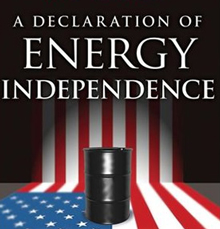
Kent Garber, writing in a recent edition of U.S. News and World Report, calls attention to a nuclear fuel with the potential to revitalize the peaceful use of atomic energy. Thorium has tremendous potential as a replacement for uranium in the nuclear industry. Senate Majority Leader Harry Reid (D-NV) and Senator Orrin Hatch (R-UT) are the bipartisan sponsors of a bill to fund thorium research.

Garber writes:

In the midst of renewed global interest in nuclear energy, a long-overlooked nuclear fuel, thorium, is being re-examined as a potential solution to some of the industry's most daunting problems, including disposal of wastes.

Widely available in the sandy beaches of India, Australia, and the United States, among other places, thorium is a naturally occurring, slightly radioactive element that is being heralded by advocates as a safer alternative to uranium that could help limit the production of nuclear waste and prevent nuclear technology from being used for weapons rather than energy.

Though many nuclear scientists have known about thorium's potential for decades—it was briefly used in the 1970s at the first U.S. commercial reactor in Shippingport, Pa.—it never caught on commercially. Today, however, with nearly three dozen nuclear reactors under construction worldwide and plans for at least two dozen more, world leaders are facing mounting pressure to make sure that the nuclear industry's expansion takes place as safely and cleanly as possible.

Could thorium be the solution? Some politicians and businesses hope so. Earlier this month, Nevada Sen. Harry Reid and Utah Sen. Orrin Hatch introduced a bill (S.3680) would set aside $250 million for research and development of thorium fuels.

Abroad, interest in thorium is even greater. The Indian government publicly has said that it wants to promote new nuclear plants running on thorium to help meet its soaring energy needs. Russia, France, the United Arab Emirates, and many others also have expressed interest.

Proponents say thorium has multiple advantages over uranium fuel. Because it is consumed more slowly in nuclear reactions than uranium, it has the potential to cut the volume of nuclear waste produced in half. Unlike a uranium reaction, a thorium fuel reaction doesn't produce weapons-usable plutonium, which would allay concerns about developing countries pursuing nuclear weapons under the pretext of nuclear energy. And proponents also say that thorium fuel could be used in new and existing reactors without companies having to make major changes to their reactor designs or fork out money for retrofits.

The dilemma of nuclear waste disposal, a longtime political lightning rod, is part of the reason no new nuclear plant has been approved for construction in the United States in some 30 years. The federal government's decades-old plan to build a nuclear waste repository at Yucca Mountain, Nev., remains stuck in limbo, and many observers speculate that the repository will never get built. Thorium would not eliminate the problem but, at least in theory, could reduce the amount of waste that would need disposal.

At the moment, thorium isn't quite ready for commercial use. The research is not yet complete, and approval of thorium fuel by the U.S. government still remains at least several years off. But some surprising international partnerships already are yielding promising developments.

http://www.usnews.com/articles/news/2008/10/14/some-nuclear-energy-backers-say-uranium-alternative-could-be-a-magic-bullet.html

See link to text of S. 3680 - Thorium Energy Independence and Security Act http://thomas.loc.gov/cgi-bin/query/z?c110:S.3680:

Hat tip www.pronucleardemocrats.blogspot.com

Alabama Baptist Minister challenges his state's regressive tax system


In a column at Ethics Daily.Com, Alabama Baptist minister Jim Evans questions the fairness of his state's regressive tax structure.

Don’t Perpetuate Economic Injustice

Jim Evans
11-14-08

The 2008 presidential campaign was a taxing affair, and in more than one sense. For one thing, the campaign went on for nearly two years—taxing our patience and the limits of civil discourse. And at the end, the campaign was mostly about the economy, of which taxes are an integral part. Who should be taxed or not taxed? How should those tax dollars be spent?

Unfortunately, even though the campaign is finally over, the debate about taxes will continue. And in Alabama that debate needs a particular focus.

Recently the Center on Budget and Policy Priorities, a non-partisan group based in Washington, published a report revealing a deplorable reality about income taxes in Alabama. According to the center, Alabama's taxes are higher at the poverty level than any other state in America.

Let me state that again so as to ensure we don't miss the point here. It's not just that we tax the poor, but we tax the poor at a higher rate than any other state in the union. A family of four earning $21,203, which is the poverty line, will owe state income tax in the amount of $423. If they moved to Mississippi, they would owe $48.

Of course, it's not as bad as it used to be. Not that long ago we began taxing families earning as little as $4600. That changed in 2007 when the state legislature raised the amount at which taxes are assessed to $12,600. But what may seem like progress to some in reality remains a gross injustice.

We are not talking about welfare here or some so-called government giveaway. These people work. They are trying to make a living and be productive members of society. And the reward they receive from their state is a regressive tax that only serves to drive them deeper into poverty.

This past spring the Alabama Legislature fell one vote short of passing more tax cuts for the working poor and removing sales tax on groceries. The anti-tax crowd hailed this as a victory. But it is not. When we allow a tax system to exist that willfully punishes those who earn the least, we are guilty of perpetuating an insidious economic injustice.

What makes this all the more amazing is to know how many followers of Jesus live in Alabama. How can it be possible that so many people who claim allegiance to Jesus can be so complacent about the plight of the poor? How can they ignore what Jesus said about loving our neighbor?

It is time and past time to fix this. People of faith and good will all across this state need to be calling on their representatives to put an end to this injustice. If not out of a commitment to biblical principles and the teaching of Jesus, then maybe out of some basic sense of fairness for our fellow citizens.

It's not fair for the poor to carry the heaviest part of our tax burden. We should adopt a progressive tax code that provides for those who make the least to pay the least. We should be willing to do that as a part of our Christian commitment—as a statement about what it means to invite Jesus into our lives as Savior and Lord.

For his part, Jesus put it this way: "As you have done it to the least of these members of my family, you have done it to me."

James L. Evans is pastor of Auburn First Baptist Church in Auburn, Ala.

http://www.ethicsdaily.com/article_detail.cfm?AID=11330

Is the U.S. Auto Industry Worth Saving ?


U.S. AUTO INDUSTRY HAS PLAYED A CRITICAL ROLE IN OUR NATIONAL ECONOMY SINCE THE DAYS OF THE FORD MODEL T. IS IT WORTH SAVING ?

Robert Scott makes the case for preserving the American automobile industry in a Economic Policy Institute memorandum.

http://www.epi.org/content.cfm/pm134

An investment, not a bailout
The $25 billion rescue loan being considered for automakers would help maintain an essential industry, along with 3 million critically-needed jobs

By Robert Scott

With the U.S. Senate prepared to take up the question of a $25 billion rescue package for automakers as early as Monday (Nov. 17), partisans are loudly debating the merits of another bailout. But given current economic conditions, the answer should be clear. Government intervention in the form of a bridge loan will allow the industry to survive until the economy stabilizes, new fuel efficient models are introduced, and recently negotiated changes to United Auto Worker (UAW) contracts kick in. That means saving millions jobs—not only in auto factories, but also at component suppliers, dealers, and elsewhere—when employment is desperately needed.

Other circumstances strengthen the argument for this loan:

Although domestic automakers made strategic blunders in the past, they have recently made tremendous strides in restructuring. But many of those changes won’t kick in until 2010, when new models such as GM’s plug-in hybrid, the Chevy Volt, and a new model getting 45 mpg are introduced. New union contracts will also take effect in 2010, which will greatly reduce automakers’ many legacy costs.

The current industry collapse is a direct result of the financial crisis rather than past industry decisions. Nervous consumers are delaying large purchases, sending vehicle sales in the United States to their lowest level in decades. More than 16 million light vehicles were sold in 2006 and 2007. Sales fell to 10.6 million units in October, a 35% decline from 2007 and the lowest absolute level since February
1983.

The collapse in light vehicle sales has hit both import and domestic companies. GM sales fell 47% in October, but Suzuki (-48%) and Isuzu (-49%) were equally hard hit. While Chrysler sales fell 38%, Kia’s fell 40%. Ford’s sales were off 33%, but Nissan’s fell 36%. Overall, domestic sales fell 41%, and Asian producers dropped
29%. Every company experienced a sharp drop in sales last month. These declines are particularly troubling because the auto industry is one of the most capital-intensive sectors of the U.S. economy.

Unionized U.S. automakers are highly productive. The top two most productive auto assembly plants in the United States in 2005 were UAW plants (in terms of hours per vehicle assembled). In fact, six of the top 10 plants were UAW shops (Harbour 2006, as cited by Shaiken 2007). Product reliability for U.S. manufacturers is now approaching that of Japanese producers in some cases (Cohn 2008). This high productivity has allowed domestic manufacturers to compete with foreign companies that benefit from government subsidies, including manipulated currencies in Korea and Japan that reduce costs by 10% to 20%, and national health insurance systems in most competitive countries that remove the burden of covering costs for existing workers and retirees. Such high-productivity industries are exactly what is needed to ensure future economic growth.

Union auto workers have already taken substantial hits on pay and benefits. For example, contracts negotiated in 2007 slashed wages for new workers by 50%. In addition, new workers will not be guaranteed any retiree health care benefits, and will not participate in the traditional defined-benefit pension plan. On top of that, the UAW agreed that the responsibility for health care benefits for existing retirees would be transferred from the auto companies to an independent trust, called a Voluntary Employee Benefits Association. Analysts now believe that the labor cost gap between the Detroit-based auto companies and the foreign transplants will be largely or completely eliminated by the end of the current contracts.

A collapse of the Detroit-based auto manufacturers would result in the loss of 2.5 to 3 million jobs, according to a 2008 study by the Center for Automotive Research (CAR). There would also be a ripple effect throughout the local economies of auto communities across the United States. Furthermore, liquidation of the auto companies would put at risk the pension and health benefits of 1 million retirees and dependents, and could saddle the federal pension guarantee program with enormous liabilities. Under current law, the federal government would also be required to pay for part of the retiree health care costs for pre-65 retirees from the auto companies.

The automotive industry represents almost 4% of U.S. gross domestic product and 10% of U.S. industrial production by value. The failure of the Detroit-based auto companies would severely aggravate the current economic downturn, compounding the difficulties facing working families and businesses. Revenues to the federal, state, and local governments would drop, forcing cuts in vital social services at a time when they are most needed.

An airline-style (Chapter 11) bankruptcy re-organization is not an option for U.S.-based automakers. They have already extensively restructured product lines and labor contracts. They would be unable to get debtor-in-possession refinancing to continue operations, and consumers would be unwilling to buy cars from bankrupt companies. Hence, a Chapter 7 bankruptcy liquidation is the only alternative for domestic automakers. The bankruptcy of one or more of the “Big-3” automakers would endanger thousands of large and small parts and services suppliers. Massive job loss and community disruption would result. Increased government payments and tax losses alone would exceed $150 billion in the first three years following bankruptcy of all three domestic auto companies, according to the CAR report. The $25 billion rescue plan is a bargain by comparison.

References

Cohn, Jonathan. 2008. “Panic in Detroit.” The New Republic.
http://www.tnr.com/politics/story.html?id=a4893b49-36df-4784-9859-2dfa3a3211bf

Cole, David, Sean McAlinden, et al. 2008. “CAR Research Memorandum: The Impact on the U.S. Economy of a Major Contraction of the Detroit Three Automakers.” Center for Automotive Research, An Arbor, MI. http://www.cargroup.org/documents/FINALDetroitThreeContractionImpact_3__000.pdf

Shaiken, Harley. 2007. “Unions, the Economy, and Employee Free Choice”. Washington, D.C.: Economic Policy Institute. EPI Briefing Paper #181. February 22. http://www.sharedprosperity.org/bp181.html