

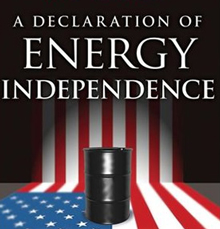
General Wesley Clark recognizes that energy independence is a national security issue. Clark has strongly endorsed biofuels as one way to reduce America's reliance on foreign oil. The State of California Air Resources Board must not be allowed to stand in reaching this important objective.
SACRAMENTO,CA– General Wesley Clark, Co-Chairman of Growth Energy, a group committed to the promise of agriculture and growing America’s economy through cleaner, greener energy, released the following statement Thursday on the California Air Resources Board (ARB) hearing on the proposed Low Carbon Fuel Standard (LCFS):
“Today’s ARB hearing has the potential to accelerate or freeze America’s drive towards energy independence,” said General Clark. “Governor Schwarzenegger and the ARB’s efforts to reduce carbon emissions can move to the next level if the Board adopts an LCFS that treats all fuels equally. However, adopting an LCFS that selectively applies one standard for biofuels and another for all other fuels, including gasoline, is not equitable, would cripple the ethanol industry and all but guarantee America’s continued dependence on fossil fuels.
“This is an issue of fairness,” added Clark. “We support an LCFS that treats all fuels fairly. This one, however, does not. The section of the LCFS dealing with indirect effects under consideration by ARB staff would impose unfair standards in calculating the carbon intensity of fuels as part of the LCFS and must be rejected. The ARB staff call for the adoption of a new and highly uncertain carbon penalty against biofuels only is derived from an empirically flawed process that is not based on real world data. This Indirect Land Use Change (ILUC) penalty would penalize only biofuels while ignoring the significant indirect effects of all other fuel types, including gasoline. For example, in a study released on Monday which was also submitted to the ARB, researchers at the University of Nebraska found that military action in the Middle East raises the greenhouse gas intensity of gasoline by two-fold.”
Clark continued, “There is no doubt that understanding all fuel types’ direct and indirect costs is important, as is developing sounder science regarding the ILUC theory. But this is a fundamental fairness issue at stake here, and this is too important of a policy change not to get right.
“We are asking the ARB to adopt the direct effects of the LCFS now, while taking the time they need to study indirect effects, evaluate its impacts across the entire energy spectrum, and apply the science fairly across all fuel pathways. This is the path to energy independence and the key to California’s renewable fuels future,” Clark summarized.
www.growthenergy.org
The National Farmers Union had this response to the ARB hearing:
WASHINGTON (April 24, 2009) – National Farmers Union President Roger Johnson released the following statement today in response to the California Air Resources Board decision to implement a low carbon fuel standard.
“While I appreciate California’s efforts to encourage renewable fuel use through a low carbon fuel standard, yesterday’s ruling is disappointing and unfortunate – especially as we look to decrease our nation’s dependence on foreign energy sources and produce more renewable fuels in the United States.
“A fairly and appropriately crafted low carbon fuel standard could spur opportunities for renewable fuels, but California’s scientifically dubious interpretation of international indirect land use change is an unnecessary setback to reducing our dependence on fossil fuels.
“There is currently no clear scientific understanding of international indirect land use impacts. Until there is better scientific certainty, and analysis accounts for all fuels including petroleum and natural gas, the inclusion of indirect effects should be delayed.
“Ethanol production has a proven track record of providing real ‘green jobs’ in our rural communities, jump-starting the local economy. Furthermore, improved technology is increasing ethanol plant efficiency and paving the way for the next generation of renewable fuels.”
www.nfu.org





No comments:
Post a Comment